Table of Contents
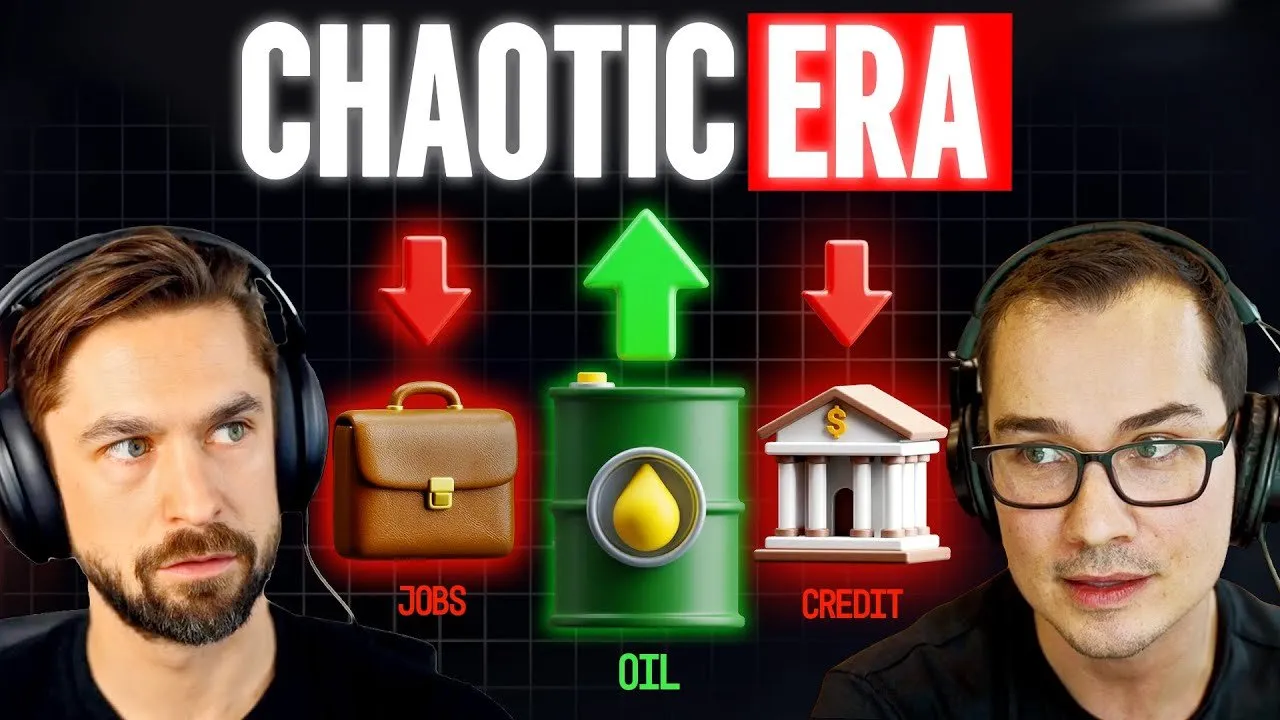
The global financial landscape is shifting beneath our feet. As we enter what Vitalik Buterin has dubbed the chaotic era, the stability that defined the previous decade is rapidly dissolving. From geopolitical conflicts and energy price volatility to the rapid advancement of artificial intelligence, market participants are finding themselves in a kangaroo market—a period where asset prices hop wildly up and down while ultimately trading sideways.
Key Takeaways
- The Chaotic Era: We have transitioned from a stable global environment into a period of high volatility driven by war, energy insecurity, and rapid technological disruption.
- Institutional Integration: Despite market jitters, institutional-grade adoption is proceeding, highlighted by BlackRock’s new staked Ethereum ETF and NASDAQ’s partnership with Kraken to tokenize real-world equities.
- The Regulatory Landscape: While the administration shows signs of supporting "Crypto TM" (institutionalized, wall-street-friendly crypto), the ongoing prosecution of open-source privacy developers suggests that sovereign, permissionless privacy remains a primary target for the nation-state.
- The AI Backlash: Political movements, such as Bernie Sanders' proposed moratorium on AI data centers, signal a growing decelerationist political force that may define the 2028 election cycle and impact technological progress.
The Macro Climate: Oil, Jobs, and Credit
Current markets are reacting to a perfect storm of uncertainty. Oil prices have become the de facto barometer for global economic health, heavily influenced by conflict in the Middle East. With the Strait of Hormuz acting as a critical chokepoint for 20-30% of global oil consumption, any fluctuation in military posture causes instantaneous, dramatic reactions in global energy and stock markets.
Parallel to these energy shocks, the labor market is flashing warning signs. Recent data showing job losses exceeding expectations and rising unemployment have reignited debates about a potential recession. Simultaneously, tremors in the private credit market—specifically the marking down of loan portfolios and the suspension of withdrawals in certain lending funds—have investors wary of a new subprime-style bubble, specifically within the highly leveraged SaaS (Software as a Service) sector.
To me, the way I interpret this is the higher the price of oil, the more pressure is on Donald Trump and the United States to end this conflict.
Tokenizing Traditional Finance
A significant development in the bridge between decentralized and traditional finance is the partnership between NASDAQ and Kraken. This initiative aims to design a framework where traditional stocks, such as NVIDIA or Tesla, can trade on public blockchains as tokenized assets. By using the same CUSIP (the unique identifier for securities) for both traditional shares and on-chain tokens, the industry is moving toward a future where "Vanguard and chill" is possible on a global, permissionless scale.
Critics of current crypto projects argue that tokens often lack the investor protections found in equity markets. However, the move by projects like the Across Protocol to explore transitioning from a DAO structure to a C-Corp reflects an industry-wide realization: institutional capital demands clear legal counterparties, enforceable contracts, and structured revenue agreements. While some purists view this as a step backward, many see it as the necessary DeFi mullet—TradFi regulatory compliance on the front, and on-chain utility on the back.
The Battle for Privacy and Sovereignty
The Department of Justice’s decision to retry the Roman Storm case represents a critical inflection point for the industry. Despite recent Treasury reports acknowledging that lawful users may leverage mixers for privacy, the government continues to treat open-source privacy developers as money transmitters. This highlights a fundamental tension: the nation-state is often willing to embrace "shrink-wrapped" crypto products like ETFs, but remains inherently hostile to the self-sovereign, permissionless tools that define the true potential of the technology.
The nation-state is always going to protect itself. It takes a very noble leader to preserve the rights of individual freedom and privacy over the nation-state.
The Looming AI Political Backlash
As AI adoption accelerates, a powerful political counter-movement is emerging. Led by figures like Bernie Sanders, the push for a moratorium on new data centers is gaining traction among those concerned about energy consumption, job displacement, and the consolidation of wealth. This decelerationist stance is not merely a fringe concern; it is increasingly capturing the popular sentiment of a public uneasy with the rapid pace of change.
The divide between accelerationists—who champion the economic and societal benefits of AI and blockchain—and decelerationists—who advocate for oversight and control—will likely be a defining feature of the next decade's political discourse. As this backlash matures, it is expected to bleed into crypto policy, forcing developers and investors to navigate a landscape where their tools are scrutinized not just for financial impact, but for their role in the broader technological revolution.
The road ahead remains uncertain. Navigating the current "kangaroo market" requires a firm understanding of both macro-economic forces and the evolving regulatory battleground. While the institutionalization of crypto through ETFs and tokenized assets provides a path toward mainstream adoption, the fight for privacy and open-source sovereignty is far from over. Staying informed and agile will be the only way to thrive in the chaotic era ahead.
![Bitcoin Is on Sale [How to Buy It in 2026]](/content/images/size/w1304/format/webp/2026/03/how-to-buy-bitcoin-2026.jpg)