Table of Contents
The intersection of cryptocurrency and global macroeconomics has never been more volatile—or more critical to understand. From the halls of Congress where market structure bills are stalling, to the geopolitical maneuvering surrounding Greenland and tariffs, the landscape is shifting rapidly. At the same time, traditional finance giants are making their most significant moves onto the blockchain yet, validating the technology while challenging crypto natives to refine their value propositions.
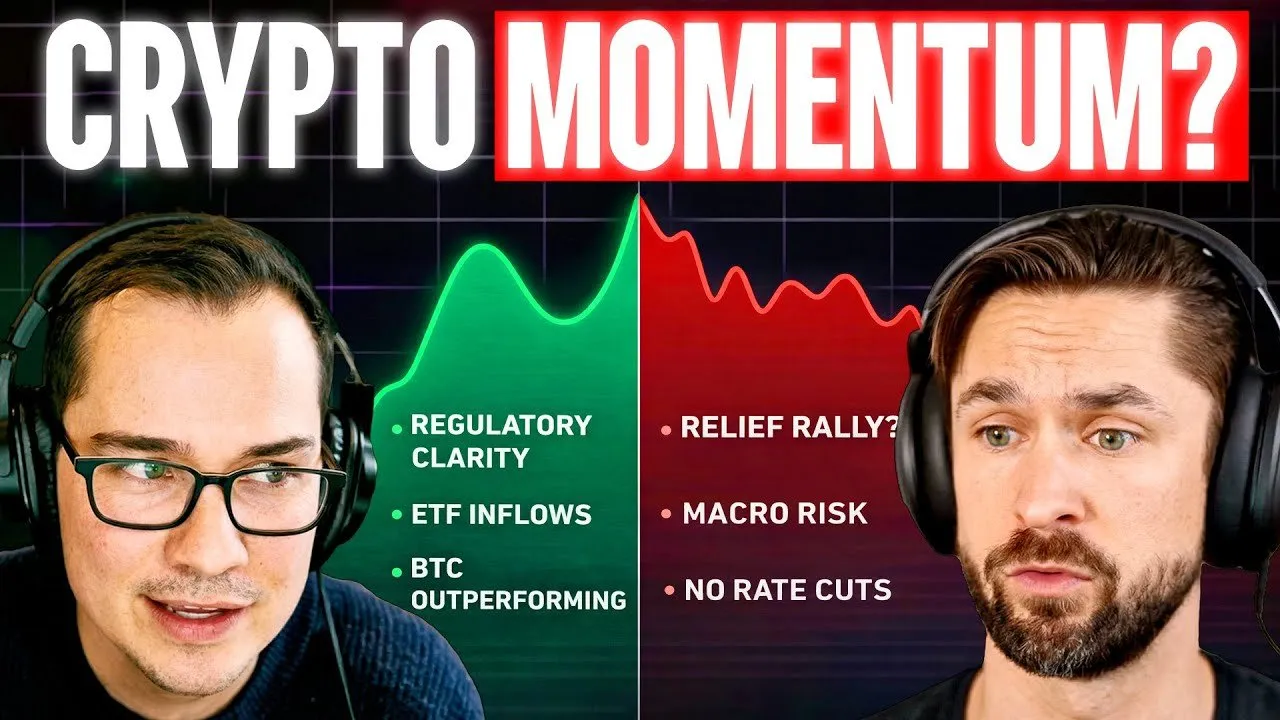
In this analysis, we dissect the latest developments discussed by industry leaders from CoinFund, Coinbase, and Aluminia. We explore why major industry players are withdrawing support for current legislative drafts, how geopolitical realpolitik is reshaping investment portfolios, and what the New York Stock Exchange’s entry into tokenization means for the future of finance.
Key Takeaways
- Market Structure Deadlock: The coalition supporting the crypto market structure bill is fracturing, with Coinbase withdrawing support due to "unworkable" provisions regarding stablecoins and regulator flexibility.
- Geopolitical Portfolio Rotation: Aggressive U.S. foreign policy and tariff threats are driving capital toward international equities and emerging markets, which are currently outperforming the S&P 500.
- Institutional Validation: The NYSE’s move to develop a platform for trading tokenized equities signals a major legitimizing moment for blockchain infrastructure, potentially solving settlement inefficiencies.
- The Innovation Gap: As Wall Street adopts blockchain tech, crypto-native firms must pivot from copying traditional finance to serving underserved niches like SME capital markets and the creator economy.
- Fed Policy Uncertainty: Conflicting signals regarding Federal Reserve appointments and rate decisions amidst strong economic data are creating a high-uncertainty environment for risk assets.
The Fragile State of Crypto Legislation
The legislative path for cryptocurrency in the United States has hit a significant roadblock. Recently, Coinbase publicly withdrew its support for the latest draft of the market structure bill, labeling it "unworkable." This move highlights the fragility of the coalition attempting to pass a comprehensive crypto framework. While the White House remains constructive, deep fissures have emerged between the crypto industry, large banks, and regulators.
The Banking Lobby and Stablecoin Yield
A primary point of contention revolves around stablecoins and yield. The traditional banking sector, particularly community banks, perceives stablecoins as a threat to their deposit base. However, data suggests this fear may be misplaced. The decline in community bank deposits correlates more with a failure to modernize and appeal to younger demographics than with the growth of stablecoins, which largely sit outside the U.S. banking system.
"It’s hard to predict exactly which rock the boat will crash into, but when you see that many rocks in front of a boat, you can pretty accurately predict it's going to hit one of them."
Despite the logic that stablecoins could actually modernize payments without destabilizing banks, the political reality is that incumbency bias is strong. Banks like Citadel and traditional financial institutions are effectively lobbying to relitigate parts of existing financial structures, creating a gridlock that threatens to derail the bill entirely.
The Impact of Clarity on Asset Prices
If legislation does pass, it will likely serve as a dividing function for the market. Under the previous regulatory regime, value was often hypothetical because utility was stifled. Regulatory clarity would force a "show your work" moment: tokens with genuine utility will thrive, while those relying on speculative ambiguity will likely collapse. While some institutional capital—pensions and endowments—is waiting for this regulatory green light, other sectors of the market may have already priced in the gridlock.
Geopolitics, Tariffs, and the Dollar
Beyond the Beltway, the macro environment is being shaped by an aggressive return to realpolitik. Former President Trump’s renewed interest in purchasing Greenland and the ramping up of tariff threats are not merely rhetorical; they represent a muscular version of the Monroe Doctrine aimed at securing strategic resources.
The Rotation to International Equities
Markets generally dislike uncertainty, and the current geopolitical posture is causing a shift in capital allocation. Investors are increasingly rotating out of U.S. markets and into international equities. Emerging markets, Europe, and specific sectors in Canada and Japan are seeing inflows as money managers hedge against U.S. policy volatility.
This trend is supported by performance data showing international markets outperforming the S&P 500 over recent periods. Major asset managers are beginning to diversify away from U.S. debt, anticipating that protectionist policies may complicate the investment landscape.
The Dollarization Paradox
There is a fascinating divergence occurring in the global currency market. While foreign governments and central banks may be attempting to "de-dollarize" to reduce reliance on the U.S. financial system, their citizens are doing the opposite. Through stablecoins, individuals in emerging markets are opting into the U.S. dollar for safety and stability.
This creates a paradox where U.S. political influence might wane diplomatically, but the economic relevance of the dollar expands via blockchain rails. The adoption of stablecoins effectively allows for the internet-speed export of the dollar, bypassing traditional banking bottlenecks.
Wall Street Goes On-Chain
Perhaps the most significant structural development is the news that the New York Stock Exchange (NYSE), owned by the Intercontinental Exchange (ICE), is developing a platform for trading and settling tokenized U.S. equities and ETFs. This initiative aims to enable 24/7 trading and near-instant settlement.
Validation of Blockchain Infrastructure
For years, crypto advocates have argued that blockchain is superior infrastructure for all asset classes, not just cryptocurrencies. The NYSE’s entry is a vindication of this thesis. It signals that legacy institutions acknowledge the inefficiencies of the traditional T+1 settlement cycle and the limitations of banking hours.
"I don't see how this doesn't validate the vision that we've had... The future of finance will be on-chain. It's just that we were fighting that fight on our own for a very long time and now you're having a lot of traditional incumbents kind of come into the space."
The Innovator's Dilemma for Crypto Natives
While this legitimizes the technology, it poses a threat to crypto-native firms. If incumbents like BlackRock and NYSE successfully co-opt blockchain technology, they bring with them massive existing customer bases and regulatory moats. This highlights a critical failure in the crypto industry: the neglect of the customer relationship in favor of building niche technology for engineers.
To compete, crypto entrepreneurs must stop trying to build a "better NASDAQ" and instead focus on underserved markets that Wall Street ignores. Two massive opportunities exist:
- Internet Capital Markets for SMEs: Small businesses often lack access to public capital markets. Blockchain can facilitate debt and equity financing for main street businesses that community banks struggle to serve.
- The Creator Economy: As AI increases leisure time and the value of entertainment, content creators need better monetization rails. Crypto allows for the securitization of influence and content in a way traditional finance cannot easily replicate.
Macro Uncertainty: The Fed and Debt Cycles
Finally, the macroeconomic picture remains clouded by mixed signals from the Federal Reserve and the broader economy. With potential changes in leadership at the Fed—shifting between doves like Kevin Hassett and hawks like Kevin Warsh—markets are struggling to predict the path of interest rates.
The U.S. economy is currently in a "Goldilocks" scenario with strong GDP growth, low jobless claims, and high consumer spending. In this environment, the necessity for rate cuts is questionable, yet they remain on the table. Complicating this is the sheer volume of U.S. government debt. With debt-to-GDP ratios at historical highs, the mechanical impact of interest rate changes is fundamentally different than in previous cycles.
If the Fed cuts rates, it risks reigniting inflation in a strong economy. If they hold or raise rates, the interest expense on government debt becomes a massive burden. This uncertainty is further driving the rotation into non-U.S. assets as large institutions like PIMCO look for safer harbors.
Conclusion
We are in a period of transition where market structure, geopolitics, and technology are colliding. The stall in legislation suggests that regulatory clarity may be delayed, but the technological march continues unabated as Wall Street adopts blockchain rails. For investors and builders, the alpha lies not in waiting for permission, but in identifying the specific inefficiencies—whether in cross-border payments or SME financing—that this new convergence of crypto and macro can solve.