Table of Contents
Manufacturing 1 Million Drones a Year: How Neros is Building Sovereign Capability
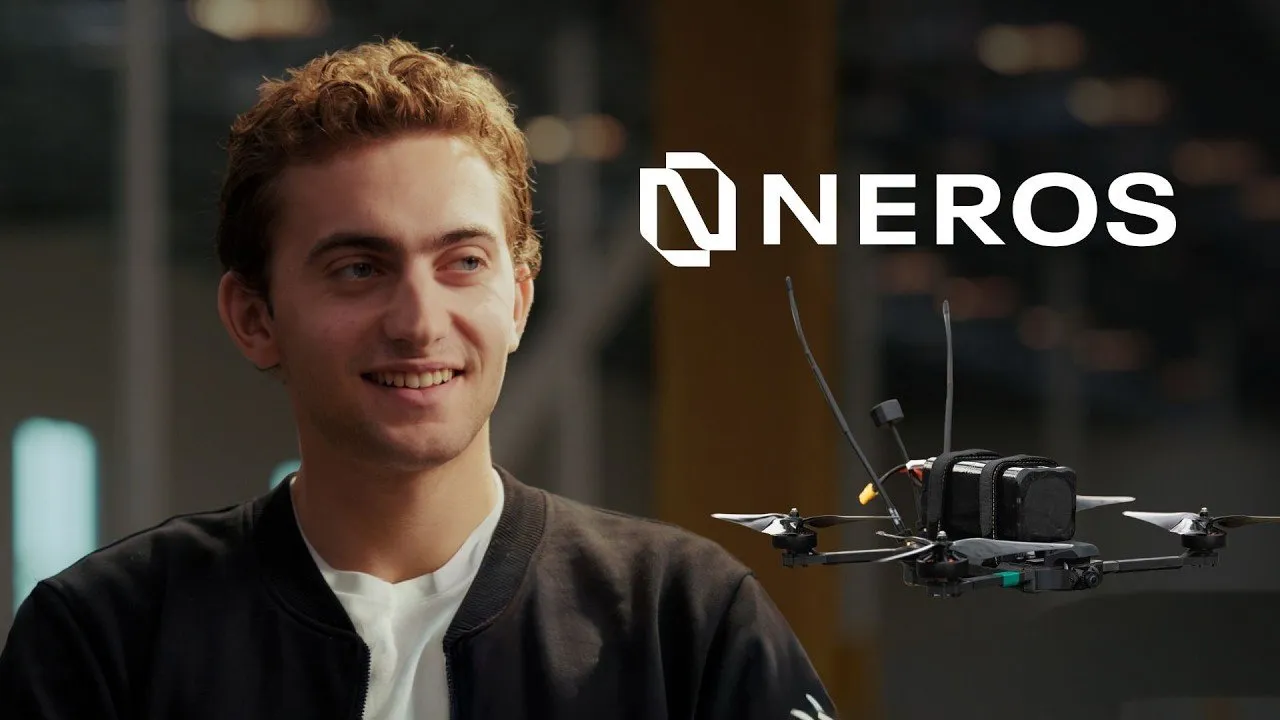
The landscape of modern warfare has shifted irrevocably toward small, unmanned aerial systems. While global powers once relied exclusively on multi-million dollar platforms, the conflict in Ukraine has proven that low-cost, high-performance First-Person View (FPV) drones can effectively challenge traditional military hardware. At the forefront of this industrial revolution is Neros, a company transitioning from a garage-based startup to a manufacturing powerhouse capable of producing one million drones annually. By prioritizing vertical integration and aggressive production ramp-ups, Neros aims to establish the sovereign supply chain necessary for credible national deterrence.
Key Takeaways
- Sovereign Supply Chain: Neros is scaling to a 250,000-square-foot facility to bypass reliance on Chinese components and build a truly resilient American drone industrial base.
- Battlefield-Proven Performance: Through constant real-world testing in Ukraine and against U.S. military jammers, the company has proven that high-precision FPV drones can defeat expensive electronic warfare systems.
- The "Manufacturing First" Philosophy: Success in defense tech is not just about software; it requires mastering the "production hell" of component manufacturing, rigorous assembly, and iterative hardware design.
- Human-in-the-Loop Autonomy: While AI is a buzzword, Neros emphasizes that maintaining manual precision and human decision-making remains the most effective strategy for dynamic, camouflaged battlefield environments.
The Shift from Garage Prototype to Mass Production
Scaling a defense startup is not simply about having a good product; it is about building the infrastructure to deliver that product at volume. Neros has evolved from a small team in a garage to a 125-person organization operating in a massive new headquarters. The goal is to create a blueprint for American manufacturing that mirrors the efficiency of high-rate consumer electronics.
Building the Blueprint
The company views SpaceX’s Starlink terminal factory as the gold standard for modern U.S. manufacturing. By focusing on vertical integration—owning the design, assembly, and testing of core components—Neros eliminates the bottlenecks of long lead times and low-quality parts that plague typical defense contractors. As CEO Saurin Monroe-Anderson notes, the challenge is not just the empty facility, but the systematic build-out of automated assembly and testing lines that function at scale.
"An empty building doesn't equal a million drones per year... we've bought ourselves a canvas to do the thing."
Defeating Electronic Warfare Through Innovation
A recurring theme in the Neros trajectory is the capability gap between current counter-UAS (Unmanned Aerial Systems) technology and the threat posed by modern drones. In testing scenarios, Neros drones have consistently outperformed expensive, multi-layered jamming systems designed to protect ground forces.
The "Smucker’s Jam" Lesson
In one notable test, the Neros team flew their drones directly over five active U.S. military jammers, hovering for 10 minutes to prove the resilience of their control links. To make their point, they strapped a jar of strawberry jam to the drone. When the soldiers finally identified the payload at close range, the message was clear: the expensive jamming equipment had been defeated by a low-cost, high-performance system.
"The jammer has been defeated by the jam. In a real world scenario, we would just have come in and hit the target."
The Critical Need for an Allied Industrial Base
A primary mandate for Neros is moving beyond the reliance on foreign supply chains. The current geopolitical reality suggests that America cannot afford to be dependent on adversarial regions for critical components like microchips, magnets, or raw minerals. Building a domestic supply chain is a multi-layered, difficult, and essential task.
Collaborating for Resilience
While full domestic sourcing for every single screw and microchip is an immense challenge, the focus for Neros is on creating an allied supply chain. This involves fostering partnerships across the U.S. and among international allies to ensure that the production capacity of democratic nations remains competitive with countries like China and Russia. By unblocking their own supply chain, Neros hopes to eventually supply other OEMs, turning their manufacturing success into a rising tide that lifts the entire defense industrial base.
Navigating the Future of Warfare
As the conflict in Ukraine matures, the role of drones has moved toward longer distances and more difficult, camouflaged targets. Neros rejects the trend of rushing to integrate AI into every facet of the drone. Instead, they believe in the superiority of the human operator when given tools that offer "inch-level" precision at extreme distances.
Human-Centric Autonomy
The future of Neros involves developing systems that make an operator more efficient—allowing a single user to control multiple drones or providing "click-to-target" capability for simpler missions. However, they remain staunchly committed to the idea that the human warfighter is the ultimate decision-maker. Automating away the operator's judgment in a dynamic, high-stakes environment risks failure where human intuition would otherwise succeed.
"There isn't really anything else especially in the cost category where you can be sitting 20 30 kilometers away and precisely navigating."
Conclusion
Neros represents a new breed of American defense company—one that measures success by battlefield impact and production throughput rather than stock price optimization. By focusing on building the physical capability to produce one million drones a year, they are attempting to solve the existential threat of a degraded drone industrial base. As the global environment becomes increasingly contested, the ability to rapidly manufacture and deploy resilient, high-performance systems will not just be a competitive advantage; it will be the defining factor of national security for decades to come.
![Bitcoin Is on Sale [How to Buy It in 2026]](/content/images/size/w1304/format/webp/2026/03/how-to-buy-bitcoin-2026.jpg)