Table of Contents
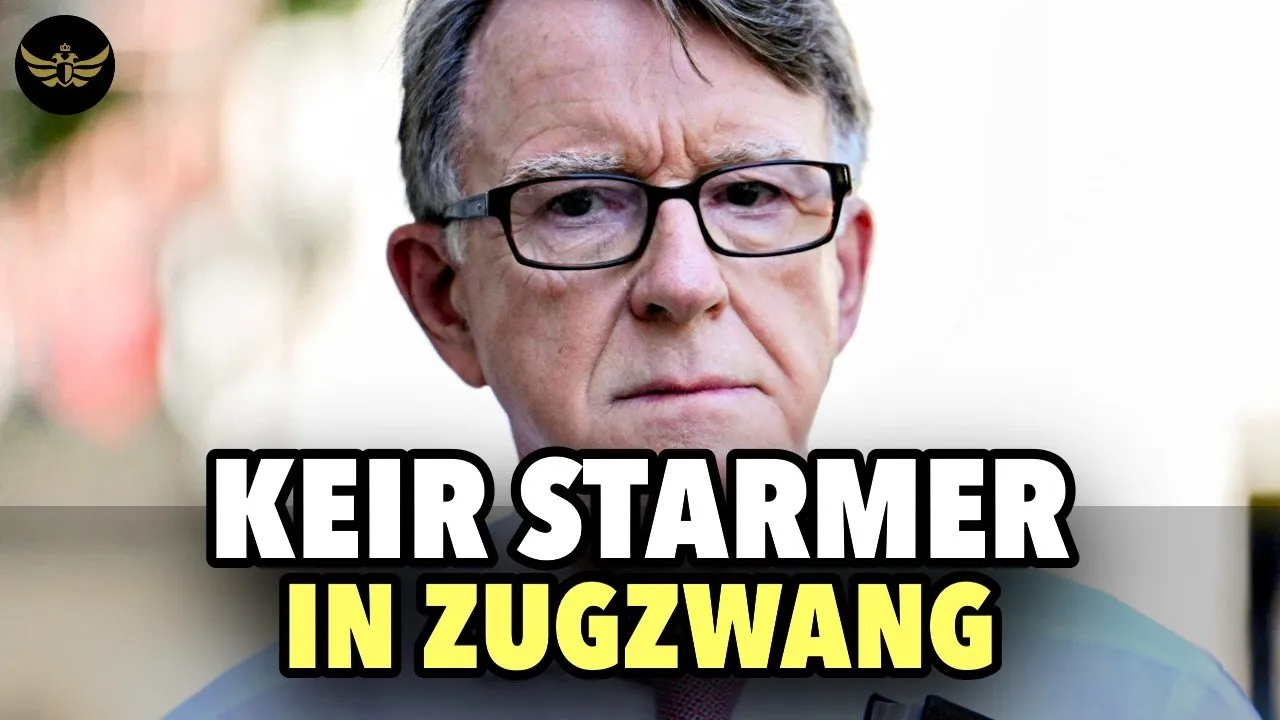
The British political establishment has been rocked by the arrest of Lord Peter Mandelson on suspicion of misconduct in public office. As one of the primary architects of the "New Labour" movement and a pivotal figure in Prime Minister Keir Starmer’s ascent to power, Mandelson’s legal troubles represent more than a personal scandal; they signal a potential crisis for the current government. The investigation, which involves allegations of unauthorized communication of confidential government documents and a $75,000 payment linked to the late Jeffrey Epstein, has sent ripples through Westminster, leaving the Prime Minister in an increasingly untenable position.
Key Takeaways
- High-Stakes Arrest: Peter Mandelson has been arrested on suspicion of misconduct in public office regarding his alleged dealings with Jeffrey Epstein.
- Political Zugzwang: Keir Starmer is facing a "zugzwang" — a chess term where every possible move weakens his position due to his close ties to Mandelson.
- Establishment Ties: The investigation highlights the deep connections between the "Epstein class" and high-ranking British officials, including Prince Andrew.
- Diversionary Tactics: Analysts suggest the government’s hardline stance on Russia and Ukraine serves as a primary tool to maintain political coherence amidst domestic scandals.
The Legal Case Against Peter Mandelson
The arrest of Peter Mandelson centers on allegations of misconduct in public office, a serious common law offense in the United Kingdom. Specifically, the investigation explores whether Mandelson provided confidential or classified government information to Jeffrey Epstein. While Mandelson has publicly disputed these claims, stating he has no recollection of receiving payments from Epstein, investigators are scrutinizing email exchanges regarding a $75,000 transaction.
Mandelson vs. Prince Andrew
While Prince Andrew was also recently questioned and detained, legal observers note that the case against Mandelson may be structurally stronger. As a former cabinet minister and a member of the Privy Council, Mandelson was bound by a strict oath of secrecy. Unlike Prince Andrew, whose role as a trade representative was largely decorative and unpaid, Mandelson held substantial executive power. Critics argue that the disclosure of government business by a cabinet minister constitutes a direct violation of the public trust and the Privy Council oath.
The Bribery Allegations
Beyond the mishandling of documents, the investigation touches on potential financial impropriety. The reported $75,000 payment is at the heart of the suspicion. In the context of misconduct in public office, the receipt of funds from a foreign national like Epstein while serving in a government capacity creates a significant legal vulnerability. The focus has now shifted to why Mandelson was not detained sooner, especially given his central role in recommending Prince Andrew for his trade envoy position.
Starmer’s Political Paradox
For Prime Minister Keir Starmer, the timing of this arrest could not be worse. Mandelson was not merely an advisor; he was a mentor and a key figure in the team that secured Starmer’s leadership. The appointment of Mandelson as the British Ambassador to Washington was seen as a sign of his enduring influence within the party. Now, that relationship has become a liability.
"Whatever move he makes now, it makes his position worse."
This situation is described as a zugzwang. If Starmer defends Mandelson, he risks being seen as protective of the "Epstein class" and the establishment elite. If he distances himself too aggressively, he risks alienating the power brokers within his own party who still remain loyal to the Mandelson legacy. Furthermore, the arrest undermines Starmer’s frequent assertion that "no one is above the law," as the public questions why it took so long for the authorities to act against such a high-profile figure.
Electoral Instability and the Manchester By-Election
The legal drama unfolding around Mandelson coincides with a period of intense electoral pressure. Labour is facing a critical by-election in Manchester, a former stronghold that is now considered at risk. Predictions suggest a potential loss to either the Green Party or Reform UK, which would be interpreted as a massive vote of no confidence in Starmer’s leadership.
This "perfect storm" of legal scandal and electoral decline has left the government paralyzed. Ministers are reportedly increasingly independent of the Prime Minister’s authority, sensing his weakened position. Without a clear successor lined up, the Labour Party remains in a state of stasis, unable to push through controversial legislation or command a unified front in Parliament.
The Geopolitical Shield: Russia as a Distraction
Some political analysts argue that the government’s intense focus on the conflict in Ukraine serves a domestic purpose. In this view, hostility toward Russia is the "glue" that holds a disintegrating political class together. By framing the geopolitical landscape as a struggle against a "monstrous dictatorship" in the East, the establishment can shift public attention away from domestic failures and internal scandals.
The "Epstein Class" Theory
The term "Epstein class," recently popularized in political discourse, refers to a globalist elite whose interests often transcend national borders. The theory suggests that maintaining a state of perpetual external conflict helps protect this class from scrutiny. Notably, documents have surfaced indicating that Jeffrey Epstein himself viewed the post-2014 landscape in Ukraine as a land of "many opportunities" for investment and influence.
Public Perception and Fear
The constant narrative of a Russian threat serves to keep the British public in a state of apprehension. While this strategy has been successful in the past, its effectiveness may be waning as the reality of domestic economic struggles and high-level corruption becomes harder to ignore. Critics suggest that the government’s only remaining point of consensus is its support for the Zelenskyy administration, as they have failed to find common ground on almost any other policy issue.
Conclusion
The arrest of Peter Mandelson marks a turning point in contemporary British politics. It challenges the integrity of the Labour leadership and exposes the deep-seated connections between the political establishment and controversial global figures. As the investigation proceeds toward potential charges and a public trial, the pressure on Keir Starmer will only intensify. Whether the government can weather this storm or if it will lead to a broader collapse of authority remains to be seen. For now, the "Epstein class" finds itself under a level of scrutiny that no amount of geopolitical posturing can fully obscure.