Table of Contents
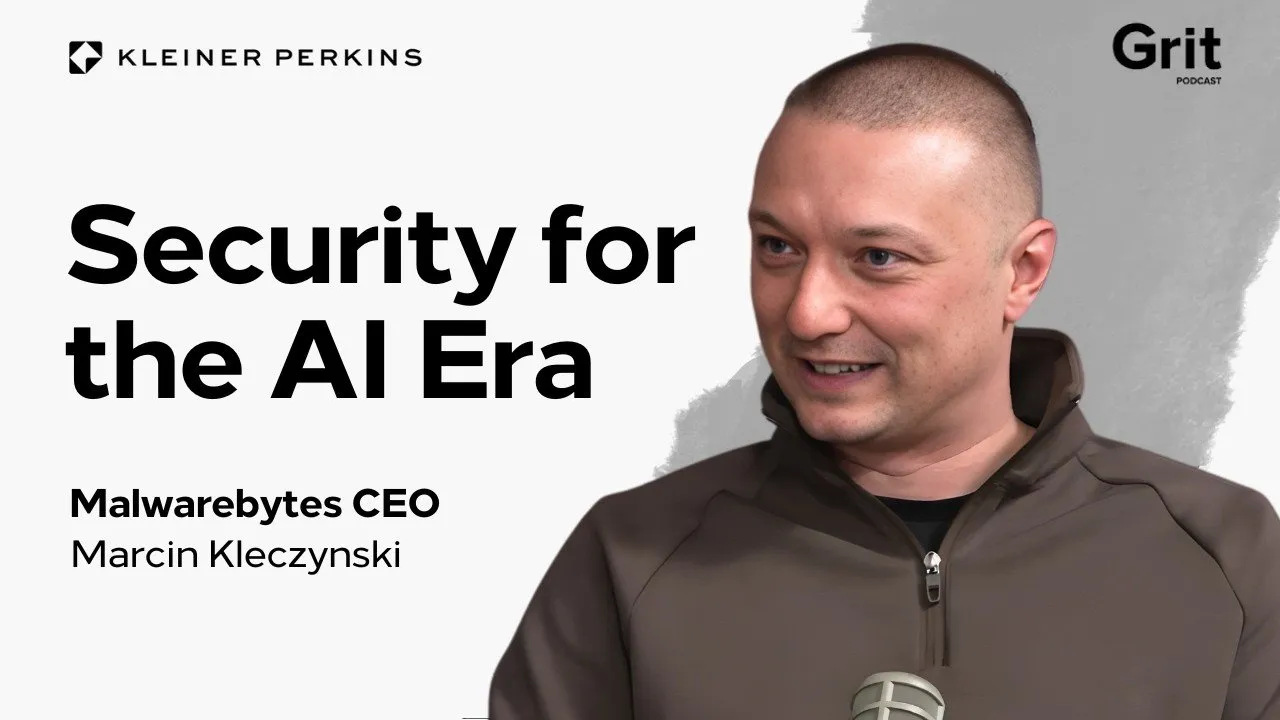
Building a multi-billion dollar company is rarely a straight line, but for Marcin Kleczynski, the journey started with a broken family computer and a purple gorilla. As the founder and CEO of Malwarebytes, Kleczynski has spent eighteen years—half of his life—navigating the shifting tides of the cybersecurity industry. From a teenage "hacker" working with strangers on internet forums to a seasoned executive managing a massive organizational split, his story offers a masterclass in longevity, strategic pivots, and the raw grit required to stay at the helm for two decades. In a landscape now dominated by AI-driven threats and autonomous scams, his approach to leadership and product evolution remains anchored in a simple, foundational mission: keeping people safe online.
Key Takeaways
- Strategic Market Fragmentation: Recognizing that B2B and consumer markets require entirely different management styles, brands, and product roadmaps is critical for scaling beyond initial success.
- The Pedigree Paradox: High-profile LinkedIn backgrounds do not always correlate with performance; "will" often outweighs "skill" in high-stakes environments.
- AI as a Double-Edged Sword: While AI accelerates software development, it also enables cybercriminals to launch highly sophisticated, autonomous attacks that bypass traditional security filters.
- Bootstrapped Longevity: Building a profitable business from day one allows for secondary funding rounds that prioritize founder and investor liquidity over balance sheet padding.
The 18-Year Marathon: From Teenage Hacker to Global CEO
Most tech founders aim for a quick exit within five to seven years. Marcin Kleczynski has been running Malwarebytes since he was 14. The company’s origins were born out of necessity when Kleczynski accidentally infected his family's white Dell desktop with spyware while trying to download pirated games. After seeking help on obscure internet forums, he collaborated with a volunteer in Belgium—whom he still hasn't met in person—to build a tool that could catch what traditional antivirus software missed.
Profitability from the Start
Unlike many Silicon Valley startups that rely on endless venture capital burn, Malwarebytes was profitable from its earliest days as "donation-ware." This financial independence allowed the company to grow on its own terms. When they finally did take institutional capital, it wasn't to keep the lights on. Instead, they used secondary rounds to professionalize the business and provide liquidity to early stakeholders.
"We were a highly profitable consumer business... each of those [funding rounds] were circumstantial. I had founders that wanted to exit the business."
This path allowed Kleczynski to maintain control and stay focused on the product rather than the next pitch deck. By the time he graduated from the University of Illinois with a computer science degree, he was already leading a company that had made its first million dollars before he even shook hands with his co-founders.
Decoupling Growth: The Strategic Split of B2B and Consumer
One of the most difficult challenges Kleczynski faced was realizing that a single brand could no longer serve two masters. For years, Malwarebytes thrived because employees would sneak the consumer product into their offices to fix work computers. However, as the enterprise market matured, the needs of IT security professionals diverged sharply from those of the average home user.
The Birth of ThreatDown
Kleczynski candidly admits that trying to manage two different business models under one management team was a mistake. Consumers care about privacy and identity protection, while businesses require managed services and complex channel sales. To address this, Malwarebytes recently split into two distinct units: the original brand focused on individuals, and ThreatDown, a new brand dedicated to B2B security.
This restructuring involved more than just a name change. It required separate financial reporting, distinct leadership teams, and a legal separation facilitated by private equity partners. By creating autonomous units, Kleczynski was able to reignite growth in both sectors, proving that sometimes you have to break a company apart to help it grow.
The Talent Trap: Rethinking Pedigree and Hiring
After hiring over 800 people, Kleczynski has developed a skeptical view of traditional resumes. He notes that some of his best performers were candidates who looked underwhelming on paper, while those with "flashy" company backgrounds often struggled to adapt to the reality of a scaling business. He argues that arriving at a company after it is already successful is a very different skill set than building that success from scratch.
"I found the people that have the greatest backgrounds on LinkedIn often perform the worst."
Refining the Interview Process
To combat hiring inconsistencies, Kleczynski implemented a hiring committee system. Instead of different groups interviewing different candidates, the same committee evaluates every person for a specific role to ensure a level playing field. He also utilizes a specific strategy for reference checks, asking what the new hire will need in their first 90 days to be successful. This often reveals the "truth" about a candidate's weaknesses in a way that standard "is this person good?" questions never do.
The Value of Internal Community
Malwarebytes still employs many of the original volunteers from the internet forums where the company began. Kleczynski makes a point to celebrate every employee's anniversary at monthly all-hands meetings, reinforcing a culture of loyalty. This connection to the "old-timers" provides him with a direct feedback loop that bypasses corporate hierarchy, allowing him to stay grounded in the actual work being done on the front lines of threat research.
The AI Frontier: Protecting Millions from Autonomous Scams
The rise of generative AI has fundamentally altered the cybersecurity landscape. While Kleczynski's engineering team uses AI to write code faster and analyze threats more efficiently, he is acutely aware that attackers are using the same tools to devastating effect. The "Nigerian Prince" emails of the past, characterized by poor grammar, are being replaced by perfectly crafted, personalized phishing attacks generated by LLMs.
The Skepticism of the AI Wave
Despite the hype, Kleczynski remains a pragmatist. He expresses skepticism toward the current "bubble" of AI-native security startups raising massive rounds without proven scale. He argues that many of these companies are applying a single "hammer" (AI) to every problem, regardless of whether it's the right tool for the job.
"If you're an AI company now doing the same stuff other AI companies are doing, are you really going to be able to raise money?"
For Malwarebytes, the focus is on practical application: using AI to automate the detection of autonomous attacks that can scan networks and deliver payloads without human intervention. The goal is to stay one step ahead of "cockroach" criminals who are constantly finding new ways to exploit human trust through AI-enabled social engineering.
Maintaining Grit: How to Lead for Two Decades
Staying motivated for 18 years in a high-stress industry requires a deliberate approach to mental health and routine. Kleczynski has moved away from the "all-nighter" culture of his youth, recognizing that three hours of sleep and a fresh perspective are often more productive than twenty hours of brute-force coding. He finds solace in activities with clear checklists and little chaos, such as flying planes and following recipes in the kitchen.
When asked about "grit," Kleczynski defines it not as a lack of fear, but as the willingness to continue after failure. He acknowledges that his identity is inextricably linked to the business, and while he occasionally faces "professional boredom," the intellectual challenge of re-architecting the company for the AI era keeps him engaged.
"Grit is just getting kicked in the teeth over and over and over again and considering it fun maybe."
Conclusion
Marcin Kleczynski’s journey with Malwarebytes illustrates that the most successful companies are often those built on a foundation of genuine problem-solving rather than speculative hype. By transitioning from a bootstrapped startup to a bifurcated enterprise and consumer powerhouse, Malwarebytes has survived where many of its contemporaries failed. As the industry moves into an era of autonomous threats, Kleczynski’s focus on "will," strategic clarity, and a servant-leader mindset provides a robust blueprint for founders looking to build for the long haul. In the world of cybersecurity, the technology may change, but the grit required to protect the world remains a constant.