Table of Contents
Small businesses are the backbone of the American economy, yet many entrepreneurs find themselves navigating a financial landscape that is often opaque, predatory, and disconnected from the realities of running a company. While technology has accelerated the pace of lending, it has also introduced new complexities that can threaten the survival of the very businesses it is supposed to support. As policymakers and industry leaders search for solutions, a movement is building to demand transparency, fairness, and structural reform in small business lending.
Key Takeaways
- The Transparency Gap: Small business owners often lack the clear, standardized disclosures—such as Annual Percentage Rate (APR)—that are standard in consumer lending, leaving them vulnerable to predatory products.
- The Hidden Cost of Innovation: While FinTech can increase access to capital, it sometimes facilitates "extractive" practices, such as merchant cash advances with hidden liens, that can drain a company’s cash flow.
- Systemic Barriers: Entrepreneurs, particularly women and minority business owners, frequently face both institutional bias and a lack of understanding regarding their industries, which makes accessing traditional bank capital difficult.
- A Call for Reform: Advocacy groups are pushing for a federal Small Business Borrowers Bill of Rights and the implementation of 1071 data collection to track lending trends and ensure equitable access.
The Reality of Small Business Financing
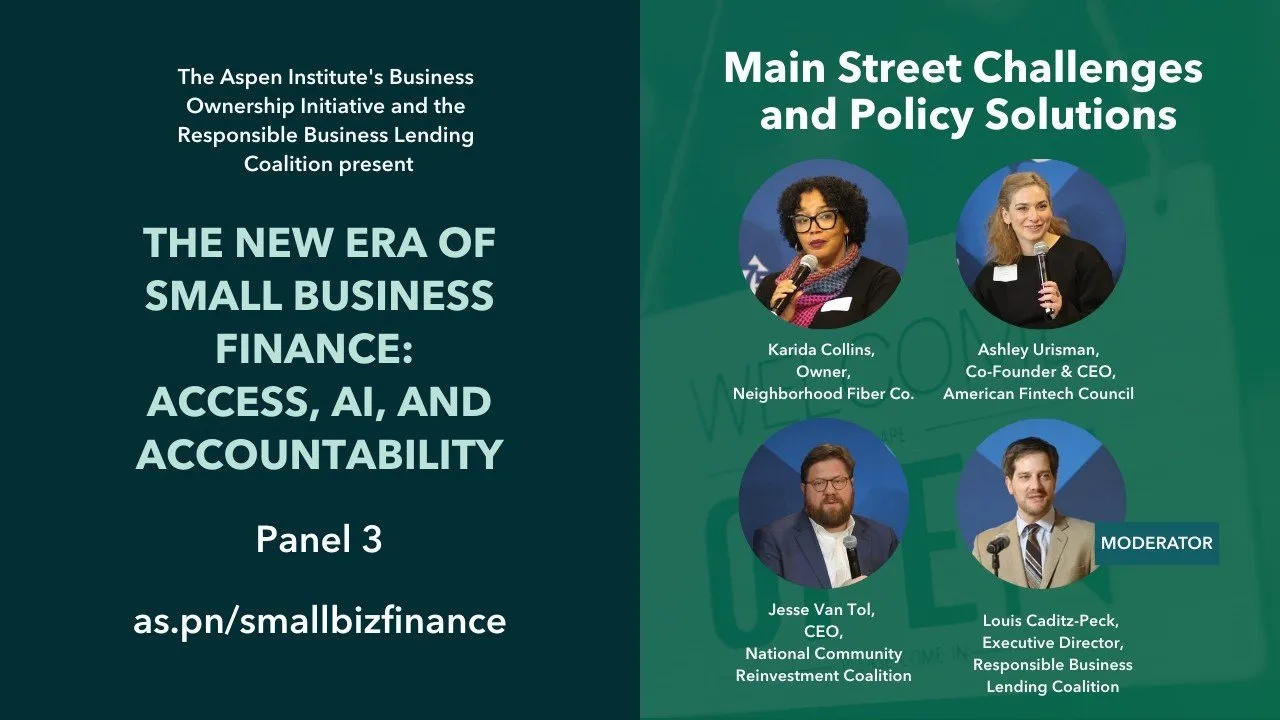
For many entrepreneurs, the path to capital is fraught with obstacles. As Karida Collins, owner of Neighborhood Fiber Company, noted, the experience of a small business owner is often one of constant "pivoting" and resilience. Despite the rise of digital lending platforms, securing affordable, sustainable capital remains a primary struggle.
Too often, small businesses are funneled into high-cost financing products without adequate disclosure. This lack of information—or "data asymmetry"—prevents owners from making informed decisions, leading to situations where they may be paying effective interest rates as high as 60% without realizing the true cost of their debt until it is too late.
The right kind of financing can be a lifesaver, but the wrong kind of practices can be a death sentence for small businesses.
The Perils of Opaque Lending
The danger of unregulated or poorly disclosed lending is not just a theoretical concern; it is a lived experience for thousands of business owners. When a borrower does not have access to simple, standardized cost comparisons, they may inadvertently agree to terms that place liens on their future revenue. This can create a cascading crisis, where payments are automatically withdrawn regardless of the business’s current financial health.
When Technology Becomes a Barrier
FinTech innovations have made applying for loans easier, but they have also created friction points that are difficult for the average business owner to navigate. When disputes arise—such as a misplaced lien or a frozen payout—entrepreneurs are often left dealing with automated systems or "chat bots" rather than human representatives who can resolve systemic errors. As seen in recent cases, some business owners only find relief after taking their grievances to social media, a path that is neither scalable nor sustainable for the average small business.
Bridging the Access Gap
Access to capital is not just about the availability of funds; it is about the availability of responsible capital. While traditional banks remain a vital source of funding, they are often inaccessible to small, creative, or non-traditional businesses. This leaves many owners with two choices: rely on personal credit cards and family loans, or turn to high-interest, alternative lenders.
Addressing Bias and Recognition
Institutional bias remains a significant hurdle. Many financial institutions fail to take certain industries seriously, categorizing thriving, revenue-generating businesses as mere "hobbies." This disregard for the legitimacy of diverse business models further limits the pool of available capital, pushing entrepreneurs toward predatory products that exploit their need for liquidity.
Policy Solutions and the Path Forward
The consensus among advocates is clear: the current market requires federal intervention to protect borrowers. The movement for a Small Business Borrowers Bill of Rights seeks to establish basic, non-negotiable standards, including transparent pricing and responsible underwriting.
Standardizing Disclosure
Policy experts argue that the Truth in Lending Act (TILA) should be expanded to cover small business loans. Mandating APR disclosures would allow business owners to compare products on an "apples-to-apples" basis, stripping away the complexity currently used to hide the true costs of borrowing. These measures have already seen success in states like New York and California, demonstrating that transparency does not stifle economic activity—it strengthens it.
The Role of Data
Data collection, specifically through the 1071 rule, is essential to understanding who is receiving loans and under what terms. By gathering this information, regulators can identify patterns of discrimination and ensure that financial institutions are serving all segments of the community, rather than targeting specific demographics for predatory, high-cost debt.
Conclusion
Improving the small business financing ecosystem is a complex task, but it is one that demands urgent attention. The current environment, while innovative, remains a source of significant instability for the nation’s entrepreneurs. By prioritizing transparency, implementing standardized disclosure requirements, and protecting against predatory practices, policymakers can help ensure that small businesses are empowered to grow rather than being stifled by debt. The goal is to build a financial system that works for every business owner, recognizing that their success is the primary driver of community and economic prosperity.