Table of Contents
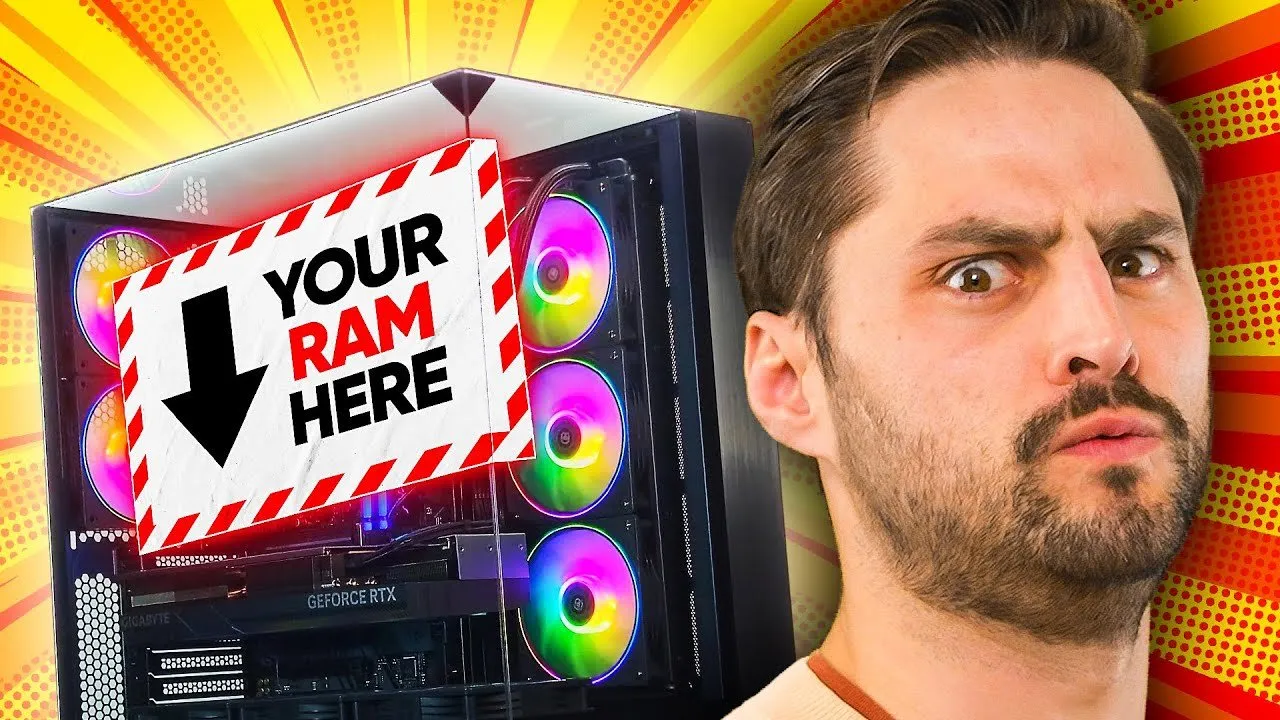
Main Gear has launched a "bring your own RAM" program that allows customers to purchase fully built gaming PCs without memory installed, addressing the ongoing DDR5 shortage and high pricing issues. The custom PC company tests complete systems before shipping them with empty memory slots, letting buyers install their own RAM modules.
Key Points
- Main Gear offers complete gaming PCs without pre-installed RAM due to DDR5 pricing and availability issues
- Samsung faces industrial espionage charges involving 10 former employees allegedly leaking DRAM technology to Chinese competitor CXMT
- Nvidia structured a $20 billion deal to acquire Grok's talent and AI inference chip technology without formally purchasing the company
- ASUS confirmed it will not build DRAM fabrication facilities, choosing instead to work with existing suppliers
- US company HGP Intelligent Energy proposes repurposing retired Navy nuclear reactors to power AI data centers
Memory Market Crisis Drives Innovation
The custom PC market continues adapting to persistent DDR5 memory shortages and inflated pricing. Main Gear's approach addresses customer frustration with forced markups by allowing buyers to source their own memory modules or upgrade using existing DDR5 sticks from previous systems.
The memory shortage has reached such severity that some Russian enthusiasts have reportedly begun manufacturing DIY DDR5 modules by soldering memory chips onto blank PCBs. While these homemade solutions lack warranties and optimal performance, they demonstrate the market's desperation for affordable memory options.
Meanwhile, ASUS definitively ruled out plans to construct its own DRAM fabrication facilities. The company told Taiwanese media outlet CNA it would instead focus on working with existing suppliers and adjusting product configurations rather than investing in the multi-year, capital-intensive process of building new fabs.
Samsung Faces Espionage Allegations
South Korean prosecutors have indicted 10 former Samsung employees for allegedly leaking critical DRAM technology to Chinese memory manufacturer CXMT. The case includes accusations that one engineer smuggled handwritten notes containing trade secrets to competitors in China.
Prosecutors claim the leaked information enabled CXMT to mass-produce 10-nanometer class DRAM, potentially costing Samsung and South Korea tens of trillions of won in lost revenue and economic damage. The semiconductor giant also faces internal investigations regarding allegations that staff members accepted kickbacks to influence memory chip order allocations, leading to personnel reshuffling in Taiwan operations.
Nvidia's Strategic Talent Acquisition
Nvidia structured a $20 billion arrangement with AI hardware company Grok that brings key personnel, including founder and president Jonathan Ross, to Nvidia while keeping Grok as an independent entity. The deal provides Nvidia access to cutting-edge AI inference chip technology and engineering talent without triggering a formal acquisition.
Industry analysts describe the arrangement as either a "surgical masterclass" in strategic talent acquisition or a mechanism to maintain competitive appearances while avoiding regulatory scrutiny. The structure resembles previous tech industry deals that transfer key assets and personnel without complete corporate consolidation.
Power Solutions for AI Infrastructure
The exponential growth in AI data center power requirements has prompted HGP Intelligent Energy to propose repurposing retired Navy nuclear reactors from submarines and aircraft carriers. The initiative could deliver approximately 450 to 520 megawatts of continuous electricity, sufficient to power roughly 360,000 homes, pending Department of Energy approval.
Data center operators are simultaneously exploring fossil-fuel peaker power plants to manage increasing electrical loads as traditional grid capacity struggles to meet AI computing demands. These developments highlight the infrastructure challenges facing the rapidly expanding artificial intelligence sector.
The convergence of memory shortages, geopolitical tensions in semiconductor supply chains, and massive power requirements for AI systems continues reshaping the technology landscape, forcing companies to adopt increasingly creative solutions to maintain competitive positions.