
Table of Contents
We often discuss the concept of the "10x engineer"—the rare technical talent who can outperform ten average peers. However, the industry rarely discusses the "10x growth advisor." The dynamic, however, is strikingly similar. In fact, the right growth advisor can have an even more profound, immediate effect on a business because they possess a specific form of pattern recognition that others lack.
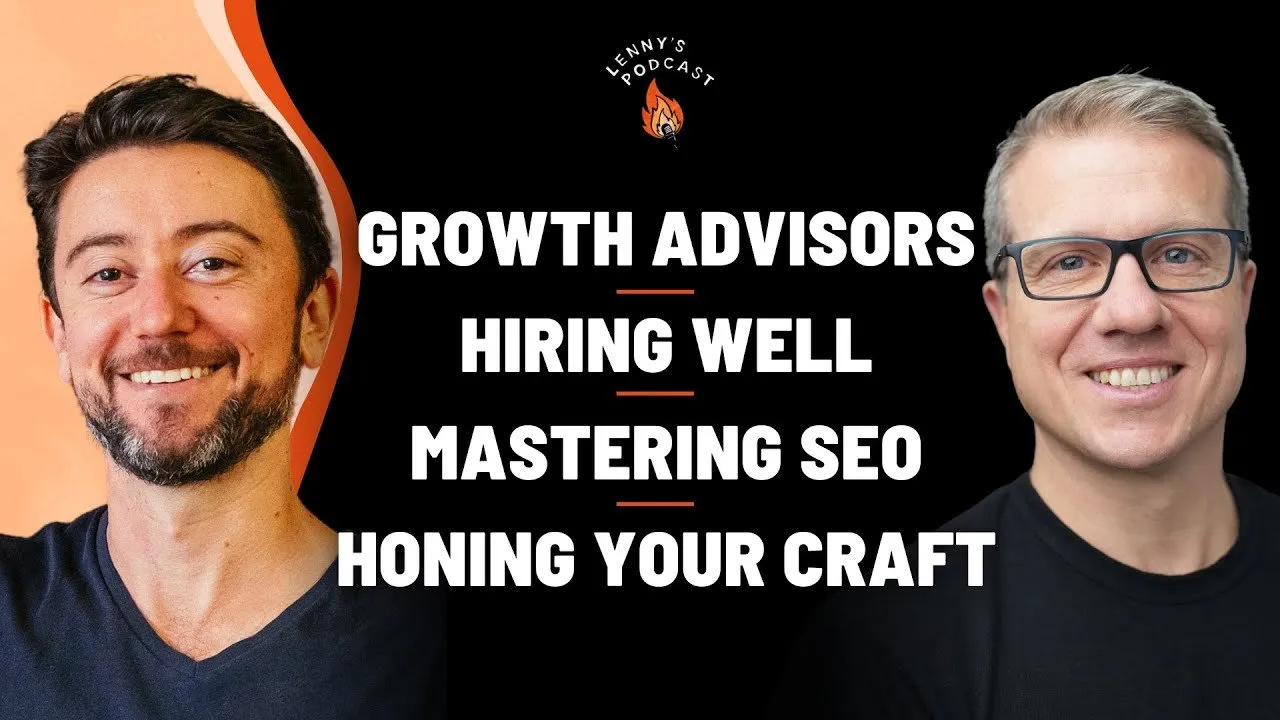
In this deep dive, Luc Levesque—Chief Growth Officer at Shopify and former executive at Meta and TripAdvisor—shares his playbook on hiring, the evolving landscape of SEO, and the high-performance habits required to lead at the top level. From being personally recruited by Mark Zuckerberg to building growth engines for Pinterest and Patreon, Levesque’s experience offers a masterclass in driving impact.
Key Takeaways
- Prioritize Impact Over Activity: The best cultures focus exclusively on outcomes rather than hours worked or tasks completed.
- Wait for Product-Market Fit: engaging a growth advisor or aggressively scaling before you have retention is counterproductive and burns capital.
- Structure Advising for Alignment: Use equity with vesting cliffs to align incentives; if the relationship doesn't add value in three months, both parties should walk away.
- Prepare for the AI SEO Shift: With the rise of LLMs and generative search, "informational" queries are at risk. Strategy must shift from optimizing for clicks to teaching AI models about your brand.
- Implement "Guild Nights": Building a network of peers through small, curated dinners is one of the highest-ROI networking activities a leader can undertake.
The "Impact-First" Hiring Blueprint
As leaders scale, their primary function shifts from doing the work to hiring the people who do the work. Levesque suggests that eventually, hiring becomes the single most important skill a leader must master. Through his experience at Meta and Shopify, he has developed a specific lens for identifying top-tier talent.
Seeking Signs of Excellence
The best predictor of future performance is past performance. When interviewing, look for "signs of excellence"—distinct markers that show a candidate has achieved something extraordinary. This doesn't strictly have to be work-related; it could be an Olympic medal, a successful side business, or a unique award.
These signals suggest that the individual possesses the grit and drive required to be in the top 1% of their field. Without these clear indicators of past excellence, it is statistically unlikely a candidate will suddenly become a star performer in a new role.
The "Boss Poach" Signal
One specific signal stands out above the rest during the vetting process. Levesque notes that the strongest endorsement a candidate can have is when a former manager leaves a company and subsequently attempts to hire that candidate again.
This "boss poach" dynamic is powerful. A former manager has perfect information regarding the employee's performance. By trying to hire them again, often putting their own reputation on the line at a new company, they are signaling that this person is indispensable.
Relentless Recruiting
Levesque recalls his own experience being recruited by Mark Zuckerberg for Facebook. At the time, Levesque was living in Canada and had strong personal reasons for not moving to California. The recruitment process took seven months.
The takeaway for founders is that "no" doesn't necessarily mean "no"—it often means the timing isn't right yet. Great recruiting requires involving the entire executive team and even the candidate's family to bridge the gap between an offer and an acceptance. Momentum is everything; never let the conversation die.
Structuring High-Impact Growth Advisorships
Finding a growth advisor is difficult because the best practitioners are often busy operating. However, the return on investment for the right advisor can be astronomical. A single conversation can unlock a channel that changes a company's trajectory.
It's one of those weird disciplines where the right person at the right time can literally say a sentence that changes the trajectory of your company.
When to Hire a Growth Advisor
Founders often seek growth advice too early. Until a product has Product-Market Fit (PMF)—evidenced by strong retention or organic loops—pouring gasoline on the fire is dangerous. Accelerating growth on a product that doesn't retain users creates a "leaky bucket" dynamic where you burn through your total addressable market with a subpar experience.
Ideally, you bring on an advisor once retention is stable and you are ready to identify and optimize specific channels.
Incentive Alignment and Vesting
The relationship between a startup and an advisor should be a partnership. Levesque advocates for equity-based compensation to align incentives toward long-term outcomes rather than hourly consulting fees. However, the structure matters:
- The 3-Month Cliff: Structure the agreement with a cliff. If the advisor hasn't demonstrated value in the first 90 days, or if the chemistry isn't right, the contract should end with no equity granted. This de-risks the engagement for the founder.
- Front-Loaded Value: A good advisor should transfer knowledge quickly, training the internal team to operate without them. Vesting schedules should reflect this, rewarding early impact.
- Long Expiration Windows: Since startups take years to exit, advisors paid in options need a long exercise window (e.g., 10 years) to ensure they actually see the upside of their contribution.
The Evolution of SEO: From Keywords to AI
Search Engine Optimization (SEO) has long been a primary growth lever for tech giants. However, the strategy for SEO is bifurcated based on the type of product you are building.
Two Types of SEO Strategies
Levesque categorizes SEO opportunities into two buckets:
- Content-Led (Small Page Count): These are SaaS or e-commerce sites with a limited number of core pages. Growth here relies on a deliberate editorial strategy—creating high-quality blog posts and guides to capture specific intent.
- Product-Led (Programmatic/UGC): These are marketplaces like TripAdvisor, Pinterest, or LinkedIn. In this model, users generate the content (profiles, reviews, pins), which automatically creates new landing pages. This creates a powerful flywheel where user activity generates SEO inventory, which in turn attracts new users.
The Threat of Generative Search
The introduction of AI into search—via ChatGPT and Google's Search Generative Experience (SGE)—represents the most significant shift in search history. The traditional model of "ten blue links" is being replaced by direct answers.
This shift puts "informational queries" at the highest risk. If a user asks Google a question and the AI answers it directly in the interface, the click-through rate to external websites may drop to near zero. Growth leaders must prepare for a future where traffic for basic questions evaporates, and value shifts to transactional intent or deep, proprietary data that LLMs cannot easily replicate.
High-Performance Leadership Habits
Sustaining a career at the executive level requires more than just technical skill; it requires a rigorous operating system for personal management. Levesque employs a "bootloader" routine—a set of morning protocols designed to prime the brain for decision-making.
The Morning "Bootloader"
Levesque starts his day at 5:00 AM with a routine that includes cardio (based on the principles in the book Spark), a cold plunge, and meditation. This physical priming is followed by an hour of structured self-reflection.
Using a personal dashboard, he tracks metrics across different areas of his life—friend, husband, father, and leader. This color-coded system (Red/Yellow/Green) forces an honest assessment of where he is failing and requires immediate course correction. This prevents "drift" in personal and professional standards.
Guild Nights: Networking at Home
One of the most effective tactical habits Levesque shares is the concept of "Guild Nights." These are small, catered dinners (6-8 people) hosted at his home, centering on a specific theme like "Consumer Product," "SEO," or "AI."
The logic is simple: interesting people want to meet other interesting people. By curating the guest list and hosting it in a personal setting, you create a depth of connection that isn't possible at conferences or coffee meetings. It serves as a recruiting pipeline, a learning mechanism, and a way to build genuine friendships with peers.
Conclusion
Whether it is optimizing a landing page or optimizing a morning routine, the common thread in Luc Levesque’s approach is a relentless focus on impact. In a world of infinite distractions and tasks, the "10x" growth leader is the one who can ruthlessly prioritize the few actions—be it a hiring decision, an SEO pivot, or an advisory relationship—that actually move the needle.
As the landscape of growth shifts with the advent of AI, this ability to discern high-impact work from "busy work" will become the defining characteristic of successful companies.



)