Table of Contents
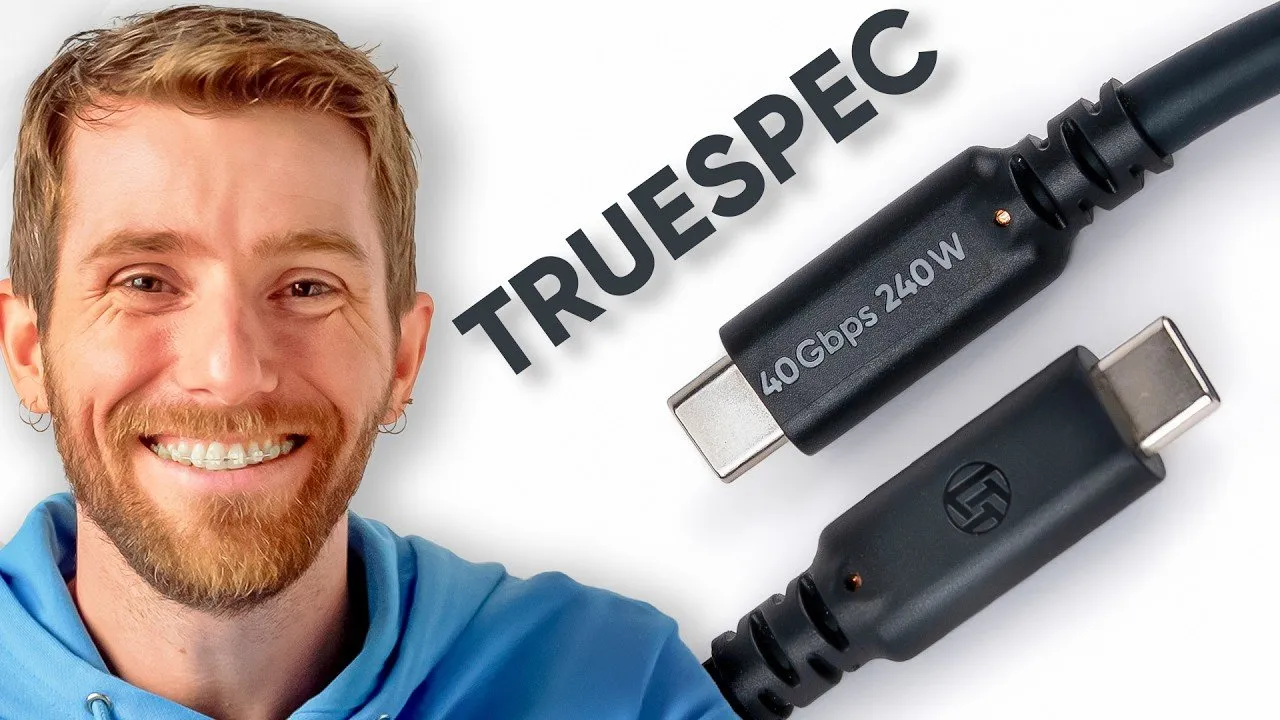
Linus Media Group has officially launched its long-awaited line of "LTT True Spec" USB cables, culminating a four-year development cycle aimed at addressing pervasive quality control issues within the consumer electronics accessory market. The new product lineup focuses on transparent performance labeling, industrial-grade materials, and verified signal integrity to combat the frustration of unreliable data and charging connections.
Key Takeaways
- Transparent Labeling: Connectors feature explicit text indicating supported data speeds (e.g., 20Gbps) and power delivery wattages, eliminating consumer confusion.
- Rigorous Development: The four-year process involved evaluating over 30 manufacturers, with initial batches suffering from a near-100% failure rate in signal integrity tests.
- Material Innovation: The cables utilize coaxial internal wiring and UV-resistant silicone sheathing rather than standard braided or PVC exteriors.
- Strategic Non-Certification: LTT opted against official USB-IF certification to reduce costs and avoid restrictive branding, citing similar strategies used by major OEMs like Apple.
Solving the "Dollar Store" Cable Crisis
The impetus for the True Spec line stemmed from internal frustrations at Linus Media Group regarding the inconsistency of commodity cables. According to the announcement, the consumer market is flooded with cables that feature confusing branding and frequently fail to meet their advertised specifications. The team highlighted that many users are unaware their cables are underperforming because modern USB standards have built-in error handling.
When a cable has poor signal integrity, the device will silently request data re-transmission. This error correction prevents outright crashes but results in slower transfer speeds and inconsistent behavior that users often blame on their computers or peripherals rather than the wire itself.
"When a whole production can be brought down by one bad connection, it is amazing how quickly your perspective changes... The bottom line is that a [cheap] cable is kind of like a dollar store toilet plunger. It usually gets the job done, but it might let you down at a very critical moment."
The search for a manufacturing partner revealed the depth of the industry's quality control issues. LTT reached out to over 30 factories and tested hundreds of samples. For months, they could not find a single manufacturer capable of delivering a batch of cables that consistently passed signal integrity tests—the measurement of how clean and distinct the electrical signal remains as it travels through the wire.
Engineering Over Standard Specs
To achieve the desired performance, the final product adheres to strict internal standards that reportedly exceed typical manufacturing tolerances. The development team prioritized specific physical and electrical characteristics that differentiate True Spec cables from standard options.
Internal Construction and Materials
While standard USB cables often use twisted pair wiring, LTT’s design utilizes coaxial conductors for the high-speed data lines. This approach involves shielding each individual conductor, which significantly improves signal isolation and integrity but increases manufacturing costs and cable thickness.
Externally, the team selected a soft silicone sheathing instead of the industry-standard PVC or nylon braiding. This material choice offers several practical advantages:
- UV Resistance: Silicone prevents the cable from becoming brittle or discolored after prolonged sun exposure.
- Kink Resistance: The material lacks "cable memory," allowing it to coil easily without retaining bends.
- flexibility: Despite the thicker coaxial internals, the silicone maintains manageability.
The design also features a custom-molded strain relief system. The engineers rejected multi-piece designs in favor of a relief mechanism that is molded directly to the connector housing, creating a seamless transition that prevents the lever-point failures common in cheaper cables.
The Certification Controversy
A notable omission from the product packaging is the official USB-IF (USB Implementers Forum) certification logo. LTT addressed this decision directly, framing it as a choice between cost-efficiency and branding utility. The company argues that the primary benefit of USB-IF certification is the right to use specific logos, which they find confusing and unnecessary for their target demographic.
The announcement noted that major industry players, including Apple, have historically produced compliant cables without seeking USB-IF certification. Instead of paying for third-party badging, LTT implemented a multi-stage validation process:
- Factory Testing: Every SKU undergoes signal integrity testing during production.
- Third-Party Validation: Samples were sent to independent labs for USB4 compliance verification, as internal testers were insufficient for the highest bandwidth specs.
- Durability Testing: The team performed extreme stress tests, including heat resistance checks, to ensure longevity.
Market Availability and Positioning
The launch represents a shift for creator-led brands moving from merchandise into high-performance tech hardware. LTT was careful to distinguish their product from "audiophile" or "snake oil" cables that promise impossible enhancements to audio or video quality.
"I am not and never have been against well-built, fairly priced, premium products. I'm just against snake oil marketing... These are digital cables. They either work or they don't. And these ones work."
The True Spec cables are positioned as a premium utility product—more expensive than generic Amazon basics but competitively priced against other high-end accessory brands. As the ecosystem of high-bandwidth devices (such as 4K monitors and high-speed external SSDs) grows, the demand for verified, high-wattage cabling is expected to rise. LTT has indicated that while prices may fluctuate, the focus will remain on maintaining strict adherence to performance specifications backed by customer support.