Table of Contents
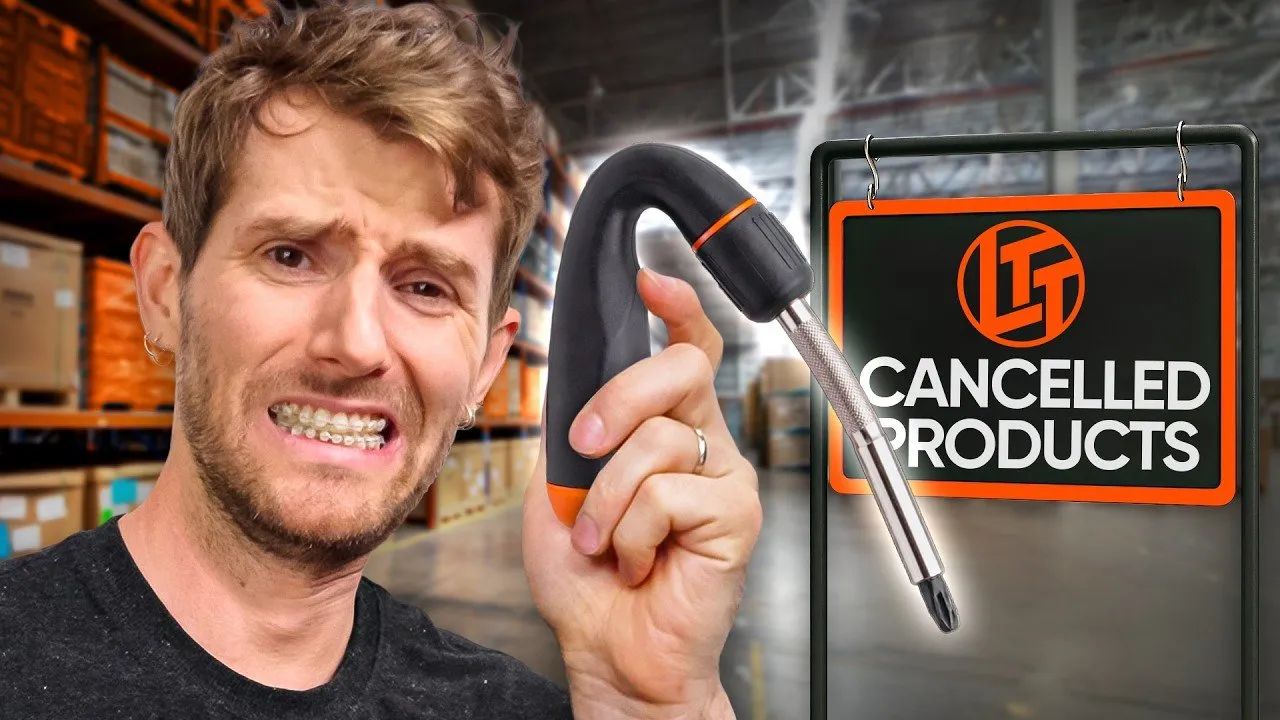
Linus Tech Tips revealed dozens of failed product prototypes that never reached market, representing years of development work and over $100,000 in unused components for a single gaming mouse project alone. The popular tech channel showcased everything from RGB welcome mats and modular water bottles to cashmere hoodies and acoustic panels, highlighting the complex challenges of bringing consumer products to market.
Key Points
- LTT spent $100,000 on gaming mouse components that were never used due to timing and complexity issues
- Multiple product categories failed including RGB accessories, apparel, gaming peripherals, and home improvement items
- Common failure reasons included patent conflicts, manufacturing costs, shipping difficulties, and market timing
- Some products went through 8+ sample iterations before being cancelled, costing hundreds of dollars per sample
- Several cancelled products may be reconsidered for future development as manufacturing capabilities improve
Gaming Hardware Setbacks
The most expensive failure involved a customizable gaming mouse that reached advanced development stages before being shelved. The project envisioned replaceable switches, user-customizable firmware, and modular ergonomic shells for different hand sizes and orientations.
We got close enough that we bought about $100,000 worth of ICs because we saw that the market was about to go crazy and then... we were doing all this during the COVID crisis. There was no silicon chips.
According to the engineering team, they purchased the components anticipating a 52-week development cycle that would coincide with chip shortages. However, the project ultimately succumbed to complexity, manufacturing challenges, and shifting market priorities as competitors released similar products.
The RGB welcome mat represented another ambitious hardware project that went through four iterations. Initially designed to light up when stepped on, the concept evolved to include proximity sensors, smart home connectivity, addressable RGB lighting, and solar charging capabilities. The final prototype required massive batteries, making it prohibitively thick and expensive at an estimated $250 retail price.
Apparel Development Challenges
The fashion team faced unique obstacles in garment development, particularly with fit consistency and material durability. A cotton-cashmere blend hoodie intended as a premium staff-only product required eight sampling iterations at approximately $300 per sample before being abandoned due to fit issues.
At an average company, you'd probably want to be doing two to three samples... Once you start sampling eight samples, they start to charge you.
An innovative "RGB woolen hoodie" featured reflective dots embedded in wool fabric to create a rainbow trout-like effect under different lighting conditions. Despite its visual appeal, the product failed quality testing when the reflective elements began peeling after washing, making it unsuitable for consumer release.
Footwear development proved particularly challenging due to upfront molding costs. The company explored creating improved sandals with magnetic fidlock buckles and reinforced failure points, but the investment required for size-specific molds across interior and exterior components made the project economically unfeasible for a single product line.
Material Innovation Attempts
Several projects explored unique materials and manufacturing approaches. The team experimented with DIY acoustic panels using flat-pack designs that customers would assemble with locally-sourced foam, reducing shipping costs and waste. The modular system allowed for hexagonal, diamond, and triangular configurations that could tessellate across walls.
A collaboration between engineering and fashion teams produced removable fabric covers for the acoustic panels, but manufacturing tolerances proved "entirely unreasonable" according to team members. Despite nailing down the technical challenges, the project was shelved after years of development.
Market Timing and Patent Issues
Patent conflicts derailed multiple promising products, including a modular RGB water bottle system with wireless induction charging and threaded power interfaces. The concept would have allowed users to create extended "hydration staffs" with consistent RGB lighting throughout modular segments.
Market timing emerged as another critical factor. The gaming mouse project, despite significant component investment, lost relevance as other companies released similar modular gaming peripherals during LTT's extended development cycle.
Some cancelled products may find new life as manufacturing capabilities evolve and market conditions change. The engineering team expressed particular interest in revisiting the acoustic panels and several apparel concepts, suggesting that failed products often provide valuable learning experiences for future development cycles in the competitive consumer electronics and merchandise markets.