
Table of Contents
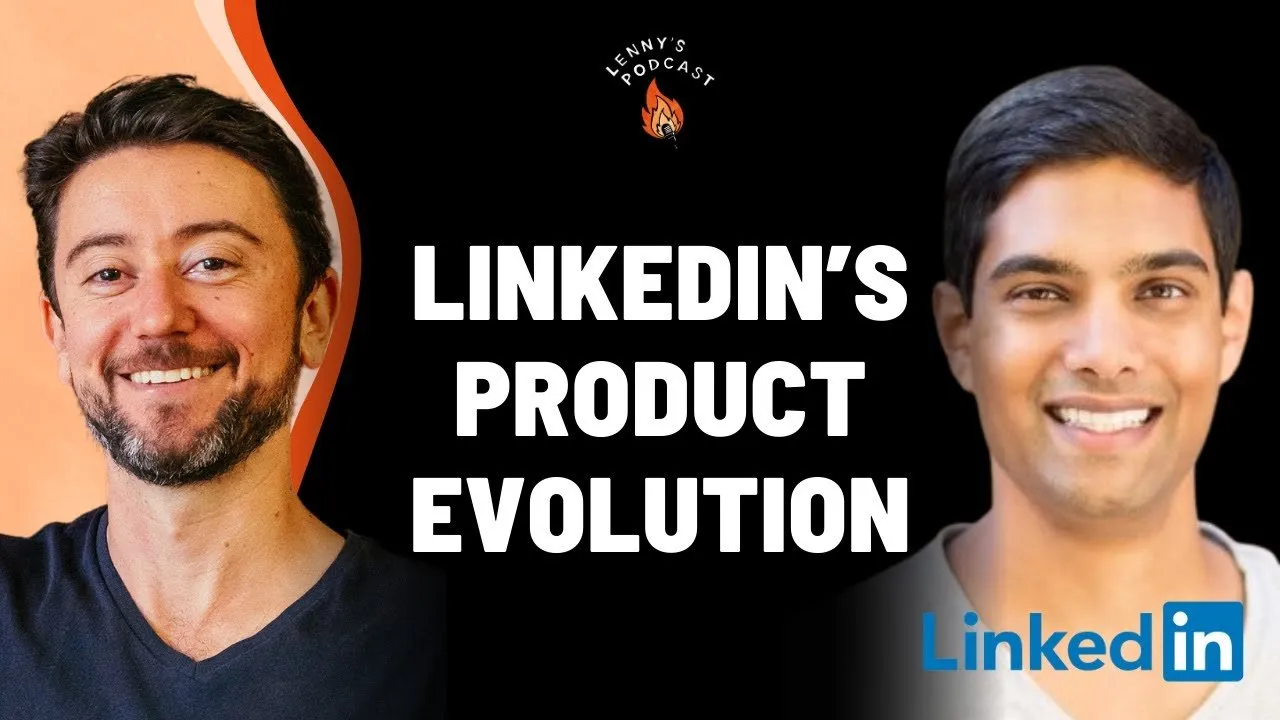
For years, LinkedIn was viewed primarily as a digital rolodex—a static place to store your resume or, occasionally, a cringy environment for corporate humble-brags. However, in recent years, the platform has undergone a significant transformation. The feed has become a genuine source of industry knowledge, and the underlying systems for hiring have shifted from title-matching to complex skills-based algorithms. Hari Srinivasan, VP of Product at LinkedIn, oversees the platform's largest business unit, Talent Solutions. In a deep-dive conversation, he reveals how the hiring market is fundamentally rebalancing, the specific signals algorithms look for in candidates, and the frameworks required to manage one of the world’s most complex digital ecosystems.
Key Takeaways
- Skills-First Hiring is the New Standard: The market is moving away from rigid job titles toward a "skills-first" approach, allowing for better matching between transferable skills (like hospitality workers moving into customer service).
- "Open to Work" Has Lost Its Stigma: Data shows that using the "Open to Work" signal significantly increases recruiter outreach and is no longer viewed as a sign of desperation.
- The PM Trinity: Successful Product Managers usually excel in one of three areas—creative storytelling (the "Spielberg"), data science, or general management—rather than trying to be a generalist in the middle.
- Managing Complexity Requires Frameworks: To manage interconnected marketplaces, LinkedIn relies on strict decision-making models like RAPID and the "5-Day Alignment" rule to prevent bottlenecks.
- Evidence Over Claims: When optimizing a profile, linking specific evidence (projects, media, credentials) to listed skills provides a much stronger signal to hiring algorithms than the skills alone.
The Shift to Skills-First Hiring
The labor market has experienced extreme volatility over the last few years, swinging from a candidate-driven market with skyrocketing salaries to an employer-driven market with fewer open roles. However, Srinivasan notes that the market isn't simply reverting to its pre-pandemic state. Instead, the fundamental architecture of how companies hire is changing.
The catalyst for this shift was the onset of COVID-19. As industries like hospitality collapsed, other sectors like customer service faced labor shortages. The traditional marketplace failed to balance quickly because it relied on job titles. A hotel concierge didn't look like a customer support agent on paper, even though they possessed 70% of the requisite skills, such as negotiation and de-escalation.
"We made a pretty big push in something we call skills-first hiring. This was the idea that we could translate people's experiences into a set of skills and by that, we can help them really start balancing the marketplace with a much different system."
Today, roughly 47% of recruiters on LinkedIn explicitly use skills data to filter candidates. This allows for a more fluid labor market where "evidence of capability" matters more than the specific title held in a previous role.
Values-Based Job Seeking
alongside the technical shift to skills, there is a behavioral shift in job seekers. Candidates are increasingly filtering for values and purpose. Users are utilizing collections and filters to find roles that align with specific interests, such as AI or sustainability, rather than just salary and title. This suggests that even in a tighter economic environment, the "why" behind a job remains a critical factor for talent.
Optimizing Your Profile for the Algorithm
Understanding how LinkedIn's hiring products work can significantly improve a candidate's visibility. The platform operates as a double-sided marketplace that attempts to match candidate intent with recruiter needs. Srinivasan shared specific tactics for standing out in this system.
The Power of "Open to Work"
There was historically a belief that high-quality talent should be passive and that signaling availability was a sign of weakness. Srinivasan confirms that this stigma has largely evaporated. The "Open to Work" feature provides a high signal-to-noise ratio for recruiters who need to fill roles quickly. Furthermore, LinkedIn is experimenting with "Open to Internal Work," allowing employees to signal to their own HR teams that they are looking for a new role within the same company, aiding in retention and internal mobility.
Validating Skills with Evidence
Simply listing a skill is no longer sufficient. To rank higher in recruiter searches, candidates should attach evidence to their skills. This feature allows users to link specific projects, media, or credentials to a skill tag.
When a recruiter hovers over a skill in their dashboard, seeing concrete proof—such as a link to a GitHub repository, a design portfolio, or a published article—dramatically increases the likelihood of them reaching out. This moves the profile from a claim of competence to a demonstration of competence.
Advice for Product Managers
The tech hiring market has cooled, with data suggesting PM hiring is down significantly. For Product Managers struggling to find roles, Srinivasan advises leaning into industry-specific experience. A PM with a background in automotive will have a distinct advantage applying for roles in auto-tech software over a generalist PM. Differentiating based on domain expertise is currently more effective than differentiating based on general product frameworks.
Managing Complex Ecosystems
LinkedIn is not a single product; it is a complex ecosystem of multiple marketplaces—hiring, learning, advertising, and content—that all interact. A change in the news feed can impact job seeker behavior, which in turn impacts recruiter success metrics.
The North Star: Connecting People to Economic Opportunity
Navigating this complexity requires a unified decision-making filter. At LinkedIn, that filter is the mission: "Connect the world's professionals to make them more productive and successful." Every product decision is weighed against whether it connects people to economic opportunity.
This "North Star" isn't just a corporate slogan; it is operationalized in product reviews. If a feature drives engagement but doesn't lead to a hire, a connection, or a learned skill, it likely won't be prioritized. Success is measured by output metrics: hires confirmed, connections made, and skills learned (often measured by time spent on validated learning content).
Frameworks for Decisiveness
In large organizations, decision paralysis is a major risk. LinkedIn employs specific frameworks to maintain velocity:
- RAPID: A decision-making matrix that clarifies roles. Recommend, Agree, Perform, Input, and—most importantly—Decide. Having a single name responsible for the "D" eliminates ambiguity.
- The 5-Day Alignment Rule: If a disagreement or blocker cannot be resolved within five days, it must be escalated to the next level of management. This prevents issues from festering in email chains and forces resolution.
"If you had three back-and-forths of an email, you got to pick up the phone. And if you've been on the phone for 20 minutes, it's time to just... write that decision maker and go."
The Art of Product Management
Srinivasan, who teaches a course on Product Management within LinkedIn Learning, conceptualizes the role of a PM through a specific triangular framework. He argues that great PMs are rarely perfectly balanced generalists.
The PM Triangle
Srinivasan visualizes PM skills on a triangle, with the following three points:
- The Creator (Spielberg): The ability to empathize, tell stories, and craft user experiences that resonate emotionally.
- The Data Scientist: The ability to analyze patterns, understand metrics, and see the future through data.
- The General Manager: The ability to lead teams, manage budgets, and understand the operational mechanics of the business.
He notes that the most successful PMs usually live on the "edges" of this triangle—they are exceptional at one or two of these aspects rather than trying to be average at all three. Aspiring PMs should identify their dominant vertex and lean into it.
The Necessity of Building
To remain sharp, product leaders must continue to build. Srinivasan maintains a side project portfolio, "Mind of Hari," where he builds everything from children's books to low-sugar gummy bears. This practice keeps the "zero-to-one" muscle active, which can easily atrophy in executive roles focused on optimization and management.
When interviewing candidates, he specifically asks about the most complex system they have ever built. He looks for individuals who gravitate toward difficult, messy problems—like healthcare or education—and who can simplify that complexity into a clear cause-and-effect narrative.
Conclusion
LinkedIn’s evolution from a resume repository to a dynamic economic graph was not accidental. It was the result of deliberate systems thinking, a shift toward skills-based data, and a relentless focus on a single North Star metric. For professionals navigating today's market, success lies in mirroring this approach: treating your career as a product, validating your skills with evidence, and understanding the complex systems that govern hiring decisions.

)