
Table of Contents
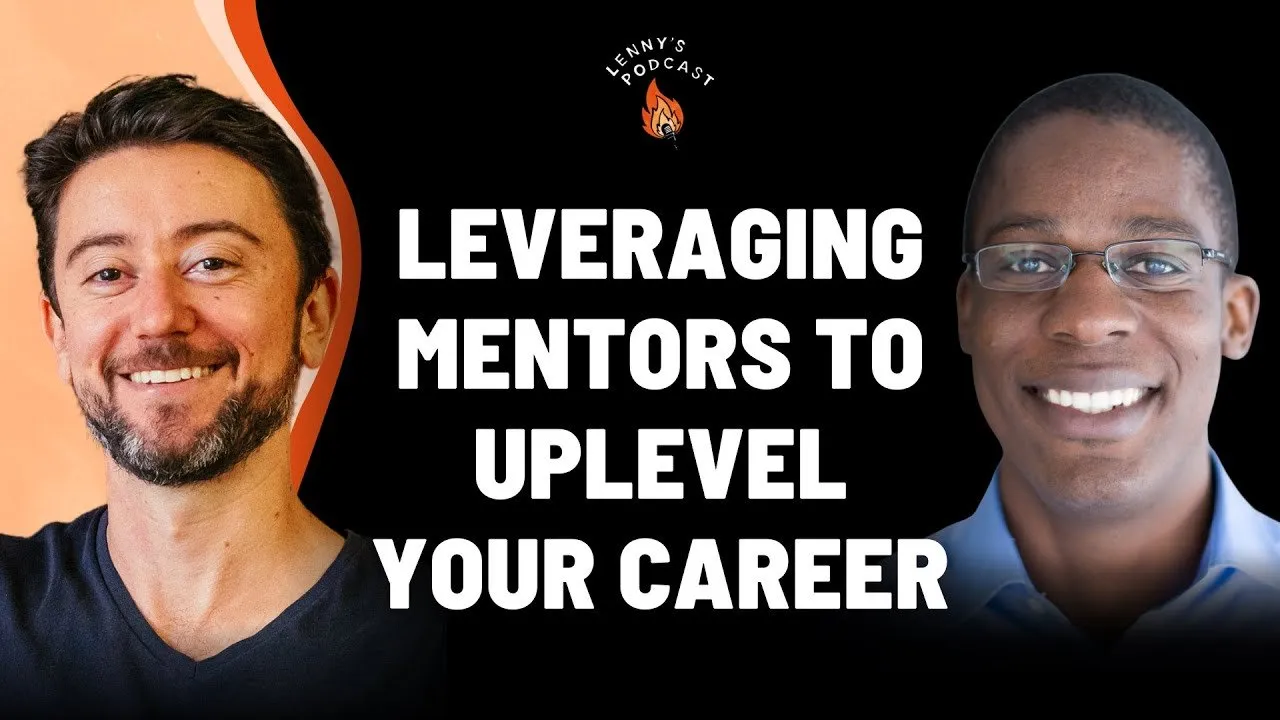
Building a successful career in product management often feels like navigating a labyrinth without a map. While technical proficiency and product sense are the entry tickets, ascending to leadership requires a distinct set of emotional and strategic skills that are rarely taught in bootcamps. Jules Walter, a Product Lead at YouTube and former Growth PM at Slack, has navigated this path by mastering the art of accelerated learning and cultivating a powerful network of mentors.
Beyond his impressive tenure at top-tier tech companies, Walter is a co-founder of the Black Product Managers Network and CodePath, non-profits dedicated to increasing diversity in tech. His journey from medical devices to leading growth at Slack reveals a systematic approach to skill acquisition. By treating career development as a product problem—defining outcomes, working backward, and iterating on feedback—product managers can systematically unlock new levels of influence and impact.
Key Takeaways
- Distinguish IQ from EQ skills: Early career success relies on "IQ" skills like execution and product sense, while senior leadership demands "EQ" skills such as communication, empathy, and organizational influence.
- Treat interviewing as a distinct skill: Being good at your job does not automatically make you good at interviewing. It requires deliberate practice and mock sessions to overcome nerves and bias.
- Use "Forcing Functions" to learn: To master a new domain, set a high-stakes outcome (e.g., driving a metric by X%) and work backward to identify the necessary knowledge gaps.
- The "Small Ask" mentorship model: Do not ask someone to "be your mentor." Start with one specific, answerable question, apply their advice, and close the loop to build a relationship organically.
- Solicit "Subjective" Feedback: Create an environment where peers feel safe sharing how you make them feel, not just what you did, to uncover blind spots in your leadership style.
The Evolution from IQ to EQ Skills
Career progression in product management can be visualized as a shift in focus from intellectual capabilities (IQ) to emotional intelligence (EQ). Walter identifies a distinct bifurcation in the skills required to succeed at different stages of a PM’s career.
Mastering the "Hard" Skills First
In the early stages, success is defined by execution. When Walter joined Slack as their first Growth PM, his primary focus was on "IQ skills"—product sense, strategy, and execution. These are tangible, learnable skills often grounded in frameworks and mental models. The objective is to build credibility by shipping successful experiments and moving metrics. For example, Walter focused intensely on user activation, running experiments that moved top-line metrics by double-digit percentages within six months.
The Pivot to "Soft" Skills
As scope increases, the job changes. Managing ambiguity, influencing cross-functional partners, and leading teams require high EQ. Unlike hard skills, which can often be learned through study, soft skills like communication and leadership require constant self-reflection and practice.
The reality with PMS is that within each of these buckets there are so many skills... early on I leaned more into the hard skills... and then later on I spent more time getting better at the EQ skills.
A critical component of EQ is self-awareness. Walter notes that under stress, his default behavior was to withdraw and become quiet to think. Without self-awareness, this silence was misinterpreted by colleagues as disinterest. Recognizing these patterns allows leaders to narrate their thought process ("I'm quiet because I'm thinking through this complex problem"), thereby managing perceptions and maintaining team confidence.
The Overlooked Skill: Interviewing
One "hard skill" that is frequently undervalued is the ability to interview. Walter candidly shares that despite his success, he failed interviews at Google multiple times over a decade before landing his role at YouTube. The disconnect often lies in the lack of feedback; unlike product work where data tells you if you succeeded, failed interviews offer silence.
This is particularly challenging for underrepresented groups in tech, who may face unconscious bias or "imposter syndrome" when walking into rooms where no one looks like them. The solution is deliberate practice. Walter advises conducting dozens of mock interviews until you are so proficient that "even at your worst, you’re good enough."
Accelerated Learning Through Forcing Functions
Waiting to learn through osmosis is too slow. To rapidly acquire new skills—whether it is growth hacking, monetization, or organizational design—Walter utilizes a rigorous, outcome-based learning framework.
The "Working Backwards" Framework
When attempting to learn a new domain, start by defining a specific, ambitious outcome. If the goal is to learn growth, set a target to improve a specific metric (e.g., activation) by a specific amount within a set timeframe. This goal acts as a forcing function.
- Define the Outcome: Commit to a result that proves competence.
- Identify Knowledge Gaps: Determine what questions need to be answered to achieve that result.
- Consult the Experts: Instead of reading aimlessly, take those specific questions to experts or mentors.
- Iterate and Report: Apply the advice, measure the results, and return to the mentor with progress.
Reverse Engineering Success
Another powerful tactic for skill building is studying "artifacts of success." If a colleague is renowned for their strategy documents or executive presentations, ask to see their previous work. Deconstruct these documents to understand the underlying structure. What questions did they answer? How did they handle objections? Studying the "backstage" process—drafts, feedback cycles, and iterations—is often more educational than seeing the final polished product.
The Art of Cultivating Mentorship
Mentorship is frequently misunderstood as a formal, transactional relationship. Walter, who has benefitted from mentors like Bengali Kaba and Lawrence Ripsher, argues that the best mentorships evolve organically through specific, low-friction interactions.
Start Small, Not Big
The most common mistake people make is asking a stranger, "Will you be my mentor?" This request feels like a heavy burden on a busy professional. Instead, lower the barrier to entry.
Reach out with a single, highly specific question that can be answered in a few minutes via email. For example, rather than asking "How do I become a PM?", ask "You mentioned 'finding the heat' in your talk; could you share one example of a product that successfully applied this?"
The Feedback Loop
The secret to turning a one-time interaction into a long-term relationship is closing the loop. If a mentor gives advice, use it. Then, reach out weeks or months later to share the specific outcome of that advice.
If you get some advice that's useful, the key is to circle back with them at a later point and show that you've actually made good use of the advice. I think that's the thing nobody does.
This signals that you are a high-ROI investment of their time. Over time, these small touchpoints build trust, eventually leading to coffee chats, regular meetings, and genuine friendship.
Unlocking Growth Through Radical Feedback
Developing EQ requires a mirror. Because we judge ourselves by our intentions while others judge us by our actions, we often have significant blind spots. The only way to reveal these is through honest feedback, which is notoriously difficult to extract.
Making It Safe to Criticize
Most colleagues are terrified of hurting feelings or damaging professional relationships. To get the truth, you must remove the risk for the other person. Walter suggests two tactics:
- Self-Critique First: "I felt like that presentation didn't land well because I got bogged down in details. Did you see it that way?" This gives the other person permission to agree and elaborate.
- Enthusiastic Gratitude: When you receive critical feedback, your external reaction must be overwhelmingly positive, even if you feel defensive internally.
If you give me feedback I'll be like hey thank you so much this is super helpful... inside my heart might be melting... but externally I'm like hey thank you and I mean it.
Identifying Strengths Through Others
While fixing weaknesses is important, doubling down on strengths often yields higher returns. However, many professionals struggle to identify their own superpowers because they feel effortless. Walter suggests asking peers: "What is something I am good at that seems like a big deal to you, but feels easy to me?"
Once identified, you must also recognize the "shadow side" of your strengths. A strength in asking clarifying questions can be perceived as a lack of knowledge in certain contexts. A strength in simplifying complex problems might look like passivity while you process information. Understanding this nuance allows you to dial your behaviors up or down depending on the room.
Conclusion
Levelling up a career in product management is a long game. It requires the humility to ask basic questions, the discipline to practice interviewing like a sport, and the courage to seek feedback that might sting. By shifting focus from purely intellectual execution to emotional intelligence and relationship building, PMs can move from individual contributors to true organizational leaders. The journey is difficult, but as Walter proves, with the right mentors and a learning mindset, it is entirely navigable.

)