Table of Contents
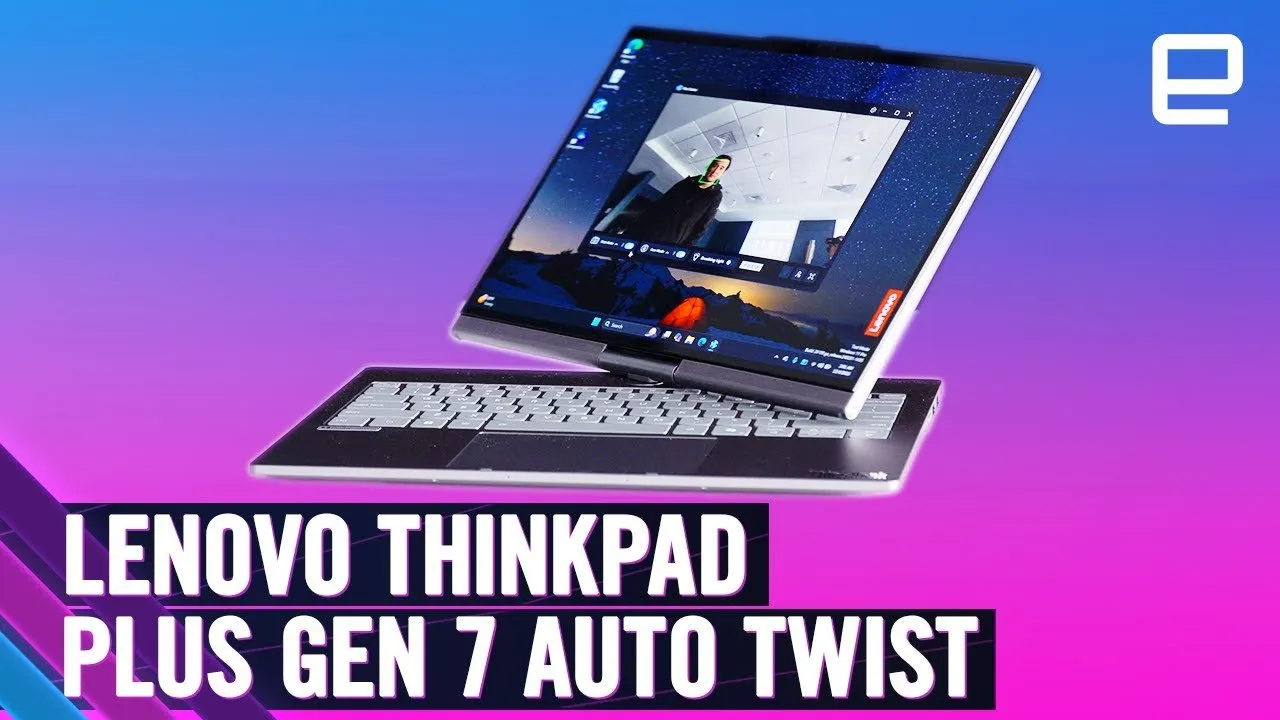
Lenovo has officially transitioned its ambitious motorized laptop concept into a commercial reality with the debut of the ThinkBook Plus Gen 7 Auto Twist at CES 2026. What began as a prototype two years ago is now slated for release later this year, featuring a display that automatically rotates to track users and advanced AI capabilities designed to interpret the hidden subtext in spoken conversations.
Key Points
- Motorized Display: The laptop features a dual-axis hinge that automatically opens, closes, and rotates to follow the user during video calls.
- Subtext Translation: A unique AI mode goes beyond literal translation to analyze emotional context and hidden meanings in speech.
- Hardware Specs: The device is powered by an Intel Core Ultra 7 processor, featuring a 14-inch OLED display, up to 32GB of RAM, and Wi-Fi 7.
- Market Availability: Formerly a concept, the device joins Lenovo's experimental retail line and is scheduled for purchase later this year.
From Concept to Commercial Release
While Lenovo first discussed the auto-twist technology two years ago and demonstrated a concept version last year, the company has now confirmed the device is ready for the mass market. Rebranded as the ThinkBook Plus Gen 7 Auto Twist, the device sits within Lenovo's "experimental" retail line—a bridge between pure concept devices and standard consumer electronics.
Despite the complex mechanical hinge, the chassis retains a profile similar to a standard laptop. It avoids excessive thickness or weight, maintaining the portability expected of a modern 14-inch device. However, the standout feature remains its motorized lid, which responds to physical cues and voice commands.
Motorized Mechanics and Face Tracking
The defining hardware feature of the Gen 7 Auto Twist is its ability to manipulate the display orientation without user handling. A "knock-to-open" feature allows the lid to rise automatically, while voice commands can trigger the system to close or rotate into tablet mode.
Beyond novelty, the motor serves a functional purpose during video conferencing. The laptop utilizes face-tracking technology combined with the rotating hinge to keep the user centered in the frame. If the user moves around the room, the screen physically turns to follow them, ensuring they remain visible to callers without needing to manually adjust the device.
AI That Reads Between the Lines
Lenovo has integrated a companion app powered by Large Language Models (LLMs), including ChatGPT, to serve as an on-device assistant. While standard functions like weather updates and voice controls are present, the device introduces a novel "Subtext Translation" mode.
Unlike standard translation tools that convert words literally, this feature attempts to analyze the intent and emotion behind the speech. In demonstrations, the AI successfully identified a backhanded compliment, breaking down the sarcasm for the user.
"In this mode, I will not just translate the text but also provide insights into the hidden meanings, emotions, and subtext," the onboard AI assistant stated during the demonstration.
This functionality positions the laptop not just as a productivity tool, but as a social interpreter, offering users insight into whether a speaker is being genuine, sarcastic, or critical.
Specifications and Outlook
Beneath the motorized exterior, the ThinkBook Plus Gen 7 Auto Twist offers competitive specifications for a high-end business machine. The system is equipped with:
- Processor: Up to Intel Core Ultra 7 CPU
- Display: 14-inch OLED panel
- Memory & Storage: Up to 32GB of RAM and 2TB of storage
- Connectivity: Wi-Fi 7 support
While the port selection and raw performance ceiling are constrained by the unique form factor, the device is built to standard Lenovo quality metrics. Currently, Lenovo has not released official pricing, though the complexity of the motorized hinge and OLED panel suggests a premium price point.
As the ThinkBook Plus Gen 7 Auto Twist moves toward its retail launch later this year, market observers will be watching to see if the utility of a self-orienting screen and empathetic AI can drive adoption beyond early adopters and tech enthusiasts.