Table of Contents
Lenovo’s Chief Technology Officer has outlined a comprehensive strategy for a "hybrid AI" future, emphasizing a shift away from single-device dominance toward an interconnected ecosystem where public cloud models and private edge computing coexist. Speaking on the company's latest technological roadmap, the executive detailed how new hardware integrations across Motorola and APEX product lines will leverage ambient intelligence to create predictive, cross-platform user experiences.
Key Points
- Hybrid Architecture: Lenovo is prioritizing a distributed data model where AI processing is shared between public clouds and on-device (edge) processors to balance power and privacy.
- Ambient Intelligence: The company is developing "always-on" AI that anticipates user intent and maintains context across phones, tablets, and PCs.
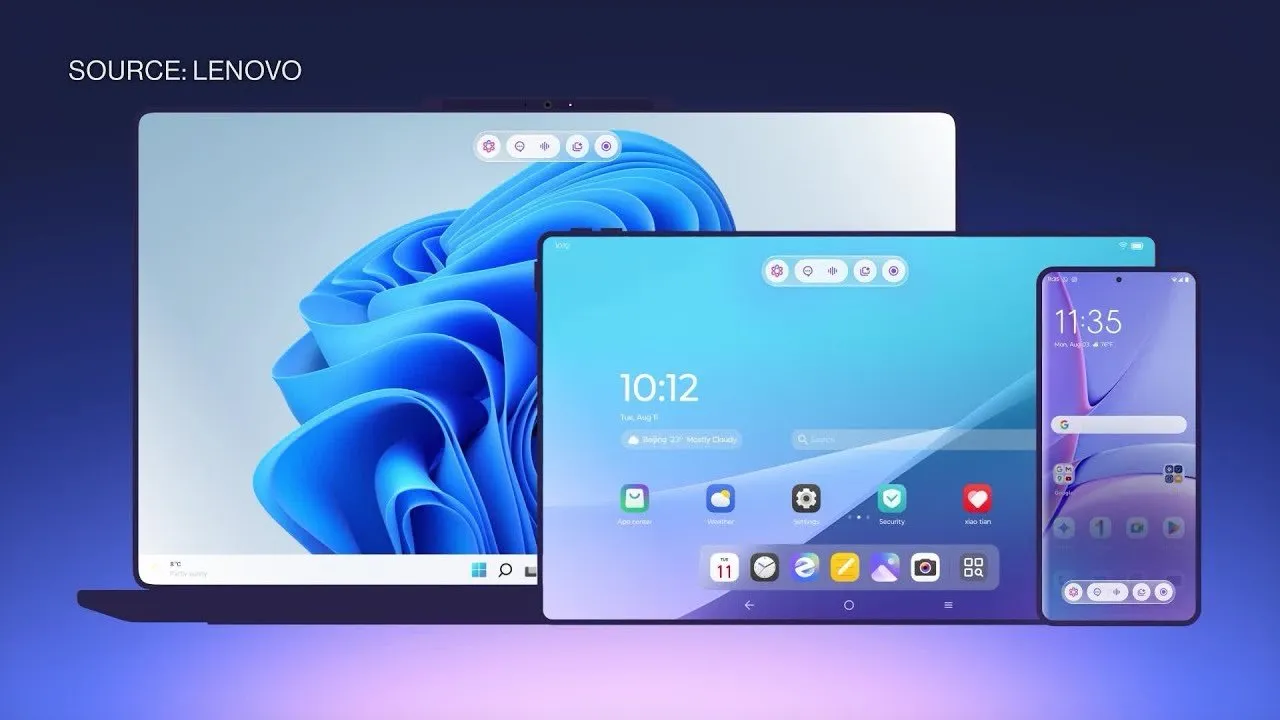
- Unified Interface: New software frameworks aim to provide a single, seamless user interface that operates independently of the specific hardware being used.
- Future R&D: The emerging technology group is heavily investing in "agent-native" devices, robotics, and physical AI that utilize voice, gesture, and eye-gaze interactions.
Defining the Hybrid Ecosystem
Lenovo’s strategic vision rests on the concept that the future of computing will not be defined by a single piece of hardware. Instead, the company is building an architecture where data and processing are highly distributed. This hybrid AI approach combines "public AI"—general-purpose models residing in the cloud—with "private AI," which processes personal or enterprise data directly on end-user devices or at the edge.
According to Lenovo's leadership, this dual approach allows for a harmonious ecosystem where different AI agents collaborate to manage tasks efficiently while respecting data privacy.
"We don't believe the future belongs to any particular device, single device, a single model, [or] a single agent... we believe in a future where it is an ecosystem of those models... and ecosystem of those agents that all needs to harmoniously work with one another."
Technologically, this requires a sophisticated orchestration between cloud capabilities and on-device processing power. The goal is to ensure that heavy computational tasks leverage the cloud, while sensitive, immediate tasks are handled locally, creating a foundation for what Lenovo describes as "ambient" computing.
Hardware Integration and Ambient Intelligence
The practical application of this vision is being rolled out through Lenovo’s newest range of APEX tablets and Motorola smartphones. A primary focus for these devices is the integration of intelligent camera systems and ambient AI, designed to function as a user-centric, single interface.
This system allows users to access a personalized knowledge base through a unified interface, regardless of whether they are using a phone, tablet, or PC. The AI is designed to be "ambient," meaning it remains active in the background to learn user context and memory patterns without requiring constant manual input.
"We want AI to be ambient, always available, sit there and in anticipation of the user's intent... remembering interactions with you, memory management... we can essentially help create the best personalized experience."
Beyond the Screen: Robotics and Agents
Looking past current consumer electronics, Lenovo’s emerging technology group is actively researching physical and embedded AI, specifically within the robotics sector. The executive highlighted that cybersecurity remains a foundational technology underpinning these advancements, ensuring that as devices become more interconnected, they remain secure.
The company is also engaged in rapid prototyping of "agent-native devices." These future form factors are expected to move away from traditional input methods like keyboards and touchscreens, favoring modalities such as voice, gestures, and eye-gazing.
The evolution of these technologies relies heavily on advanced sensing capabilities. By enabling devices to understand the user deeply and continuously—24 hours a day—Lenovo aims to transition from reactive computing to proactive assistance, where technology understands the user's needs uninterrupted.