Table of Contents
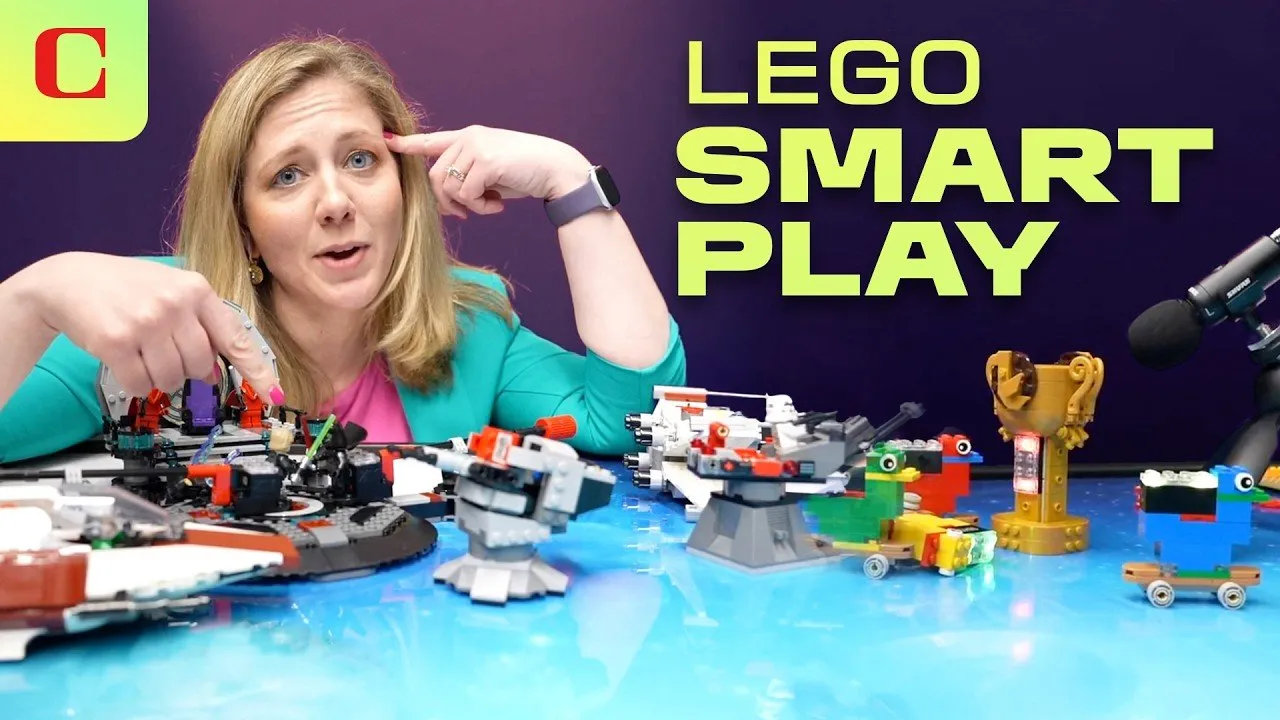
LEGO is bridging the gap between physical construction and digital interaction with the unveiling of its new Star Wars Smart Bricks technology, a sensor-laden system that brings sets to life with reactive sound and lighting. The new hardware, previewed in a recent hands-on demonstration, enables iconic ships and characters to respond to movement and proximity, offering a high-tech upgrade to the traditional sound effects usually supplied by a child’s imagination.
Key Takeaways
- Interactive Hardware: New "Smart Bricks" utilize accelerometers, gyroscopes, and light sensors to detect movement, proximity, and color.
- Context Aware: Specific "smart tiles" and tagged minifigures tell the system which set is being built, altering sound effects accordingly.
- Play Duration: The rechargeable bricks offer approximately 45 minutes of continuous active play.
- Premium Pricing: The technology will be integrated into sets ranging from $70 to $160.
Digitizing the Analog Brick
The core of this new system is a central "smart brick" that acts as the computing hub for the Lego set. According to early hands-on reports, the technology relies on a combination of hardware sensors and physical coding tokens. To activate the system, users utilize a "shake-to-wake" motion, engaging internal sensors that track how the toy is being moved through the air.
The system requires a specific identification tile to function correctly. When connected to a set—such as an X-Wing or a Death Star turret—this tile communicates with the smart brick to dictate the appropriate audio and visual profile. Additionally, the system employs optical sensors to detect interaction. For example, the brick can identify the color red to trigger firing sounds or blue to simulate refueling.
This contextual awareness extends to the characters as well. Smart minifigures feature unique symbols on their backs, allowing the system to recognize who is piloting a ship or engaging in battle. The sensors enable proximity-based interactions, such as detecting when a character is knocked over or when two rival characters, like Luke Skywalker and Darth Vader, are placed near one another.
"You can mix and match these sets... telling it it's an X-wing [or] telling it that it's on a turret from the Death Star. And now immediately it knows it's a turret."
Balancing Tech and Imagination
A primary concern for digital toy integration is often the displacement of creativity. However, the Star Wars Smart Bricks appear designed to augment rather than replace the user's imagination. The audio output consists of sound effects, engine noises, and "mushed up" character vocalizations rather than full dialogue. This design choice ensures that children—or adult collectors—must still construct the narrative narrative in their minds.
The play pattern remains flexible. Users are not forced to follow a linear digital script; the brick simply reacts to whatever physical action is occurring. If a user smashes a turret, the brick detects the impact and plays an explosion sound. If a ship is swooped through the air, the engine sounds adjust to the movement.
Operational Constraints and Market Impact
While the technology adds a layer of "delightful" interactivity, it introduces logistical considerations typical of consumer electronics. The smart bricks rely on battery power, with LEGO estimating around 45 minutes of intense, continuous play on a single charge. To mitigate this, the bricks automatically enter a sleep mode when idle to conserve energy. Recharging is handled via a dedicated yellow station that plugs into a wall outlet.
The inclusion of this hardware contributes to a higher price point. The initial wave of compatible sets will retail between $70 and $160, positioning them as a premium offering within the LEGO ecosystem. There is also a noted learning curve; users must track which smart tiles belong to which sets to ensure the correct sound profiles are loaded.
"Having all this does make it a little more of an expensive set... But overall, playing around with this, I'm finding that there's a lot of silliness."
As these sets move from demonstration to retail shelves, the true test will be how seamlessly the technology integrates into long-term play sessions and whether the premium cost provides enough value to justify the 45-minute battery window.