Table of Contents
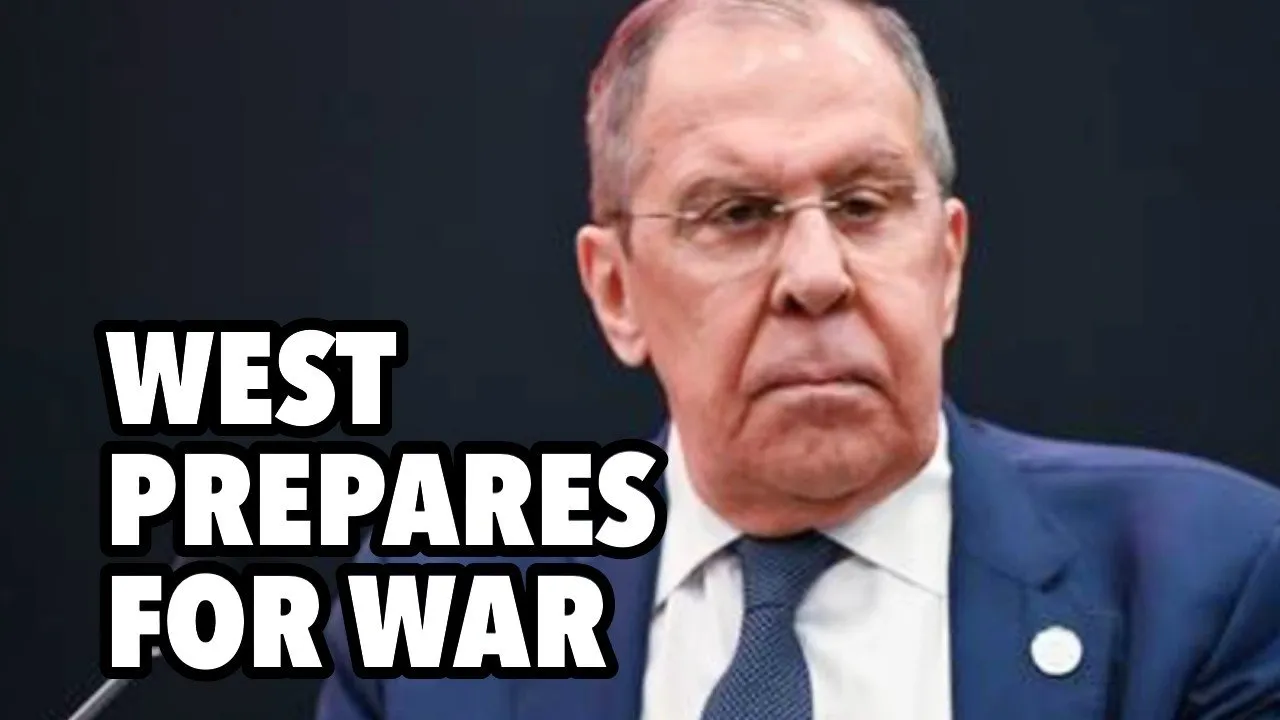
Russian Foreign Minister Sergey Lavrov has delivered what many observers are calling his most outspoken interview to date, signaling a potential sea change in Moscow’s diplomatic posture toward the United States. For months, speculation has swirled regarding the status of back-channel negotiations and the so-called "Anchorage formula"—a tentative framework agreed upon between President Vladimir Putin and the Trump administration. However, recent developments, including aggressive sanctions and targeted attacks on negotiating teams, suggest that the diplomatic window is rapidly closing. Lavrov’s latest comments offer a rare, unvarnished glimpse into the Kremlin’s frustration, implying that the collective West has abandoned good faith diplomacy in favor of a continued quest for unipolar dominance.
Key Takeaways
- The "Anchorage Formula" has collapsed: Lavrov indicates that the United States has walked back the framework previously agreed upon by President Putin and President Trump, rendering current negotiations performative and effectively void.
- Escalation beyond sanctions: The conflict has moved beyond economic measures to physical threats, with reports of an assassination attempt on a key Russian negotiator in Abu Dhabi.
- The trap of "Rational Actor" theory: Analysts argue that Putin’s primary strategic error has been assuming Western leadership acts on rational economic self-interest, a miscalculation reminiscent of his dealings with Angela Merkel regarding Nord Stream.
- A pivot to military solutions: With diplomatic avenues blocked and European powers telegraphing a direct conflict by 2028, Russia appears to be shifting authority back to its military command to intensify operations in Ukraine.
The Collapse of the Anchorage Framework
For the first time, Sergey Lavrov has publicly articulated a narrative that was previously relegated to rumors: the existence and subsequent failure of the "Anchorage formula." According to the Russian Foreign Minister, President Putin departed from the Anchorage summit believing he had secured a viable proposal from the Trump administration—a framework intended to serve as the bedrock for future security architecture in Europe. However, recent behavior from Washington suggests a complete reversal of this agreement.
Lavrov’s critique goes beyond mere disappointment; it serves as a stark indictment of the entire diplomatic process. By continuing to engage in negotiations based on a proposal the Americans have already withdrawn, Moscow finds itself in a paradoxical position. Lavrov argues that the United States is no longer working within the agreed parameters, effectively rendering current talks a "phantom" negotiation. This revelation implies that while the Kremlin has been waiting for the US to honor its commitments, Washington has utilized the time to further entrench its dominance over global energy markets and trade routes.
Implicit Criticism of the Kremlin’s Patience
While Lavrov is known for his loyalty, analysts suggest his recent interview contains a subtle, implicit criticism of President Putin’s approach. By highlighting the futility of negotiating with a partner who has abandoned the agreed-upon framework, Lavrov is signaling that the time for patience has passed. The subtext is clear: continuing to treat the current US administration as a reliable negotiating partner is a strategic error, and the "reality" of the antagonistic relationship must be acknowledged.
Escalation: Assassinations and Economic Warfare
The skepticism within the Russian Foreign Ministry is not unfounded. It is driven by a series of tangible escalations that have occurred parallel to the supposed diplomatic efforts. Lavrov points to a systematic campaign by the "collective West" to exert control not just over Ukraine, but over the global economy and energy resources. This includes pressuring BRICS nations, specifically India, to halt purchases of Russian oil—a move designed to strangle the Russian economy despite the lack of direct war between the two great powers.
However, the most alarming development is the shift from economic pressure to physical violence against diplomatic staff.
"The second [issue] has to be the attempted assassination of Alexeyev... the general who is the deputy of the chief negotiator that the Russians have sent and who's been meeting with the Americans and the Ukrainians in Abu Dhabi."
Reports from the FSB indicate that the assassin, captured in the UAE and extradited to Russia, was working for Ukrainian intelligence (SBU), potentially with the assistance of Polish intelligence. For Moscow, it is inconceivable that such an operation—targeting a high-level negotiator involved in back-channel talks—could occur without the knowledge or tacit approval of US intelligence agencies. This event appears to have been a tipping point for Lavrov, crystallizing the view that the adversary is not interested in peace but in the physical elimination of Russian diplomatic capability.
The Trap of Rational Expectations
A recurring theme in the analysis of President Putin’s geopolitical strategy is his reliance on rationality. Putin, described as an extremely rational actor, often projects this trait onto his counterparts. This cognitive bias leads to the assumption that adversaries will avoid actions that are economically self-destructive. This was evident in Russia’s past dealings with Germany; Putin believed Angela Merkel would never sacrifice Nord Stream because it was vital for the German economy. That assumption proved false.
Today, Putin appears to be making a similar calculation regarding the United States. Observing that the US is overextended, facing financial strain, and needing to pivot toward the Asia-Pacific to counter China, Putin likely concludes that a deal with Russia is in America's best interest. Therefore, he persists in seeking dialogue.
The flaw in this logic is twofold:
- Ideology over Economy: Western decision-makers are increasingly driven by ideological goals—specifically the maintenance of a unipolar world order—rather than strict economic pragmatism.
- Fragmentation of Power: The assumption that a US President (whether Trump or otherwise) has full agency to enact a rational foreign policy ignores the entrenched hostility of the broader political and intelligence establishment.
Lavrov’s interview suggests he has recognized this disconnect. He sees an adversary that is willing to damage its own long-term interests and stability to inflict immediate harm on Russia, making traditional "rational" negotiations impossible.
Strategic Pivot: From Diplomacy to Military Reality
Following the breakdown of trust in the Anchorage formula, there has been a notable shift in President Putin’s public demeanor. Since the beginning of the year, Putin has largely ceased public commentary on the diplomatic process, the United States, or Donald Trump. This silence is deafening. It suggests an internal debate in Moscow has concluded, and the focus is shifting away from elusive diplomatic breakthroughs toward tangible military objectives.
Unleashing the General Staff
Evidence of this shift is visible on the ground in Ukraine. The recent intensification of missile and drone strikes against Ukraine’s energy infrastructure indicates that the "gloves are coming off." While Putin retains ultimate strategic control, there are strong indications that General Gerasimov and the General Staff have been granted greater autonomy to prosecute the war as they see fit.
This transition marks the end of the "waiting game." With European leaders telegraphing preparations for a direct conflict with Russia by 2028 or 2029, Moscow seems to have accepted that long-term security cannot be negotiated at a table in Anchorage or Abu Dhabi. Instead, it must be established through the finalization of military objectives in the Donbas and Zaporizhzhia regions.
Conclusion
Sergey Lavrov’s interview serves as a grim milestone in US-Russia relations. By publicly exposing the failure of the Anchorage formula and criticizing the performative nature of ongoing talks, he is preparing the Russian public and the world for a prolonged period of hostility. The disconnect between Putin’s desire for a rational security architecture and the West’s ideological commitment to dominance has led to a dangerous impasse. As diplomatic avenues are exhausted and negotiators are targeted, the conflict is increasingly likely to be settled not by diplomats, but by generals.