Table of Contents
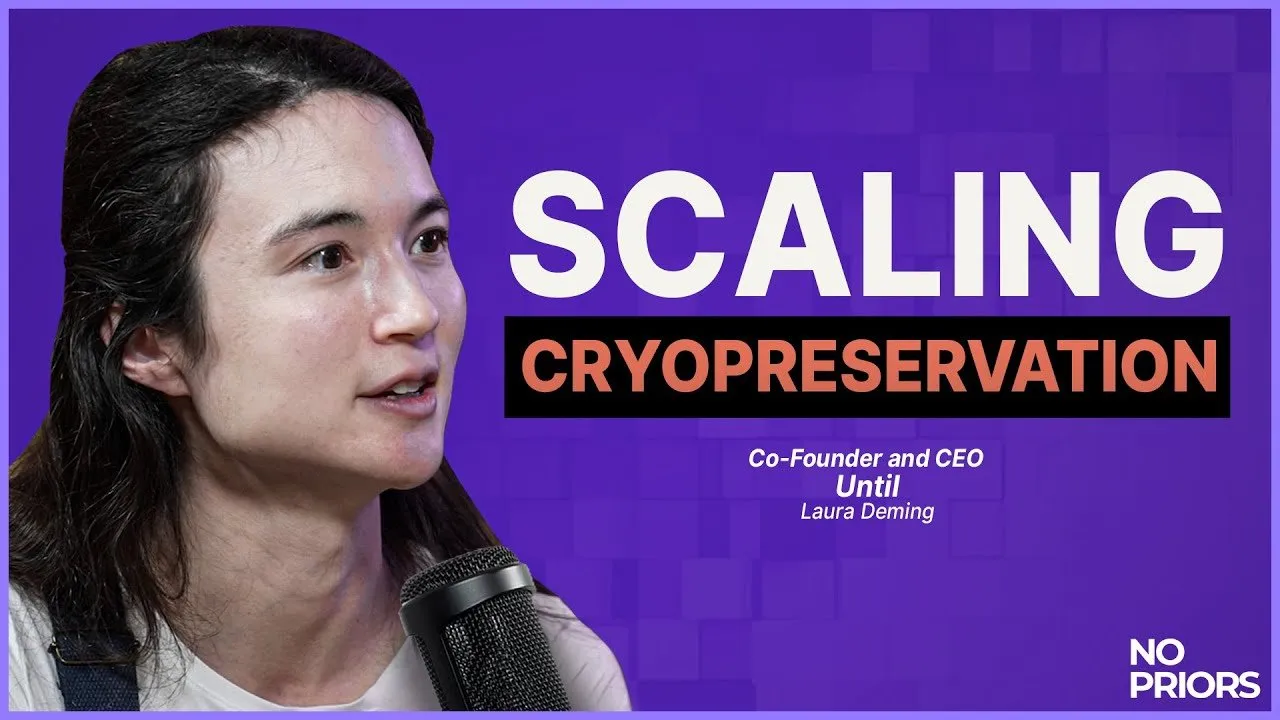
The concept of pausing biological time has long been relegated to the realm of science fiction or speculative futurism. We imagine space travelers in stasis pods or eccentric billionaires freezing their heads in hopes of a distant resurrection. However, for Laura Deming, co-founder and CEO of Until, cryopreservation is not a fantasy of the far future—it is an urgent engineering discipline with immediate medical applications.
Transitioning from her background as the founder of the Longevity Fund, Deming is now tackling one of biology’s most difficult challenges: reversible whole-body cryopreservation. The goal is to transform critical care by creating a state of "medical hibernation," effectively buying patients time until a cure for their specific condition becomes available. By treating time as a variable rather than a constraint, this technology promises to reshape everything from organ transplantation to emergency medicine.
Key Takeaways
- Medical hibernation is a new form of critical care: The primary goal of reversible cryopreservation isn't just life extension, but pausing biological time to allow patients to survive until existing or near-future cures can be administered.
- Ice formation is the enemy, but it is manageable: The core technical challenge is cooling tissue without allowing water to crystallize and damage cells. Because ice nucleation is a stochastic (random) process, it can be manipulated through engineering.
- Organ banking is the immediate frontier: Before achieving whole-body stasis, the technology is being applied to preserve single organs, potentially solving the logistical bottlenecks that cause thousands of transplantable organs to go to waste.
- Engineering solves biological problems: Advanced temperature control allows for faster cooling and rewarming, reducing the need for toxic cryoprotective chemicals.
The Case for Medical Hibernation
The driving philosophy behind reversible cryopreservation is the realization that terminal illness is often a timing problem. Medical progress is continuous, yet patients frequently die just months or years before a breakthrough therapy becomes widely available. Deming views cryopreservation as an "ambulance of the future"—a bridge across time.
What if you could take someone who is on their deathbed and find some way to hibernate them until the sort of critical cure for their disease comes online?
This approach reframes the technology from a recreational pursuit—like seeing the future or traveling to Mars—into a necessary medical intervention. In cases of metastatic melanoma, for example, prognoses shifted from months to over a decade within a single year due to new immunotherapies. For a patient who missed that window by a few weeks, the ability to pause biological processes would have been the difference between life and death.
The Physics of Freezing Time
To make hibernation possible, scientists must overcome a fundamental property of matter: water expands when it freezes. In biological systems, this expansion shreds cell membranes and destroys tissue integrity. The solution lies in "vitrification," or cooling the system so rapidly and under such specific conditions that liquids solidify into a glass-like state without forming ice crystals.
The Stochastic Nature of Ice
Deming points out that ice formation is not an instantaneous, binary switch. It is a stochastic process involving random nucleation and extension. This probability provides an opening for engineering. By modulating the rate of nucleation and minimizing the time spent in the critical temperature danger zone, scientists can drastically reduce the probability of ice formation.
Leveraging Engineering Against Biology
One of the unique advantages of this field is the ability to trade biological difficulty for engineering precision. Typically, preserving tissue requires cryoprotective agents (CPAs)—chemicals that prevent ice but can be toxic in high concentrations. However, by improving the engineering capacity to cool and rewarm tissue rapidly, researchers can use lower, less toxic concentrations of CPAs.
Temperature is such a beautiful conceptual tool... It links molecular motion to a single high level measurable parameter and just tuning temperature sort of tells you about almost like the relative passage of time of molecules at the nanoscale.
This interchangeability allows the team at Until to solve biological toxicity problems with thermodynamic engineering solutions, a leverage point rarely found in other areas of biotechnology.
From Embryos to Organs
Skeptics often view whole-body preservation as impossible, yet reversible cryopreservation is already a standard medical practice. Human embryos are routinely frozen for decades and successfully revived to produce healthy pregnancies. The challenge is not the fundamental physics, but scaling the process from a cluster of cells to complex vascular systems.
The immediate commercial and humanitarian application of this scaling process is organ transplantation. The current transplant system is plagued by inefficiency due to the rapid expiration of organs outside the body.
Solving the Logistics Crisis
Today, organs must often be transported via private jets and rushed into surgery within hours. Patients are effectively under house arrest, unable to travel more than two hours from a transplant center for fear of missing a call. Despite these frantic efforts, many organs are discarded because they cannot reach a matched patient in time.
By enabling the reversible preservation of kidneys and other organs, medical teams could bank organs, optimize genetic matching, and perform surgeries during standard hours rather than in emergency conditions. This would fundamentally alter the logistics of transplant medicine, making time a manageable asset rather than a scarcity.
The Path to Whole-Body Preservation
While organ banking presents a clear roadmap, scaling to the whole body introduces significant complexity, particularly regarding the brain. The brain is not just tissue; it is the seat of consciousness and identity. While kidneys have been successfully reversibly cryopreserved in animal models—restoring full function after rewarming—the tolerance of neural networks to this process remains the primary unknown.
Deming acknowledges that the timeline for whole-body capabilities is uncertain. However, the roadmap is being built on verifying milestones: first single organs, then small animals, and eventually larger biological systems. The progression is driven by data, not optimism. The fact that researchers have successfully banked organs and revived small animals suggests that the barrier is one of complexity and engineering, not fundamental physics.
Conclusion
Cryopreservation is transitioning from a niche interest to a rigorous scientific pursuit. By stripping away the sci-fi tropes and focusing on the mechanics of heat transfer, nucleation, and toxicity, companies like Until are normalizing the concept of pausing biological time. Whether it is saving a kidney for a transplant patient today or preserving a terminal patient for a future cure, the ability to control biological time promises to be one of the most transformative shifts in the history of medicine.