Table of Contents
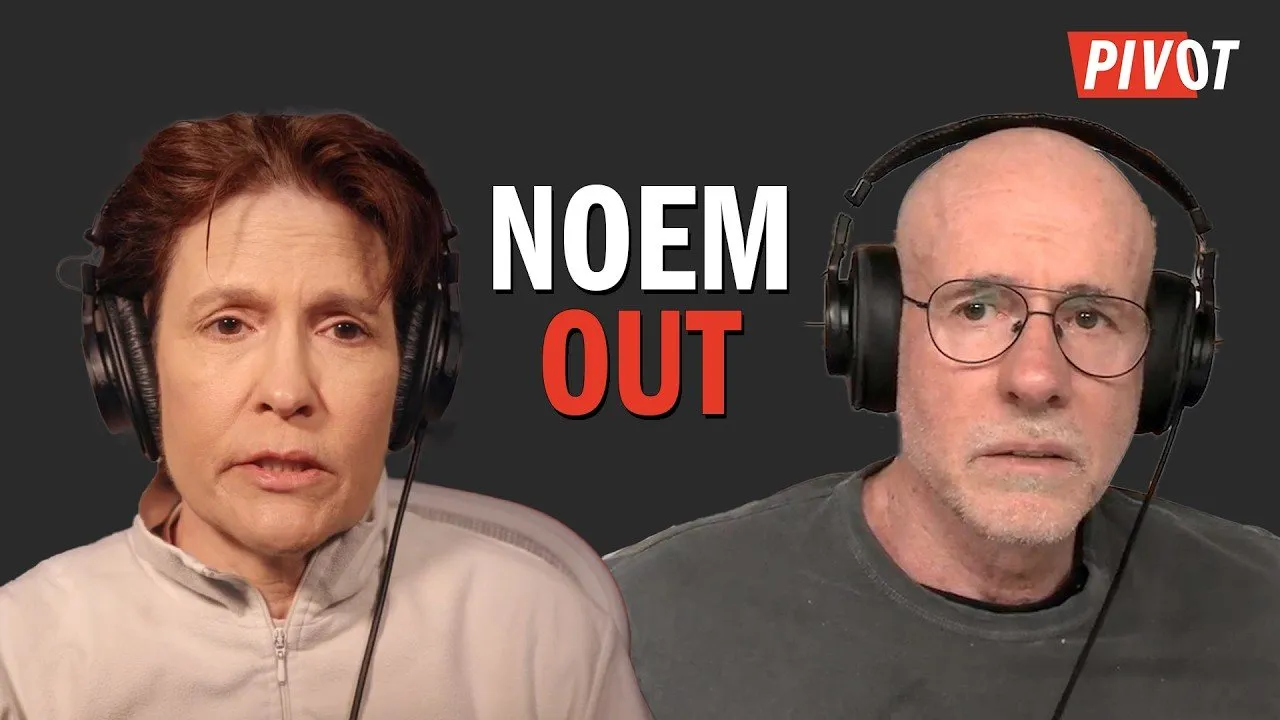
The political landscape in Washington is shifting rapidly as President Trump’s recent personnel moves, including the dismissal of Homeland Security Secretary Kristi Noem, signal a volatile and unpredictable administration. What was framed as a reassignment—dubbed by observers as a "special envoy to the Shield of the Americas"—is widely viewed as a blunt firing. This development serves as a stark reminder of the current White House management style: prioritize loyalty and personal optics above all else, often at the expense of professional dignity.
Key Takeaways
- Management Style: Trump’s tendency to replace high-ranking officials with little notice and humiliating public transitions underscores a lack of institutional stability.
- Corporate Accountability: The emergence of companies like Anthropic, which have taken a principled stance against questionable government contracts, is setting a new benchmark for corporate responsibility.
- Political Volatility: The 2026 midterm cycle is already heating up with record-breaking spending and intense primary clashes, signaling deep fractures within both parties.
- Economic Signals: Rising tensions in the Middle East and unilateral policy decisions are creating uncertainty in global markets, threatening long-term American economic prosperity.
The Trump Administration’s Management Chaos
The dismissal of Kristi Noem has highlighted a recurring pattern within the current executive branch. Observers note that the decision was likely spurred by self-serving behavior and excessive spending on personal promotion rather than the ethical concerns surrounding her tenure. Critics argue that the administration’s approach to staffing is fundamentally unstrategic and rooted in a desire to use appointees as political "anger pillows" before discarding them.
The Erosion of Institutional Norms
The ongoing congressional hearings reveal a broader degradation of decorum in government. With political operatives seemingly emboldened to deflect, attack, and obfuscate, the prestige of the Senate has suffered. Observers suggest that the "Roy Cohn" style of combative defense has become the default, replacing substantive debate with performative conflict.
Tech Giants at a Moral Crossroads
There is a growing divide in the tech sector regarding how firms should engage with the Pentagon and the administration. While some companies have faced backlash for "sloppy" and opportunistic deals, others are finding commercial success by taking a firm ethical stance.
The hero we didn't think we needed is Dario Amodei. He’s basically stepped up and he said no.
The Anthropic Effect
Anthropic’s recent refusal to engage in certain government contracts has paradoxically bolstered its market position. By prioritizing corporate ethics over blanket government compliance, they have signaled to other executives that saying "no" can be a significant competitive advantage. As consumers become more selective, the willingness of leaders to push back against government overreach may redefine the relationship between Silicon Valley and Washington.
The 2026 Midterm Landscape
The primary season for the 2026 midterms is already generating historic levels of campaign spending. In Texas, the rise of candidates who focus on class inequality and the influence of the billionaire class suggests that the electorate is increasingly receptive to populist rhetoric. The intense voter turnout on both sides of the aisle indicates that the upcoming general election will be a defining moment for the direction of American politics.
The Power of Populist Messaging
Candidates are finding traction by identifying the billionaire class as a central antagonist in their campaigns. This shift mirrors broader global trends where wealth inequality and the "genie coefficient" drive political change. Whether through tax reform or systemic restructuring, the focus on economic disparity is expected to remain a dominant theme through the next election cycle.
The Economic Implications of Unilateralism
The administration’s tendency to act unilaterally—without consulting allies or Congress—is causing significant concern among experts. By ignoring the established norms of international cooperation, the U.S. risks undermining its role as the "operating system" of the global economy. When the nation that previously enforced the rule of law appears to act as a rogue player, the downstream effects on energy prices and market stability are likely to be severe.
Ultimately, the current political and economic climate suggests a period of profound transition. Whether through the emergence of new corporate leaders willing to challenge the status quo or the shifting tides of midterm elections, the American public is witnessing a recalibration of power. As the administration continues to navigate internal chaos and external geopolitical pressure, the resilience of our democratic and economic institutions will be tested in ways that have not been seen in decades.