Table of Contents
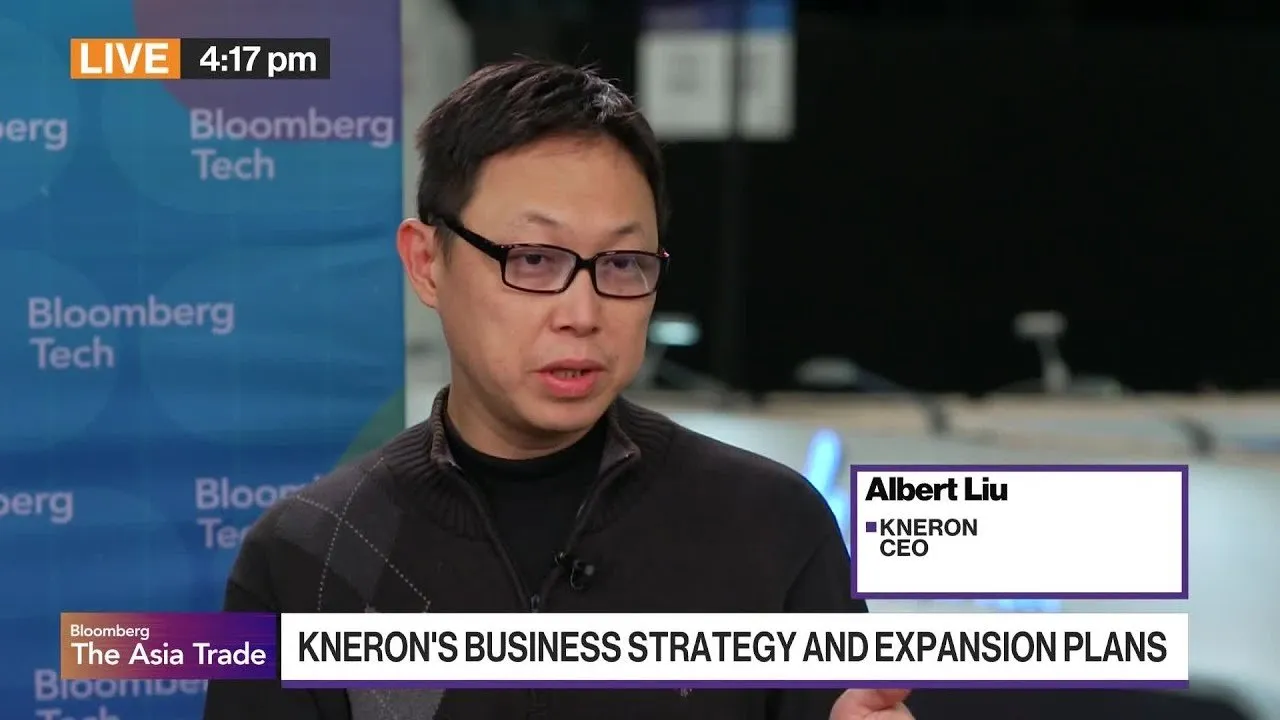
Kneron CEO Albert Liu detailed the semiconductor industry's pivotal transition from standard processors to specialized Neural Processing Units (NPUs) this week, positioning his company as a primary architect of efficient, on-device artificial intelligence. Speaking on the sidelines of CES, Liu outlined how Kneron’s low-power architecture is enabling major partners—including Qualcomm and South Korean search giant Naver—to deploy generative AI locally on devices, while also signaling that a major partnership announcement in the second quarter of this year will pave the way for a potential public listing.
Key Points
- Architectural Shift: Liu argues the industry is moving from power-hungry GPUs to efficient NPUs, comparing the evolution to the shift from physical media to streaming dongles.
- Strategic Partners: Kneron is actively working with industry heavyweights such as Qualcomm, Foxconn, Naver, Panasonic, and Garmin.
- Edge AI Advantage: The company’s technology allows businesses to build private, low-latency "personal GPTs" without relying on cloud-based hyperscalers.
- IPO Trajectory: Liu confirmed plans for a "meaningful" IPO, contingent on a major validation milestone expected to be announced in Q2.
The Evolution from GPU to NPU
While Graphics Processing Units (GPUs) have powered the current boom in artificial intelligence, Liu contends that the industry is approaching an inflection point where efficiency becomes paramount. He describes the current reliance on CPUs and GPUs as legacy architecture attempting to handle modern workloads, contrasting it with the purpose-built efficiency of the NPU.
Liu utilized a consumer electronics analogy to describe this transition, comparing traditional processors to VHS tapes and DVDs—bulky and older formats—while likening Kneron’s NPU technology to a modern streaming dongle: compact, efficient, and capable of delivering high-definition results without the massive hardware footprint.
"NPU is quite tiny, but it's the way that you get these high [performance] for AI purpose... It's not just the edge computing. If you want to learn a new structure, you most likely will read the textbook I wrote... This architecture can be on the edge like in your PC or your cell phone, but also can be in the data center."
According to Liu, the memory shortages and 3D packaging complexities currently plaguing the GPU market (such as High Bandwidth Memory or HBM bottlenecks) are less of a constraint for Kneron’s NPU architecture, which does not require the same massive power draw or thermal management.
Democratizing AI with On-Device Compute
A central pillar of Kneron’s business strategy is enabling "Edge AI"—processing artificial intelligence directly on physical devices rather than in remote data centers. This approach addresses two critical concerns for modern enterprises: latency and privacy.
Liu highlighted that relying on cloud-based models restricts capabilities due to the older architecture of CPUs. By shifting to NPUs, Kneron aims to allow users to run powerful applications, such as large language models (LLMs), directly on laptops and wearables without the heat generation associated with traditional chips.
"Once you use the game-changer technology, you pretty much can build your own personal GPT and your company's own GPT, which can be high privacy and also low latency... Right now our cell phone is more powerful than three decades of supercomputers."
Global Partnerships and Market Competition
Kneron has secured a diverse portfolio of clients and investors across the United States, East Asia, and the Middle East. Liu noted that the company generates significant revenue from Korea and Japan, citing a partnership with Naver, Korea's largest search engine provider. Additionally, the company has expanded its footprint into Saudi Arabia with a new site launched recently.
The company also maintains a complex relationship with industry giants. While Kneron competes for market share, it also collaborates closely with major players. Qualcomm, for instance, is both an investor in Kneron and a partner in intellectual property development. Liu also mentioned collaboration with Foxconn and a growing client list that includes Panasonic and Garmin.
Navigating the Geopolitical Landscape
Addressing the intense technological rivalry between the U.S. and China, Liu described Kneron as a pioneer with a "textbook" advantage in core innovation. While acknowledging that China is aggressively pursuing AI self-sufficiency due to geopolitical pressures, Liu believes Western-aligned technology still holds the lead in "zero-to-one" innovation.
Kneron continues to service Chinese customers, primarily in the consumer electronics and home appliance sectors—such as air conditioning manufacturers—while reserving more sensitive defense and security applications for other markets.
Future Outlook and IPO Plans
Looking ahead, Kneron is focused on cementing its status as a market leader before pursuing a public listing. Liu emphasized that the company is not looking for a premature exit but rather a "meaningful IPO" backed by a solid customer base and industry influence.
The CEO revealed that the company has already signed a significant deal with a top-five global customer in the United States. While the details remain under non-disclosure agreements (NDA), Liu indicated that this partnership serves as a critical validation point for their technology.
Kneron expects to announce this major partnership in the second quarter of this year. Following this milestone, Liu believes the company will have the proven track record required to lead the next wave of semiconductor public listings.