Table of Contents
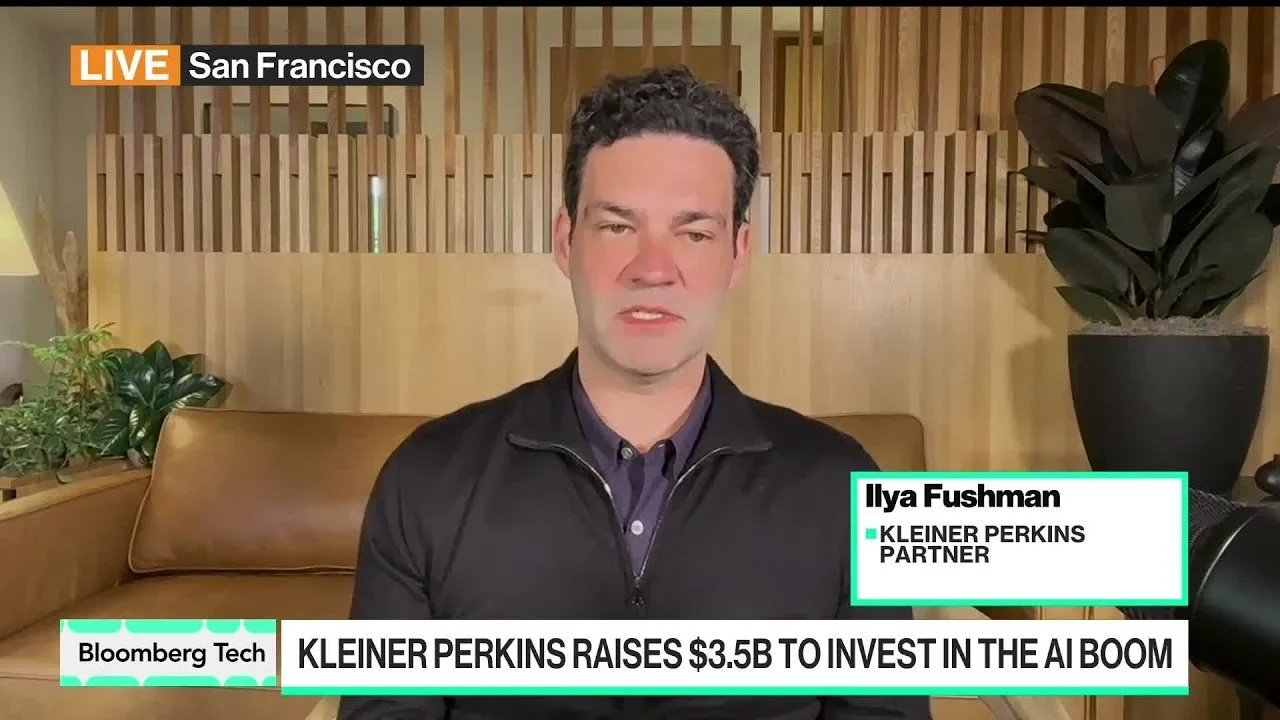
Venture capital giant Kleiner Perkins has successfully raised $3.5 billion to fuel its latest investment cycle, signaling continued institutional confidence in the artificial intelligence sector. The capital is split into $1 billion dedicated to early-stage venture funding and $2.5 billion earmarked for growth-stage investments, aiming to capitalize on what the firm characterizes as the most significant technological transformation in modern history.
Key Points
- $3.5 billion total raised: $1 billion for early-stage and $2.5 billion for growth-stage investments.
- Investment focus covers the AI application layer, infrastructure, and autonomy within the physical economy.
- High-conviction portfolio bets include Anthropic, Waymo, Harvey, and Open Evidence.
- The firm identifies a "future private market Mag Seven"—a group of companies expected to achieve unprecedented revenue scale and speed.
The Investment Thesis: Betting on Early Innings
According to Kleiner Perkins, the industry has transitioned past the initial "hype-driven" phase of AI and into a period of tangible enterprise integration. By deploying capital across both seed and growth stages, the firm intends to capture value as startups transition from experimental labs to high-velocity market performers.
The firm emphasizes that its strategy remains consistent: back companies as early as possible and aggressively "double down" as they achieve escape velocity. The substantial allocation toward growth funds reflects the reality that modern AI companies are reaching revenue scales at a pace previously unseen in the technology sector.
"We're really at the early innings of probably the biggest transformation in technology that any of us have witnessed," said an Ilya, partner at Kleiner Perkins. "We see companies growing at big scale faster than ever before. We see AI penetrate all facets of our lives."
Navigating the Physical and Digital Frontier
Beyond software and Large Language Models (LLMs), Kleiner Perkins is increasingly focused on the intersection of AI and the physical economy. This includes advancements in transportation, defense technology, and connectivity. With existing positions in high-profile entities like SpaceX and Waymo, the firm maintains that the next wave of value will stem from companies that bridge the gap between digital intelligence and physical-world execution.
The firm is actively looking for "model companies of the future"—entities capable of rivaling current industry leaders. By balancing its portfolio between emerging startups and established powerhouses, the firm aims to mitigate risk while participating in the rapid maturation of the AI ecosystem.
Addressing Societal Implications
While institutional investors remain optimistic, public sentiment regarding AI remains polarized, with concerns often centering on job displacement, energy consumption, and the speed of integration. Kleiner Perkins acknowledges these tensions, emphasizing that the primary long-term output of this technological shift will be improved quality of life and better access to critical services like healthcare and information.
The firm contends that the industry must be proactive in managing this transition. Future initiatives, both at the investment level and within portfolio companies, will likely focus on upskilling workforces to ensure that the "abundance" created by AI is distributed effectively across society.
Looking Ahead: The Path to Liquidity
The successful, oversubscribed fundraising round underscores a strong appetite among limited partners for exposure to the AI sector. Much of this interest is driven by the potential for liquidity events in the coming years. With companies like Anthropic and SpaceX moving toward potential public offerings, Kleiner Perkins is positioning itself to capitalize on a long-awaited thaw in the IPO market. As the firm looks toward 2026, the focus remains on identifying the next generation of industry leaders that will define the modern economic landscape.