Table of Contents
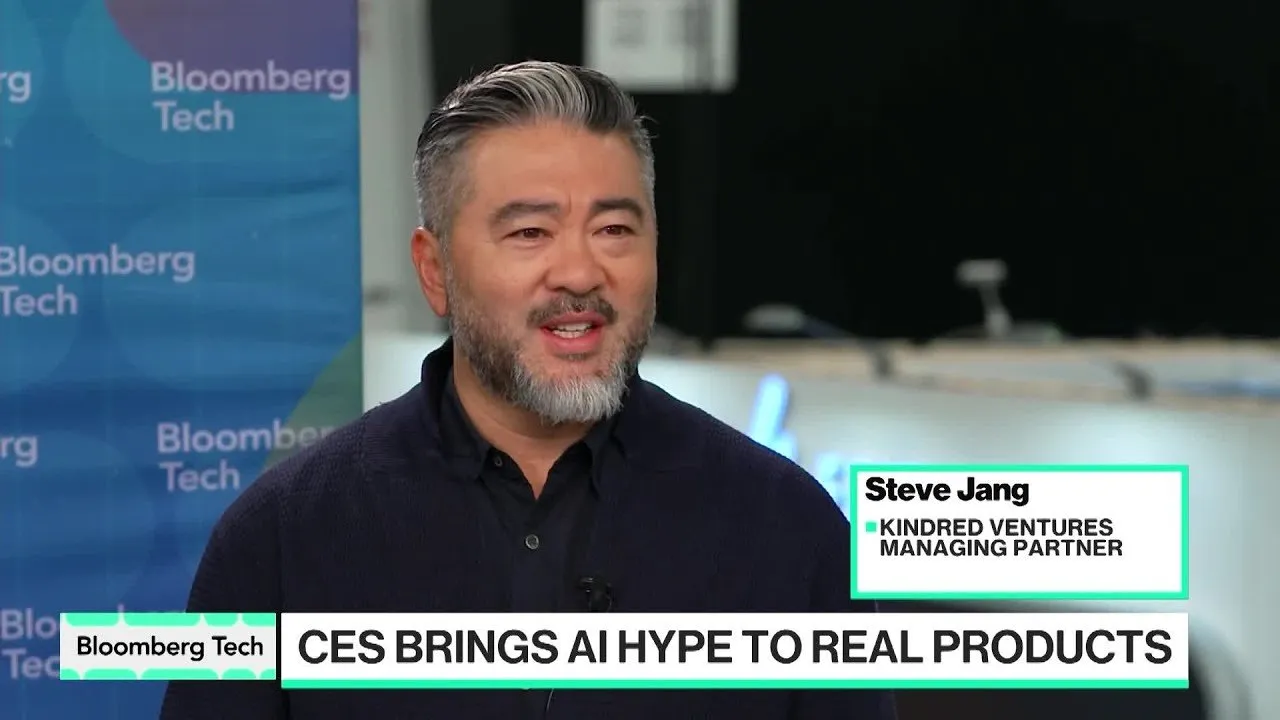
Uber and autonomous technology company Nuro have announced a strategic partnership with Lucid Motors to deploy Level 4 autonomous vehicles in the Bay Area later this year. Speaking at CES, the founder of Kindred Ventures highlighted this alliance as a pivotal moment in the shift toward "capital light" fleet management, while pointing to Nvidia’s growing dominance as the primary infrastructure provider for the sector.
Key Points
- New Alliance: Uber, Nuro, and Lucid are teaming up to launch self-driving taxis in the Bay Area by the end of the year.
- Strategic Pivot: Uber has successfully transitioned from developing proprietary hardware to a fleet management model using third-party autonomy stacks.
- Nvidia’s Role: The chipmaker is positioning itself as the "Fed for AI," providing the essential data, models, and compute power for the industry.
- Market Consolidation: The sector is expected to whittle down to two or three major players per region, similar to historical Silicon Valley innovation curves.
The Evolution of Autonomous Mobility
The collaboration marks a significant maturation in Uber's autonomous driving strategy. Ten years ago, under former CEO Travis Kalanick, Uber attempted to build its own self-driving technology stack from scratch. Under current CEO Dara Khosrowshahi, the company has pivoted to accelerate deployment through partnerships.
Nuro, previously known for its delivery pods, has expanded its scope with the launch of an autonomy intelligence platform—effectively an operating system that allows automakers to integrate self-driving capabilities. By retrofitting Lucid vehicles with Nuro’s Level 4 autonomy (full self-driving without human intervention) and deploying them on the Uber network, the partnership creates a cohesive ecosystem.
"You'll be able to open up your Uber app at the end of this year in the Bay Area and be able to take a self-driving car that's [a] capital light model. Let someone else take on the burden of the hardware in the stack, just do the fleet management."
This approach allows Uber to leverage its massive user base and fleet logistics experience without bearing the heavy research and development costs associated with hardware manufacturing.
Nvidia as the "Fed" of Artificial Intelligence
Beyond the immediate partnership, the Kindred Ventures executive identified Nvidia as the "kingmaker" of the sector. While competitors like Nuro build the software, Nvidia is providing the underlying infrastructure—chips, open-source models, and data sets—that powers these innovations.
The executive drew a parallel between the semiconductor giant and the Federal Reserve, noting that Nvidia is effectively setting the direction for the entire industry.
"They're very, very smart [in] saying... 'We're the Fed for AI. We're going to tell you the headline... and we're going to tell you where everyone's going to go.'"
Nvidia has transitioned its focus at CES from pure robotics to "physical AI," encompassing autonomy and mobility. By offering a "starter kit" for companies to build self-driving platforms, Nvidia incentivizes the creation of multiple competitors, all of whom rely on Nvidia GPUs to operate.
Consolidation and the Compute "Flip"
The autonomous vehicle market is following a classic Silicon Valley innovation curve: a crowded field of entrants eventually narrowing to a few dominant players. In the United States, the field is crystallizing around leaders like Waymo, Tesla, and Nuro, while Europe currently lacks Level 4 competitors.
This consolidation is driven by the immense resources required for training data and road testing. A similar trend is emerging in robotics and generative AI, where platforms are expected to reduce to two or three major winners.
Looking ahead, the industry is approaching a critical technical inflection point regarding computational demand. The need for "inference"—the processing power required to run AI models once they are trained—is projected to exceed the demand for training compute.
"Demand for compute is far exceeding supply... there's a battle royale happening here in compute."
As AI models move from development to deployment in physical robots and vehicles, the shortage of high-performance computing hardware is likely to intensify, further favoring established entities with secured supply chains.