Table of Contents
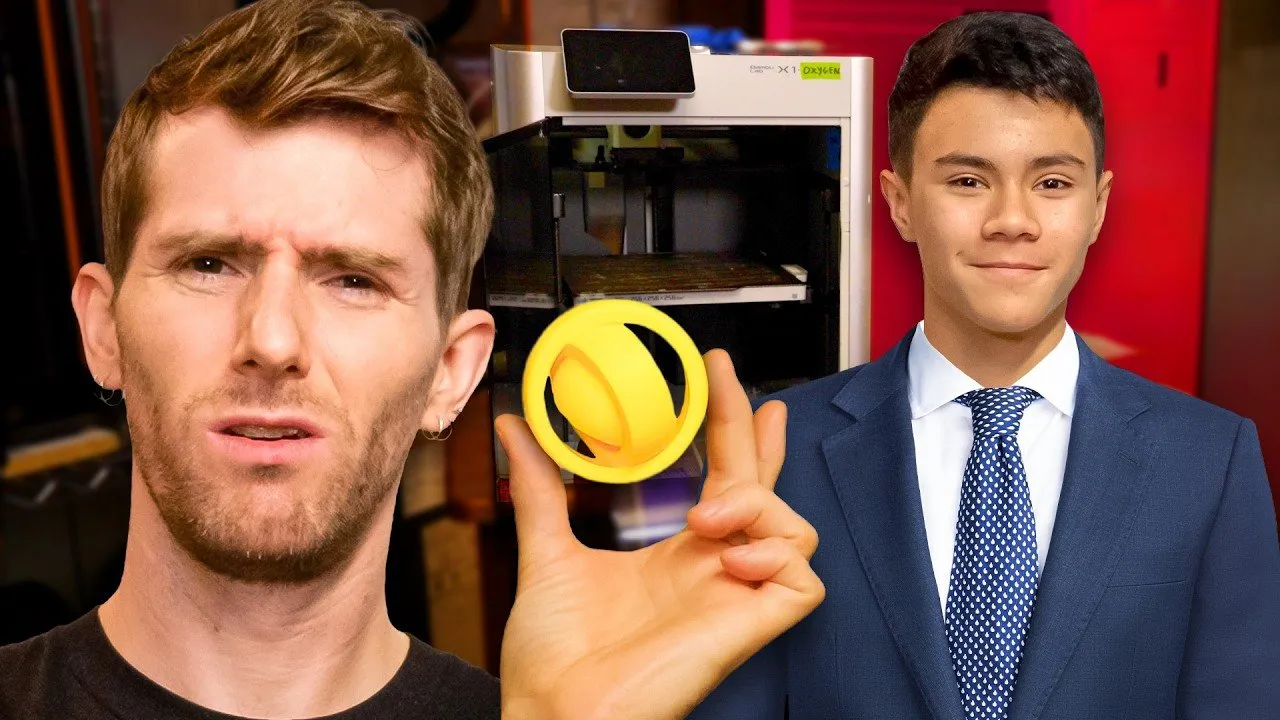
What began as an educational initiative to teach 3D modeling has evolved into a profitable basement-based micro-enterprise, generating hundreds of dollars in revenue for a pair of young entrepreneurs. Following a successful showing at a local school entrepreneur fair, the burgeoning business is now scaling operations by integrating industrial-grade hardware and optimizing production workflows to meet rising demand from both students and faculty.
Key Points
- Revenue Growth: The youth-led venture has reached a total of $500 in sales, with a single school event netting $200 through the sale of 3D-printed fidgets and gadgets.
- Hardware Expansion: To meet scaling demands, the "print farm" has expanded to include a Prusa Core 1 and several retired Bambu Lab X1C units, requiring a full reorganization of the workspace.
- Technical Upgrades: The operation integrated high-end Panda Revo hotends and $75 Obsidian nozzles to handle abrasive materials and allow for rapid nozzle swaps.
- Efficiency Optimization: New software configurations and "purge-into-infill" techniques aim to reduce filament waste by approximately 50% during multi-color print jobs.
From Educational Hobby to Micro-Enterprise
The business originated a year ago when the children were gifted a 3D printer under the guise of making toys. The primary goal was to serve as a catalyst for learning 3D modeling and technology; however, the project quickly transitioned into a commercial endeavor. The "number one seller" currently consists of high-demand fidget toys that have gained popularity not only among classmates but also with adult faculty members.
As the venture outgrew its "mechanical room" origins, the transition from hobbyist printing to a small-scale production line necessitated a professional-grade overhaul. The shift highlights a growing trend in "garage-tech" entrepreneurship, where accessible additive manufacturing allows young creators to bypass traditional supply chains and enter the market directly.
Scaling Infrastructure and Maintenance
Scaling a 3D printing business requires more than additional hardware; it demands rigorous maintenance and organizational logistics. The team recently repaired a Bambu P1S that had been out of commission due to a destroyed print head. To prevent future downtime, they moved toward a modular system using BQ’s Panda Revo hotends.
The introduction of Obsidian nozzles represents a significant capital investment at $75 per unit. These components are essential for printing with abrasive filaments that would otherwise erode standard brass nozzles. According to the father and lead technician on the project:
"The deal we have... is we have no problem encouraging their entrepreneurship. We're willing to provide the equipment, but consumables they need to reimburse us for."
This financial structure forces the young entrepreneurs to account for "overhead" costs, including filament, electricity, and specialized hardware, mirroring real-world business accounting practices.
Operational Efficiency and Waste Management
A major hurdle in scaling multi-filament 3D printing is the significant amount of "purge" waste generated during color changes. In previous tests, a 125-gram model could result in over 500 grams of wasted filament due to default purge settings and "prime towers." To mitigate these losses and improve the bottom line, the team implemented several technical adjustments:
- Long Retraction: Reducing the amount of residual filament left in the hotend during swaps.
- Purge-into-Infill: Using the "waste" filament to build the internal structure of the model where color purity is irrelevant.
- Flushing Multiplier Adjustments: Reducing the flushing multiplier to 0.5, effectively cutting material waste in half.
Safety has also become a priority as the farm moves into more confined spaces. Because 3D printing can release volatile organic compounds (VOCs), the team is integrating air purification systems and sticking to safer materials like PLA and PETG rather than engineering-grade plastics like ABS.
Future Outlook and Automation
The next phase for this basement enterprise involves further streamlining the "print-to-ship" pipeline. This includes the potential adoption of AutoFarm3D or OctoPrint’s continuous printing plugins, which allow for automatic print removal and consecutive job starts. Such automation would enable the farm to operate at near-constant capacity without manual intervention between every print. As the young founders prepare for "round two" of their local entrepreneur fair, the focus remains on maintaining high inventory levels while managing the rising costs of success.