
Table of Contents
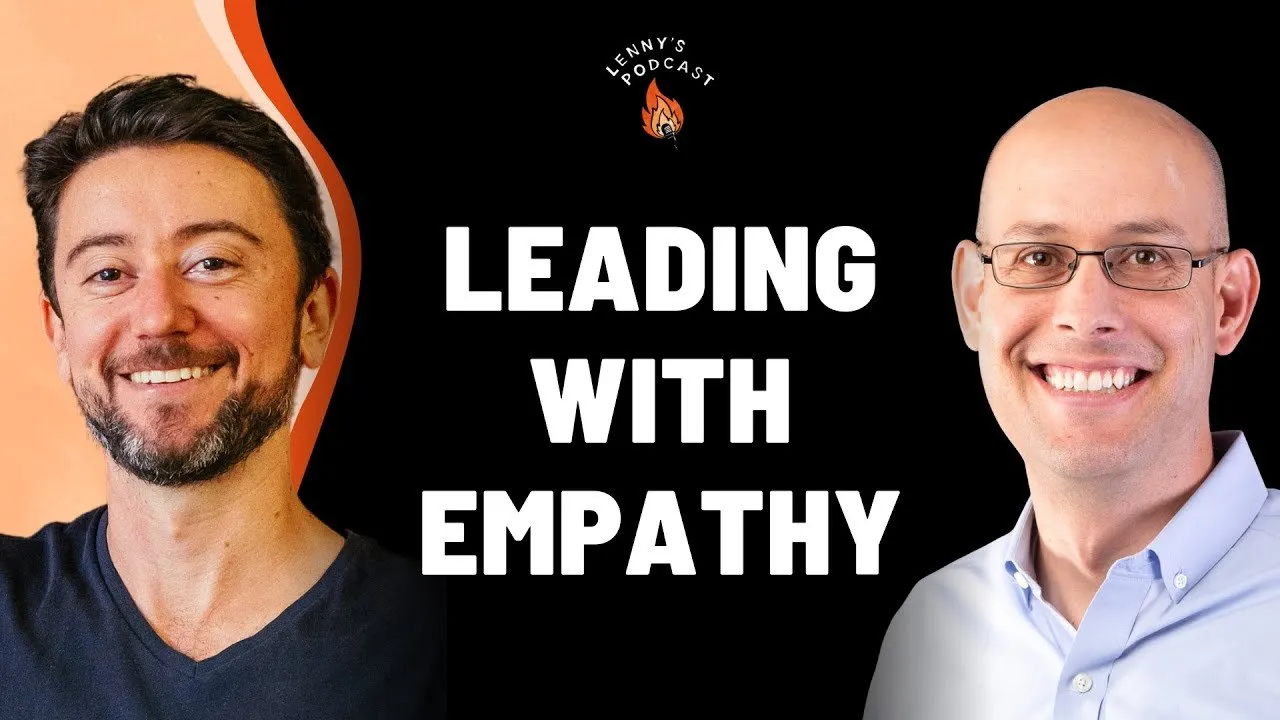
It is rare to encounter an executive who has successfully led legal, HR, marketing, customer support, and corporate development teams all within the same tenure. Yet, this is exactly the path Keith Yandell carved out during his seven years at DoorDash. Originally a litigator who led legal efforts at Uber, Yandell transitioned into a "fixer" role at DoorDash, taking over disparate organizations despite having no subject matter expertise in those specific fields.
Yandell’s journey offers a masterclass in generalist leadership, the power of radical transparency, and how to scale culture in a hyper-growth environment. His approach challenges traditional management dogma—arguing that managers should help employees find their next jobs and that generalists are often better positioned to achieve 10x outcomes than specialists. Below are the insights on how empathy, directness, and rigorous operational discipline drove DoorDash’s ascent to market leadership.
Key Takeaways
- Generalists drive reinvention: While specialists are excellent at incremental improvements, generalists are often better equipped to rethink systems entirely and achieve exponential results.
- Transparency builds loyalty: Openly helping your direct reports find their next job—even outside the company—paradoxically increases retention and trust.
- Mandate constructive feedback: Use the "T3 B3" method (three top strengths, three areas for improvement) to force necessary, difficult conversations.
- Steel-man the opposition: In heated executive debates, force leaders to argue the opposing side’s case to generate empathy and accelerate decision-making.
- Operationalize customer obsession: Programs like "WeDash" ensure that every employee, from engineers to the C-suite, understands the on-the-ground reality of the product.
The Case for the Generalist Leader
There is a pervasive belief in corporate structures that functional leadership requires deep subject matter expertise. When DoorDash CEO Tony Xu asked Yandell to move from Legal to run Marketing, and later other departments, Yandell initially suffered from imposter syndrome. Xu countered this with a philosophy inspired by David Epstein’s book, Range.
The thesis is that while specialists are likely to optimize existing processes, they rarely reinvent them. They tend to do things the way they have always been done. To achieve a 10x outcome, you often need a generalist who can look at a problem with fresh eyes. Yandell’s playbook for leading a team where he lacked expertise was simple but effective:
- Admit what you don’t know immediately to build trust.
- Hire the absolute best subject matter experts available.
- Clear roadblocks and let the experts execute.
By positioning himself as an enabler rather than the technical authority, Yandell attracted top-tier talent who appreciated the autonomy and the "air cover" he provided.
Radical Transparency and Management Style
Yandell’s management style is defined by an unusual level of openness, codified in a "How to Work with Keith" document he shares with his teams. This document outlines his flaws, his expectations, and a controversial promise: he commits to helping his direct reports find their next job, regardless of whether that job is at DoorDash.
The "Next Job" Philosophy
Most managers fear their best talent leaving; Yandell leans into it. He explicitly tells his team that life is too short to stay in a role they do not enjoy. By offering to review outside offers and discuss career trajectories openly, he achieves two things:
- No surprises: He knows exactly when an employee is unhappy or looking, allowing for better succession planning.
- Deep loyalty: Employees stay longer because they know their manager prioritizes their long-term career over short-term company needs.
"If someone runs a blind reference on me at this point... what they're going to hear is Keith's gonna put you first. And I think that's really motivating for a lot of people."
The T3 B3 Feedback Loop
To cultivate a culture where feedback is actually shared, Yandell utilizes a method he learned from Travis Kalanick at Uber called T3 B3. In reviews, employees must provide three positive traits (Top 3) and three constructive criticisms (Bottom 3) about their manager.
Crucially, constructive feedback is mandatory. If an employee claims everything is fine, the manager rejects the review. This creates a safe container for criticism; the employee isn't "complaining," they are simply fulfilling a job requirement. This removes the social friction of giving a boss bad news.
Cultivating Customer Obsession
At many tech companies, "customer obsession" is a poster on the wall. At DoorDash, it is operationalized through the WeDash program. Four times a year, every employee—including the CEO and C-suite—is required to complete deliveries.
This dogfooding process is not just for show; it serves as a critical bug-hunting mechanism. Executives experience restaurant delays, routing errors, and app glitches firsthand. It also acts as a cultural filter during hiring. If a highly qualified engineer feels that delivering food is "beneath" them, they are screened out of the hiring process for lacking the requisite humility.
The intensity of this obsession is best illustrated by an interaction involving Yandell’s eight-year-old daughter. During a WeDash delivery, they encountered a routing logic error that required driving 18 miles for a cold coffee. She insisted on calling the CEO directly.
"She just lays into him... 'How could you allow this experience if you really care about your customers?' ... Tony was great. He said, 'This is one of the most insightful pieces of feedback I've gotten recently.' By the time we got home, he'd actually sent an email out to the product organization calling out the problem."
Decision Making in the C-Suite
As a leader who has worn many hats, Yandell often plays the role of a unifying force during contentious executive meetings. When different business lines have competing incentives—for example, one GM prioritizing profitability while another prioritizes growth—deadlocks can occur.
To break these logjams, Yandell employs a "steel-manning" technique. He asks the profitability advocate to articulate the growth advocate's best arguments, and vice versa. This exercise forces empathy and ensures that each side feels heard. Once the debate is exhausted, the culture shifts to clear decision-making mechanics:
- Identify the singular decision-maker (tie-breaker).
- Set a strict time horizon for the decision.
- Once decided, the team must "disagree and commit."
Navigating Crisis and Rejection
DoorDash’s history is marked by high highs and near-death experiences. During the Series D fundraising, the company had weeks of runway left and was rejected by nearly every major venture capitalist. This period taught the leadership team that "tough times make companies."
The Compound Interest of Urgency
Survival often comes down to speed. The internal drive at DoorDash focuses on the compound interest of shipping schedules. If a team can pull a roadmap forward by one week, they aren't just gaining a week; they are starting the next project a week sooner. Over a year, this urgency compounds, allowing the company to lap competitors who are just slightly slower.
For founders currently facing a difficult fundraising environment, Yandell offers a reminder on resilience:
"Every business that you have heard of has gotten rejected by at least a handful of venture capitalists... it only takes one yes. So you got to keep going."
Bridging Business Development and Product
Currently leading Business Development (BD) and Corporate Development, Yandell has refined how non-technical teams interface with Product and Engineering. A common friction point in startups is BD signing deals that require bespoke engineering work, turning the product team into a consultancy.
To solve this, Yandell adheres to two principles:
- Dream Big, Start Small: Do not build complex integrations for unproven partnerships. Test the thesis with manual operations first. If you want to put room service in a hotel, hand out promo codes physically before building an API integration.
- Build Platforms, Not One-Offs: If a partnership requires a new feature, Product should build it as a scalable platform capability that can be used for the next 50 partners, not a hard-coded solution for one.
Conclusion
Keith Yandell’s tenure at DoorDash illustrates that the most effective leaders are not necessarily the ones with the deepest technical knowledge, but those with the highest capacity for empathy and the greatest range. Whether it is steel-manning a colleague's argument, helping a direct report navigate their career, or personally delivering a sandwich to understand a routing bug, the through-line is a willingness to engage deeply with the human element of the business. In a world of specialists, the generalist who leads with humility and urgency is the one who wins.

)