Table of Contents
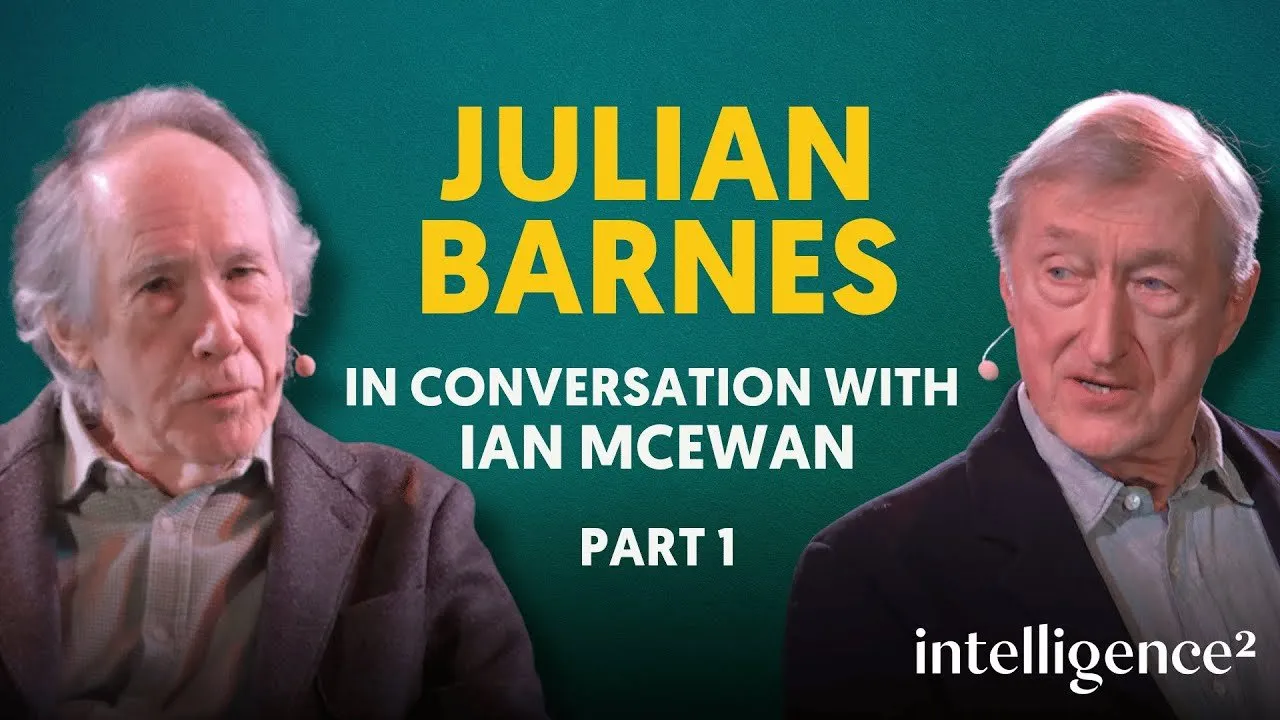
When two titans of contemporary British literature take the stage together for the first time in a fifty-year friendship, the result is less of a formal interview and more of a masterclass in memory, craft, and the passage of time. Julian Barnes and Ian McEwan, often grouped together as defining voices of their generation, recently sat down to dismantle the architecture of their shared past. Their conversation moved fluidly from the smoke-filled pubs of 1970s London to the neurological intricacies of memory, offering a rare glimpse into the private rapport behind their public accolades. What emerged was a poignant meditation on how writers reconstruct their lives through fiction and how they face the inevitable shrinking of the future.
Key Takeaways
- The Unreliability of Memory: Barnes and McEwan explore how repeated storytelling acts as an editing process, eventually replacing the original event with a polished, static anecdote.
- The 1970s Literary Scene: The duo reflects on the Pillars of Hercules era, dispelling myths of a "boys' club" by highlighting the diversity of the 1983 Best of Young British Novelists list.
- The Architecture of Fiction: McEwan argues that the true structure of a novel often only becomes visible upon rereading, while Barnes admits that form frequently emerges during the writing process rather than before it.
- Aging and Legacy: The conversation touches on the "radiative effects of grief" and the humorous, if grim, reality that death reduces complex lives into a "bookshelf of works" and a handful of anecdotes.
The Pillars of Hercules and the Myth of the 1970s
The conversation began by rooting itself in the physical geography of their early careers: the Pillars of Hercules pub in London’s Soho. This was the epicenter of the literary scene in the mid-1970s, acting as the unofficial saloon for the New Review. It was here, amidst cigarette smoke and "gin and bitter lemons," that a generation of writers—including Martin Amis, Christopher Hitchens, and Barnes and McEwan themselves—forged their identities.
While literary history often paints this era as an exclusive, white male stronghold, Barnes offered a necessary correction based on evidence rather than nostalgia. He pointed to the famous 1983 Granta "Best of Young British Novelists" list to challenge modern assumptions.
"The sort of semi-myth that it was all white English boys... It wasn't. It was the most diverse list that there has ever been. And subsequent lists have been much less diverse... We were showing the way with diversity. Little did we know, we just thought these are the good writers."
They recalled the influence of "avuncular figures" and literary editors like Ian Hamilton and Terry Kilmartin, who guided them with a mix of severity and soft-hearted patronage. These figures, now gone, served as the gatekeepers of a smaller, more concentrated literary world, one defined by the New Statesman and The Observer rather than social media influencers.
The Neuroscience of Memory and "Involuntary Autobiographies"
A central theme of the evening was the fragility and malleability of memory. Barnes read a passage from his work exploring "Involuntary Autobiographical Memories" (IAMs). Moving beyond the romanticized Proustian "madeleine moment," Barnes introduced a more terrifying concept based on a case study of a man who, upon tasting apple pie, was forced to relive every apple pie he had ever eaten in chronological order.
Barnes extrapolated this into a horrifying thought experiment regarding moral accounting. If the brain stored a perfect chronological record of our lives, it would not just be a repository of pies, but of moral failings.
"How would you face the record... of all your lies, hypocrisies, cruelties, both avoidable and seemingly unavoidable? Your harsh forgettings, your dissimulations, your broken promises... Not just the actual failings, but the imagined and desired ones."
This discussion highlighted a paradox of the human condition: we rely on memory to construct our identity, yet the very act of remembering is an act of fiction. As McEwan noted, history is edited. The more we tell a story, the more we solidify the narrative and distance ourselves from the raw truth of the event.
The Meta-Fictional Mirror
McEwan turned his critical eye toward the structure of Barnes' work, specifically praising a narrative device where the author seems to step through the looking glass. He described a section of Barnes' writing where the narrator—ostensibly Barnes himself—meets with fictional characters, Steven and Jean, to offer relationship advice.
This blurring of lines between the creator and the created represents what McEwan called a "modern, postmodern, post-postmodern fictional magic." It raises questions about the emotional stakes of fiction. When an author treats their characters as real people seeking counsel, they dissolve the barrier between art and life.
The Architecture of Rereading
McEwan posited that the true "architecture" of a novel is often invisible during a first read, where the consumer is driven by plot and character. It is only in the rereading that the structural genius becomes apparent. Barnes agreed but demystified the process, admitting that this architecture is rarely a pre-planned blueprint.
"I somehow assumed that... the novelist sort of ticked off this and ticked off that... In my experience, that's not the case. That often the form comes with the writing."
For Barnes, the finished novel acts as a way to forget the false trails and the "ghost books" that were never written, solidifying the final product as the only inevitable outcome.
On Aging, Grief, and the "Posh Bingo" of Prizes
The dialogue inevitably turned toward mortality, a subject Barnes has tackled with devastating clarity in works like Levels of Life. The two friends discussed the transition from being "nasty teenagers" breaking rules to becoming the elder statesmen on the shelf. There was a dark humor in their recognition that their mentors have now "shrunk into anecdotes."
They joked about the Booker Prize, which Barnes once famously dismissed as "posh bingo"—a stance he has softened on since winning it, though he wryly noted the only way to stay sane is to treat it as a lottery. The conversation carried the weight of their shared history, acknowledging that they are now in the years where peers begin to disappear.
The Final Edit
Ultimately, the conversation served as a testament to the endurance of friendship and the written word. They touched on the idea of when a writer should stop—referencing Martin Amis’s suggestion that perhaps 70 or 80 is the cutoff—though Barnes, currently rereading Dante and Tolstoy, shows no sign of slowing down.
As they looked back on 50 years of shared history, from the aggressive ambition of their youth to the reflective calm of their seventies, the audience was left with a powerful image: a life not measured in years, but in 3.5 feet of books on a shelf, inscribed with love.
Conclusion
The meeting of Julian Barnes and Ian McEwan was more than a literary event; it was a live demonstration of how life is transmuted into art. By exploring the fallibility of memory and the inevitability of loss, they underscored the writer's primary job: to capture the fleeting, edited truth of human experience before it fades completely into anecdote. As Barnes noted, we may all eventually be "hosed off the street," but until then, the work continues.