Table of Contents
When discussing the genealogy of modern mixed martial arts (MMA), the conversation often stops at UFC 1. However, the true roots of American full-contact fighting go deeper, tracing back to the gritty, experimental dojos of the 1970s. Few locations hold as much historical weight as The Jet Center in Los Angeles.
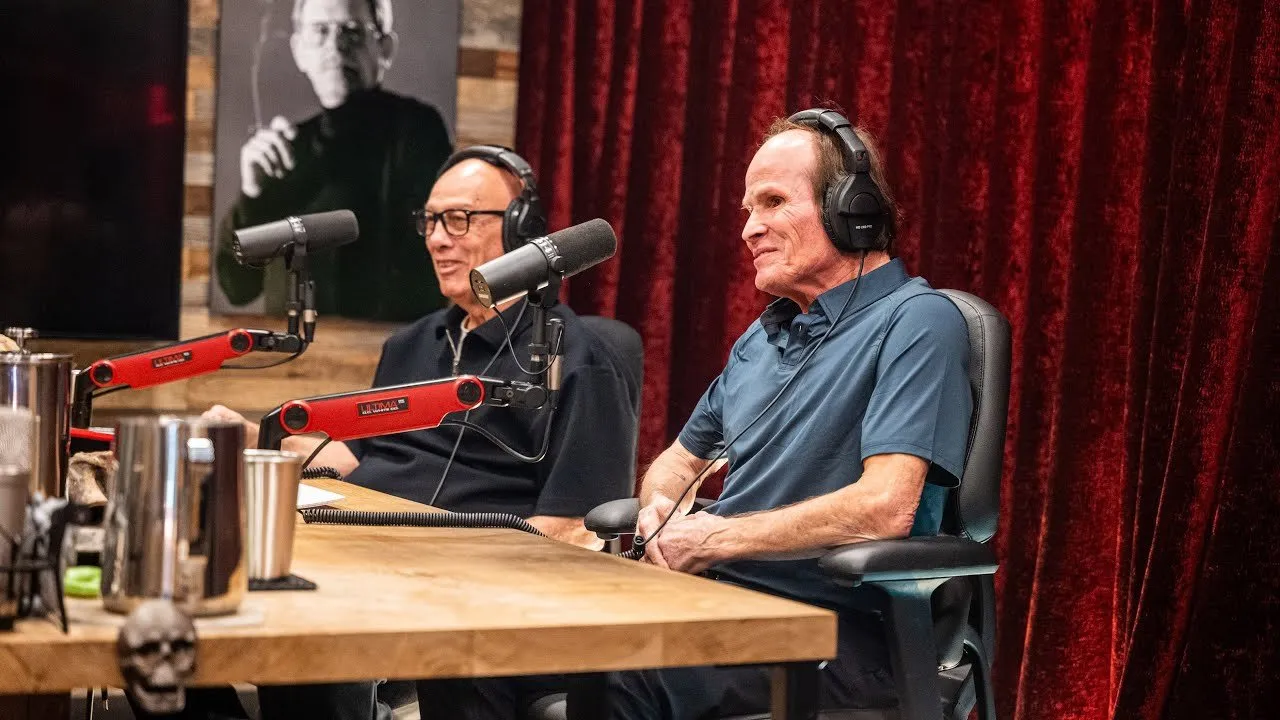
In a revealing conversation on the JRE MMA Show, Joe Rogan sat down with two living legends: Benny "The Jet" Urquidez and William "Blinky" Rodriguez. These men were not just competitors; they were architects of a combat sports revolution. From fighting in "no rules" tournaments in Hawaii decades before the Octagon existed to inventing modern safety equipment, their influence is woven into the fabric of fighting. Their discussion explores the brutal evolution of kickboxing, the cultural collision with Muay Thai, and the profound spiritual journey that accompanies a life of combat.
Key Takeaways
- The Jet Center Legacy: Benny and Blinky established a training ground that served as a melting pot, mixing professional fighters, gang members seeking a way out, and high-powered attorneys, all under the banner of discipline.
- The "No Rules" Era: Long before 1993, Urquidez and Rodriguez participated in unsanctioned, open-weight tournaments in Hawaii that laid the groundwork for modern MMA.
- Innovation through Pain: Benny "The Jet" Urquidez is credited with inventing the modern Velcro shin guard after realizing the brutality of checking kicks during his early bouts with Thai fighters.
- The Schism of Kickboxing: The split between PKA (above the waist) and WKA (international rules) dramatically altered the trajectory of striking sports in America.
- The Power of Forgiveness: Blinky Rodriguez shares a harrowing and redemptive story of meeting his son's killer in prison, illustrating the spiritual depth of true martial arts.
The Jet Center: A Cultural Melting Pot and "Mirror of Truth"
For Joe Rogan, the connection to Benny and Blinky is personal. Arriving in Los Angeles in 1994, Rogan’s first stop was the legendary Jet Center. The gym was more than a facility; it was a social experiment and a crucible for character development. It operated on a philosophy that the dojo should "mirror your truth," forcing individuals to confront their insecurities, fears, and aggression in a controlled environment.
The Ecosystem of the Gym
- Social Integration: The gym was unique for training active gang members alongside white-collar professionals. Rogan recalls the intimidating atmosphere of sparring with hardened street fighters who were there as part of an outreach program.
- The "Fighting Attorneys": Blinky Rodriguez noted a group of lawyers who trained at the center. Inside the ring, social status evaporated; they sparred with humility and intensity. Outside, they returned to their professional personas, but the gym created a bond that transcended their day jobs.
- Outreach and Transformation: The gym wasn't just about fighting; it was about saving lives. Following personal tragedies, Rodriguez and Urquidez used martial arts as a vehicle to pull youth out of generational violence, offering discipline as an alternative to the streets.
- Confronting Fear: The training methodology was designed to induce "survival mode." By pushing students to their breaking point, the instructors could bring hidden emotions—anger, fear, frustration—to the surface, allowing them to be reprogrammed into confidence and composure.
- Silent Confidence: The ultimate goal was to replace "bravado"—the loud, false confidence often seen in street culture—with the silent, lethal confidence of a trained martial artist who has nothing to prove.
- Physical Legacy: The physical structure of the gym itself has a mythical origin story. Blinky Rodriguez dreamt of the gym's layout, including the steam rooms and Jacuzzis, the night before Benny showed him a sketch of the exact same layout drawn on toilet paper while in Japan.
"The real battle is inside yourself... Martial arts teaches you like, man, your battle is in the gym tomorrow. Like get back in there tomorrow and get better... and you're going to learn and grow and then you're going to realize like I've been fighting my own self for this whole time."
The "No Rules" Era and the Collision with Muay Thai
History often forgets that before the unification of rules, fighters like Benny Urquidez were stepping into the unknown. The conversation highlighted a pivotal era in the mid-1970s where styles clashed with violent consequences. This was a time of pure experimentation, where American karate champions had to adapt or be broken by international styles.
Adapting to a New World of Combat
- The Hawaii Tournaments (1973-1975): Benny and Blinky fought in "no rules" brackets in Hawaii. These were single-elimination tournaments with no weight classes. Urquidez, weighing roughly 145 lbs, frequently fought men over 200 lbs, relying on Judo backgrounds to survive grappling exchanges.
- The "Muay Thai" Misunderstanding: When first asked to fight a "Muay Thai" fighter, Benny famously asked, "Who is Muay Thai?" assuming it was a person's name. He entered the ring with zero knowledge of the Art of Eight Limbs.
- The First Leg Kicks: During his first bout against a Thai competitor, Benny was shocked by the leg kicks. He described his eyes "bulging out" after the first impact, realizing that while his legs were strong, he had never been trained to withstand bone-on-bone impact.
- Invention of the Shin Guard: Desperate to practice checking kicks without crippling his sparring partners, Benny visited a local cobbler. He asked for a pad to be created with a new fastener called "Velcro." This improvisation effectively birthed the modern martial arts shin guard.
- Thai Conditioning vs. American Tech: While the Americans were inventing pads, the Thais were using numbing sprays and kicking banana trees. The cultural exchange eventually led to Thai fighters adopting the safety gear Urquidez introduced.
- The Evolution of the Calf Kick: Rogan and Urquidez discussed the modern resurgence of low kicks, specifically the calf kick. They noted that Japanese Kyokushin fighters are currently using low kicks to dominate Thai fighters, representing a fascinating shift in the global striking meta.
The Schism: PKA, WKA, and the Stagnation of American Kickboxing
A significant portion of the podcast was dedicated to the "what if" of American kickboxing. In the 1970s and 80s, the sport split into two distinct directions: the Professional Karate Association (PKA) and the World Karate Association (WKA). This divergence, driven by safety concerns and marketability, had lasting effects on how American fighters developed compared to their international counterparts.
The Rules That Changed the Sport
- Protecting the Stars: The PKA implemented a rule prohibiting kicks below the waist. This was largely done to protect their star, Bill "Superfoot" Wallace, who had a bad knee and disliked leg kicks. While this extended Wallace's career, it isolated American fighters from the reality of global combat.
- The "Kick of the 80s": PKA was marketed heavily as the "Kick of the 80s," but the rules created a style of "sloppy boxing" mixed with mandatory high kicks. Fighters had to land a minimum of eight kicks per round, turning bouts into math equations rather than fights.
- The WKA Response: Benny Urquidez and his brother Arnold founded the WKA to allow international rules, including leg kicks and sweeps. This decision kept them competitive in Japan and Thailand, where the "waist-up" rule was viewed as unrealistic.
- The Dennis Alexio Incident: The danger of ignoring leg kicks was illustrated by the career of Dennis Alexio. A dominant American heavyweight, Alexio fought Stan Longinidis under rules that allowed leg kicks. Unprepared for the trauma, Alexio suffered a broken femur from a low kick, ending the fight instantly.
- The Missed Opportunity: Rogan argues that if the PKA had allowed leg kicks and full Muay Thai rules from the start, kickboxing might have become as big as MMA is today in America. Instead, the sanitized ruleset failed to capture the long-term interest of the public.
- The Future of Stand-Up: There is a current push, championed by Rogan, for the UFC or similar organizations to host stand-up only bouts in small gloves (4oz), bridging the gap between the excitement of MMA and the technique of kickboxing.
"It's high-level problem solving with dire physical consequences."
Pioneers of Danger: Safety, Gender, and The Ali Experiment
The transition from traditional martial arts to full-contact fighting was fraught with dangerous experiments. Urquidez and Rodriguez reminisced about the era's legends, the lack of safety standards, and the trailblazers who broke gender barriers.
Breaking Barriers and Bones
- Lily Urquidez: Benny’s sister, Lily, was a monumental figure in combat sports. A rough-and-tumble fighter who participated in roller derby and street fights, she became the first woman to hold world titles in both boxing and kickboxing, paving the way for modern icons like Lucia Rijker and Claressa Shields.
- Ali vs. Inoki: The group analyzed the infamous 1976 mixed-rules bout between Muhammad Ali and Antonio Inoki. Benny, who fought on the undercard, witnessed the aftermath. Inoki spent the fight on his back kicking Ali’s legs, resulting in massive blood clots and infection for Ali, permanently compromising his footwork.
- The Eye Poke Problem: Rogan and the guests discussed the persistent issue of eye pokes in modern MMA. Rogan proposed a "mitten" design for MMA gloves that covers the fingertips, preventing accidental pokes while still allowing for grappling, contrasting it with the dangerous open-finger design currently used.
- Historical "Cheating": The conversation touched on the "dark arts" of early boxing and fighting, such as soaking horsehair gloves in water to make them rock-hard or using "loaded" wraps, techniques that were common before strict commission oversight.
- Gene LeBell’s Toughness: Stories were shared about "Judo" Gene LeBell, a pioneer of grappling who would choke students unconscious as a rite of passage. Even in his 70s, LeBell was known to handle street thugs with ease, exemplifying the longevity of grappling skill.
- The Evolution of Safety: The shift from "shake it off" culture to understanding CTE (Chronic Traumatic Encephalopathy) was a major topic. The Jet Center was notorious for hard sparring wars, but modern science has shifted training toward technical sparring to preserve the athlete's brain.
The Spiritual Warrior: Forgiveness as the Ultimate Weapon
Perhaps the most powerful segment of the interview moved away from physical combat to spiritual warfare. Blinky Rodriguez shared the tragic story of his son’s death in a drive-by shooting, an event that could have led to a spiral of vengeance but instead birthed a movement of peace.
The Redemption of Blinky Rodriguez
- The Tragedy: Blinky's son was killed randomly while learning to drive a stick shift. This event forced Rodriguez to confront the violence in his community not with fists, but with intervention.
- The Prison Meeting: Decades after the murder, Rodriguez received a request to meet his son’s killer in prison. Despite his internal struggle, a spiritual intuition told him to "say yes."
- The Embrace: Upon meeting the inmate, the man asked Blinky for a hug. Rodriguez embraced the man who killed his son, and both men wept. This moment of radical forgiveness broke the cycle of hatred.
- Spiritual Guidance: Rodriguez ended up leading the inmate in prayer, an act he describes as "leaving the 99 to save the one." He views this act of forgiveness as more powerful than any physical strike he ever threw in the ring.
- The New Vision: Both Benny and Blinky are currently planning a new facility. Moving beyond a simple gym, they envision a "safe haven" designed to treat the mind, body, and spirit, utilizing custom equipment and the "mirroring truth" philosophy to help people from all walks of life heal from trauma.
- The Definition of a Warrior: The consensus among the men is that a true warrior is not defined by aggression, but by the capacity for peace, discipline, and the ability to navigate life's greatest losses with dignity.
"The power of forgiveness is more powerful than my left hook, and I had a good one."
Conclusion
The conversation between Joe Rogan, Benny Urquidez, and Blinky Rodriguez serves as a vital historical document for combat sports enthusiasts. It connects the dots between the lawless brawls of the 1970s and the polished, technical spectacle of the modern UFC. But beyond the history lesson, it is a testament to the character required to be a fighter. Whether inventing equipment to protect opponents or forgiving the unforgivable, the legacy of The Jet Center proves that the ultimate aim of martial arts is not the destruction of others, but the perfection of the self.