Table of Contents
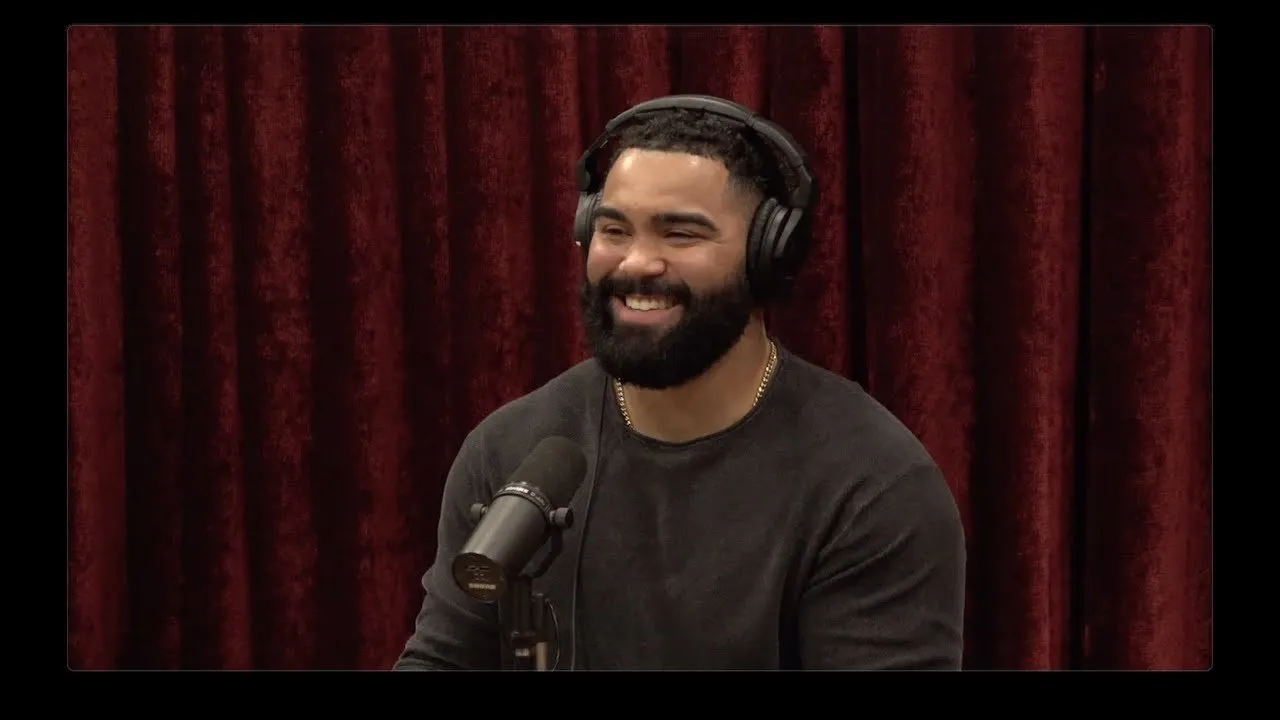
In a revealing episode of the JRE MMA Show, Joe Rogan sat down with Olympic Gold Medalist Gable Steveson to discuss his highly anticipated transition from elite wrestling to Mixed Martial Arts. Steveson, often regarded as a generational talent, opened up about his brief stint in the NFL, his mentorship under Jon Jones, and the philosophy driving his development as a heavyweight contender. The conversation offered a rare glimpse into the mindset of a young athlete who has already conquered the wrestling world and is now meticulously preparing to dominate the UFC heavyweight division.
Key Takeaways
- Mentorship from the GOAT: Steveson is training directly with Jon Jones, adopting the champion's approach to fight IQ, game planning, and professional preparation.
- The NFL Experiment: Before committing to MMA, Steveson attempted a career with the Buffalo Bills despite having zero football experience, relying solely on freak athleticism.
- Striking Evolution: While his wrestling is world-class, Steveson is intensely focused on striking, viewing his recent "dirty boxing" knockout as the baseline for his potential.
- Calculated Entry: Unlike many young fighters, Steveson is avoiding short-notice fights, opting to hone his skills in the shadows to ensure he arrives in the UFC as a complete package.
- Heavyweight Landscape: Rogan and Steveson analyzed the current "shallow" state of the heavyweight division, identifying a clear path for an elite grappler to take the throne.
From Olympic Gold to the Buffalo Bills: A Journey of Athleticism
Steveson’s path to MMA was not a straight line. Despite being named after wrestling legend Dan Gable—a prophetic choice by his mother—Steveson explored other avenues of professional athleticism before settling on fighting. His journey highlights the unique position of American wrestlers who lack a high-paying professional league comparable to the NBA or NFL.
- The Prophetic Name: Steveson was named after Dan Gable after his mother kept hearing the name at a tournament in Iowa. This foreshadowed a timeline that mirrored the legend’s own dominance, culminating in Olympic Gold.
- The Struggle for Professional Wrestling Outlets: Rogan and Steveson discussed the unfortunate reality that, unlike soccer or basketball, amateur wrestling lacks a massive professional infrastructure, often funneling athletes into MMA or pro wrestling (WWE).
- The NFL Tryout: In a display of raw athletic confidence, Steveson tried out for the Buffalo Bills at age 20. He admitted to never having worn football cleats or a helmet prior to the tryout.
- Relying on Effort Over Technique: Lacking knowledge of the defensive line techniques, Steveson impressed coach Sean McDermott purely through sprinting speed and effort, earning a temporary spot on the roster.
- The Complexity Barrier: Ultimately, the transition stalled due to the complexity of the NFL playbook and the nuances of the game, which require years of experience to master compared to the one-on-one nature of combat sports.
- The WWE Pivot: Following the NFL, Steveson had a brief run with the WWE. However, his competitive drive left him unsatisfied with scripted entertainment, pushing him toward a sport where he could physically dominate opponents for real.
The Jon Jones Influence: Learning from the Greatest
Perhaps the most significant development in Steveson’s MMA career is his alliance with UFC Heavyweight Champion Jon Jones. The two connected via Instagram, leading to Steveson joining Jones's camp. This relationship has provided Steveson with a blueprint not just for fighting, but for navigating the complexities of life as a superstar athlete.
- Seeing the Superstar Up Close: Steveson described the surreal experience of training with Jones, a figure he watched on television since he was 12 years old. He noted that Jones's aura and confidence in person solidified his desire to pursue MMA.
- The Ferrari Analogy: Steveson emphasized that Jones isn't just physically gifted; his mind is his greatest weapon. He noted that while many fighters have the physical tools (the Ferrari), they lack the high-octane "gas" (Fight IQ) to make it run.
- Strategic Preparation: One of the biggest lessons Steveson learned is Jones’s refusal to take short-notice fights. Jones studies tendencies obsessively and prepares specifically for each opponent, a habit Steveson is now adopting.
- Analyzing Opponents: In his wrestling career, Steveson famously refused to watch tape on opponents, preferring to impose his will. Under Jones, he has shifted to analyzing micro-movements, footwork, and habits to dismantle adversaries.
- Mental Toughness: Rogan pointed out that Jones's ability to win close fights, like the first Gustafsson bout, often came down to grit rather than training camp perfection, a trait Steveson admires.
- The Spinning Back Kick: They discussed Jones developing a lethal spinning back kick at age 36 to defeat Stipe Miocic. Steveson witnessed Jones drilling this technique the night before the fight, highlighting Jones's ability to evolve late in his career.
"He’s sitting in a Ferrari with Ferrari gas. A lot of people sit in a Ferrari with 87 gas and a car don't work."
Developing the "Worst" Version of Himself
Steveson recently competed in a "dirty boxing" match where he secured a knockout, showcasing fast hands and agility rare for a man of his size. However, his perspective on this performance is grounded in humility and a terrifying promise of improvement. He views his current skill set as the absolute floor of his potential.
- Handicapping His Game: In his recent boxing match, Steveson intentionally stepped away from his wrestling base to prove he could stand and bang. He wanted to show the world—and himself—that his hands were dangerous.
- Rapid Striking Growth: Despite looking comfortable striking, Steveson revealed he has only been training striking seriously for about seven months. Prior to that, he admitted he didn't even know how to properly defend a punch.
- The "Worst" I'll Ever Be: Steveson’s philosophy is that every performance the public sees now is the "worst" version of him they will ever witness, as his trajectory is purely upward.
- Training Variety: His current regimen involves a mix of boxing, kickboxing, knees, and elbows, often doing 10-12 rounds of five minutes to build the cardio base required for championship MMA.
- Incorporating Wrestling: While he loves striking, he acknowledges that his wrestling is his superpower. His goal is to blend the two so seamlessly that opponents are terrified of the takedown, opening them up for the knockout.
- Avoiding the "Striker's Trap": Rogan warned that many wrestlers fall in love with their hands and abandon their base. Steveson assured him that while he enjoys the power, he intends to use his wrestling to dictate where the fight takes place.
"Joe, in the nicest way possible, I really want to say this. That's the worst I'll ever be."
Analyzing the Heavyweight Division
Rogan and Steveson spent considerable time dissecting the current state of the UFC heavyweight division. They agreed that while there is talent at the top, the division is relatively shallow compared to lighter weight classes, creating a massive opportunity for a generational athlete like Steveson to ascend quickly.
- The Shallow Pool: Rogan noted that outside of Jon Jones, Tom Aspinall, and Ciryl Gane, there are very few "championship caliber" threats in the division. This scarcity makes Steveson’s entry immediately high-impact.
- The Threat of Tom Aspinall: They discussed Aspinall as the primary threat, though concerns regarding his eye injury were raised. Steveson compared Aspinall to Taha Akgül, a Turkish wrestler he dominated in the Olympics, suggesting he knows how to handle that body type.
- Glove Controversy and Eye Pokes: The conversation touched on the prevalence of eye pokes in the division, specifically referencing Ciryl Gane. Rogan argued passionately for a new glove design that curves the fingers to prevent accidental fouls.
- Lack of Elite Grapplers: Steveson pointed out that the current heavyweight roster lacks high-level wrestling. He believes that outside of Jones, no one can match his grappling pedigree, which gives him a distinct advantage.
- The White House Dream: Steveson expressed a specific desire for his UFC debut or a major fight to take place at the White House, potentially sharing a card with Jon Jones to mark a historic moment for the sport.
- Breaking Records: Looking long-term, Steveson has his sights set on Stipe Miocic’s record for heavyweight title defenses. He aims not just to win the belt, but to hold it long enough to be considered a legend.
The Mindset of Excellence and Focus
Beyond the physical attributes, Rogan was most impressed by Steveson’s mental fortitude. The transition from amateur athlete to professional superstar comes with distractions—money, fame, and hangers-on. Steveson’s approach to these pitfalls is disciplined and mature, largely due to the guidance he receives from Jones.
- "Me or You" Mentality: Steveson enters competition with a binary mindset: it is either him or his opponent, and he refuses to accept defeat. He utilized this "do or die" attitude to win Olympic Gold.
- Guarding Focus: Rogan used a metaphor of "100 units of focus," explaining that every ounce of attention given to haters, partying, or distractions is stolen from the pursuit of excellence.
- The Trap of Fame: They discussed how many fighters lose their way when they start prioritizing external validation over internal excellence. Steveson is wary of "leeches" and fake friends who only appear when success arrives.
- Learning from Jones's Mistakes: Steveson acknowledged Jones's turbulent past but views him as the ultimate teacher because he has made mistakes and survived. Jones actively advises Steveson to stay clean and go home after training.
- Private Life as Balance: To maintain sanity, Steveson unplugs by playing Call of Duty and spending time with his French Bulldogs. He emphasized the importance of having a "normal" life outside the cage to ground himself.
- The Ultimate Goal: Steveson stated that while championships are the target, his true goal is to be remembered for excellence and to be a good provider for his family. He wants the "Steveson" name to carry a legacy of greatness.
"Excellence is what brings you the money. Excellence is what brings you the fame. And the moment you start thinking about the fame and the money and not thinking about the excellence, you've lost your way."
Conclusion
Gable Steveson represents a terrifying prospect for the UFC heavyweight division. He combines the supreme grappling of an Olympic Gold Medalist with the explosive athleticism of an NFL hopeful and the tactical mentorship of the greatest MMA fighter of all time. While he is taking a calculated, patient approach to his debut, his mindset suggests that once he arrives, he intends to clear out the division. As Steveson put it, he is currently the "worst" he will ever be—a statement that should send shivers down the spine of every heavyweight on the roster.