Table of Contents
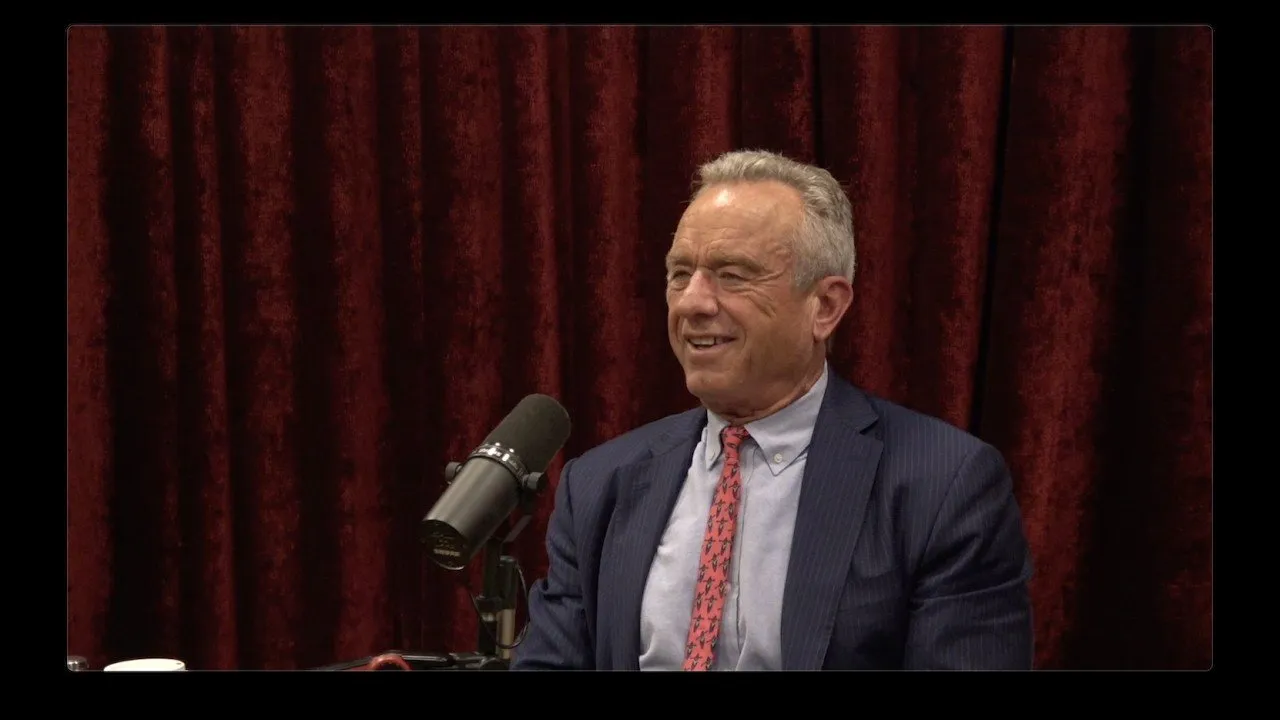
In a wide-ranging conversation on the Joe Rogan Experience, Robert F. Kennedy Jr. detailed his ongoing efforts within the Department of Health and Human Services (HHS) to dismantle what he describes as a "target-rich environment" of corruption, fraud, and systemic health failures. Kennedy argued that the American healthcare system has devolved into a "sick care" industry, where pharmaceutical companies, insurers, and food giants are economically incentivized to maintain a chronically ill population. From uncovering multibillion-dollar Medicaid scams run by foreign entities to overhaul the nation’s nutritional guidelines, Kennedy outlined a vision for a radical realignment of American public health and government integrity.
Key Takeaways
- Combatting Industrialized Fraud: HHS is utilizing AI to track and eliminate an estimated $100 billion in annual Medicaid and Medicare fraud perpetrated by international crime syndicates.
- Nutritional Reform: The administration has overhauled the food pyramid to prioritize whole, nutrient-dense foods while restricting taxpayer-funded purchases of soda and candy through the SNAP program.
- Lowering Prescription Costs: Through the "Most Favored Nation" (MFN) pricing model, the administration is ensuring Americans pay the lowest prices in the developed world for essential medications.
- Technological Transitions in Agriculture: A strategic move is underway to transition the American food system away from glyphosate and toward robotic and laser-based weeding technologies.
- Restoring Civil Discourse: Kennedy emphasizes the need to remove digital distractions from schools and shift away from the "market of outrage" fueled by social media algorithms.
Eradicating Industrialized Medicaid and Medicare Fraud
One of the most immediate priorities Kennedy identified is the rampant theft of taxpayer dollars through the healthcare system. He estimates that at least $100 billion is lost annually to industrialized fraud. Much of this activity is organized by foreign operations—notably from Cuba and Russia—which exploit "durable medical equipment" (DME) loopholes and hospice care systems.
Foreign Exploitation of the System
Kennedy described shocking instances where foreign governments allegedly oversee fraudulent operations on American soil. In Florida, investigators found a single hotel with 129 rooms, each registered as a separate DME company selling knee braces and wheelchairs that did not exist. These entities use patient identification numbers purchased on the black market to bill the federal government for millions of dollars before the operators flee back to their home countries.
The Role of Program Integrity and AI
According to Kennedy, the previous administration significantly reduced the "program integrity" offices responsible for catching this fraud, focusing instead on maximizing enrollments. By re-establishing these offices and deploying advanced Artificial Intelligence, HHS is now auditing states and demanding corrective actions. Kennedy noted that states like Maine, Minnesota, California, and New York have shown resistance to these audits, whereas several "red states" have already begun implementing fraud-prevention protocols.
"The amount of fraud that goes through that place—we lose just in Medicaid and Medicare a hundred billion dollars a year."
Addressing the Chronic Disease Epidemic
A central theme of the discussion was the paradox of American medicine: the United States spends more per capita on healthcare than any other nation, yet it possesses some of the worst health outcomes in the developed world. Kennedy noted that 77% of American youth currently do not qualify for military service, largely due to health issues.
The Crisis of Juvenile Health
Kennedy highlighted the alarming rise in juvenile diabetes and autism. In the 1970s, autism rates were approximately 1 in 10,000; today, they are 1 in 31 nationally, and as high as 1 in 12.5 among boys in California. He argues that these trends are not natural occurrences but are driven by environmental toxins and nutritional failures.
Economic Incentives for Sickness
The current medical system operates on a fee-for-service model that rewards volume over outcomes. Kennedy explained that hospitals, pharmaceutical companies, and even insurance providers benefit when patients remain chronically ill. To solve the healthcare cost crisis, he advocates for a shift toward preventative care and transparency, allowing consumers to see a "menu of prices" for procedures like MRIs or childbirth before they commit to a provider.
"The food companies make money on getting us sick, but pharma makes money on keeping us sick."
Overhauling American Nutrition and the Food Pyramid
Kennedy described the previous nutritional guidelines as being written by industry lobbyists rather than scientists. He detailed a year-long process involving top nutritionists to create a new food pyramid that eliminates "mercantile impulses" and focuses on whole, nutrient-dense foods.
Reforming SNAP and School Lunches
The administration is taking steps to ensure that taxpayer dollars are not used to purchase "taxpayer-funded diabetes." This includes granting waivers to states to remove soda and candy from the SNAP program. Additionally, efforts are being made to double the amount of "real food" available at retailers that accept food stamps.
The Military Food Transformation
Working with leaders like Chef Robert Irvine, the military is transitioning away from expensive, ultra-processed frozen meals toward fresh, locally sourced food. Early results on military bases show that providing high-quality fresh food is actually cheaper than the previous system, costing $10 per day per soldier compared to $18, while significantly increasing soldier morale and health.
Lowering Drug Prices through Trump RX
For decades, Americans have paid significantly higher prices for the same medications sold in Europe. Kennedy discussed the implementation of the Most Favored Nation (MFN) agreement, which mandates that pharmaceutical companies offer Americans the lowest prices found in the developed world.
Onshoring Pharmaceutical Production
Beyond lowering prices, the administration is pushing for the "reshoring" of drug manufacturing. Major companies like Eli Lilly and Pfizer are currently building large-scale facilities in the United States. This move is intended to secure the national supply chain and ensure that other nations cannot "blackmail" the U.S. by cutting off access to active pharmaceutical ingredients (APIs).
Impact on Consumer Costs
The "Trump RX" initiative has already seen drastic price drops for essential treatments. Kennedy cited an example of IVF medication that was reduced from $4,000 to approximately $600. By providing price certainty and leveraging the purchasing power of Medicare and Medicaid, the administration aims to make life-saving innovation affordable for all citizens.
Environmental Health and the Future of Agriculture
Kennedy, a longtime environmental lawyer, addressed the controversial role of glyphosate (Roundup) in the American food system. While he remains a critic of the pesticide, he acknowledged the complexity of transitioning a system where 97% of corn and 98% of soy are currently "addicted" to chemical inputs.
Glyphosate as a National Security Risk
A significant portion of the world's glyphosate supply is controlled by China. Kennedy noted that the administration views this as an extreme national security vulnerability. The goal is to provide farmers with an "off-ramp" that allows them to transition to regenerative agriculture without crashing the food supply.
Robotic and Laser Technology
The future of weed and pest control lies in technology rather than chemistry. Kennedy highlighted the emergence of laser-weeding machines that identify and explode weeds at the root without harming crops. These machines can reduce pesticide costs by over 70% and increase farm productivity by 30%, offering a path toward a pesticide-free agricultural model.
"Pesticides are poison. They’re designed to kill all life. It’s not a good thing to have in your food."
Conclusion
Kennedy’s overview of his work at HHS suggests a fundamental shift in how the federal government interacts with the healthcare and food industries. By focusing on transparency, program integrity, and the removal of perverse economic incentives, he believes the "cliff" of chronic disease and systemic debt can be avoided. While the road to reform is fraught with partisan tension and institutional resistance, Kennedy remains confident that data-driven, common-sense health policies can eventually unite the country. The ultimate goal, as he stated, is to transition from a nation that manages sickness to one that actively cultivates health.