Table of Contents
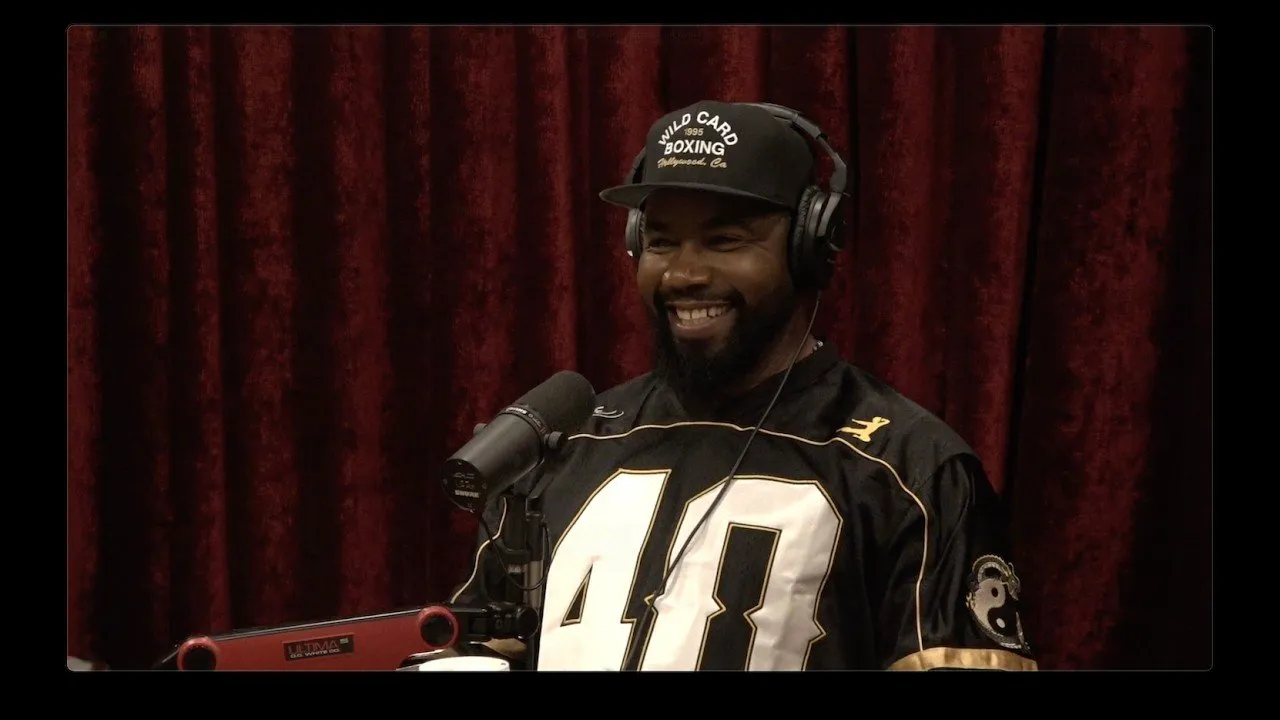
In a candid and wide-ranging discussion, martial arts icon Michael Jai White joins Joe Rogan to delve into everything from the geographic allure of Los Angeles to the profound lessons learned through a lifetime dedicated to combat sports. The conversation traverses personal anecdotes, critical insights into Hollywood's portrayal of action, and a deep dive into the evolving world of elite fighting, revealing a shared philosophy centered on continuous improvement, mental fortitude, and the pursuit of authentic self-discovery.
Key Takeaways
- Uncanny Instincts Developed Early: Michael Jai White's experiences growing up independently from a young age honed an extraordinary sense of intuition, allowing him to perceive threats and anticipate events before they fully materialized.
- Martial Arts as a Vehicle for Growth: Both White and Rogan emphasize that true martial arts mastery transcends physical technique, serving as a powerful tool for developing mental toughness, discipline, and self-awareness.
- The Imperative of Cross-Training: The evolution of combat sports, particularly MMA and Muay Thai, underscores the critical importance of integrating diverse techniques and adapting styles to exploit opponents' weaknesses, moving beyond rigid traditionalism.
- Crafting Authentic Action in Film: White champions realistic fight choreography in filmmaking, aiming to depict genuine combat scenarios by incorporating subtle details like telegraphing and even choreographed mistakes, a stark contrast to many fantastical superhero portrayals.
- Discipline as the Ultimate Addiction: The discussion highlights discipline as a foundational principle for success in any endeavor, echoing the ethos of elite athletes who understand that consistent effort, rather than mere motivation or natural talent, builds a strong and purposeful life.
From Hardship to Martial Arts Mastery
Michael Jai White’s journey is one defined by resilience and an innate ability to navigate challenging environments. Growing up in tough neighborhoods like Bridgeport, Connecticut, instilled in him a unique set of survival instincts that he credits for his perceptive nature.
Early Independence and Intuition
- White recounted moving to Bridgeport, a city then notorious for its high murder rate per capita, highlighting the necessity of hyper-awareness from a young age.
- He shared a vivid, almost unbelievable story of reacting to the 1994 Northridge earthquake in Los Angeles, instinctively jumping from his apartment balcony moments before the main tremor, a prescient act that saved him from being trapped.
- This profound moment underscored his belief in the human capacity for premonition, drawing parallels to animals' instinctive flight before natural disasters.
- Having been on his own since the age of 14, White developed a heightened sense for detecting danger and identifying "predators," skills often seen in cinema but deeply rooted in his personal history.
An Unconventional Path to Teaching
- Despite his youth, White found a haven in martial arts, dedicating himself to various styles.
- At just 15 or 16, while still a teenager, he was asked to teach karate classes at a community center due to his exceptional skill and mature appearance, amassing nearly 200 students.
- This early responsibility, often involving older students, contributed to his accelerated development and unique perspective on adult life.
- He emphasized his passion for both the practical, realistic aspects of fighting and the technical, intellectual challenge of mastering different martial arts disciplines.
The Evolving Landscape of Combat Sports
The conversation naturally transitioned to the dynamic world of martial arts and combat sports, exploring how the UFC revolutionized traditional understandings of fighting and the continuous pursuit of technical excellence.
UFC's Impact and the Rise of Jiu-Jitsu
- Rogan reminisced about the early days of the UFC, which conclusively answered the long-standing question: "What is the best martial art style?"
- The initial dominance of Jiu-Jitsu, exemplified by Royce Gracie, was a revelation, showing that smaller, more technical fighters could overcome larger, stronger opponents through submission.
- White acknowledged the strategic genius of the Gracie family in showcasing their art, though noting the initial "setup" of early UFC events.
- The unforgettable fight where Royce Gracie, weighing 175 lbs, submitted the 260 lb Dan Severn with a triangle choke became a pivotal moment, cementing Jiu-Jitsu's place on the global map.
- Both expressed regret that Rickson Gracie, often considered the greatest pound-for-pound Gracie, didn't achieve the same public recognition as Royce, despite his legendary concentration, efficiency, and cross-training in yoga.
The Value of Cross-Training and Humility
- The discussion highlighted the importance of humility in martial arts, with Rogan admitting his youthful arrogance about traditional forms.
- White strongly advocated for cross-training, citing Lomachenko's Ukrainian dance training for exceptional footwork and suggesting that even ballet could significantly benefit a heavyweight fighter.
- The inherent transparency of Jiu-Jitsu sparring, where practitioners go "full blast until the tap," prevents hiding skill and promotes continuous learning, a stark contrast to some more controlled traditional martial arts.
- White recounted his personal experiences of being humbled by wrestlers and boxers early in his journey, which drove him to learn and integrate different fighting disciplines, echoing Rogan's own similar experiences with wrestling, Taekwondo, boxing, and Muay Thai.
Behind the Camera: Crafting Action and Story
Michael Jai White, known for his roles in action films, shared insights into his approach to filmmaking, his passion for writing, and the challenges of creating believable fight sequences in Hollywood.
Directorial Vision and Realistic Choreography
- White emphasizes a commitment to realism in fight choreography, aspiring to depict combat that genuinely looks like a real fight rather than stylized movements.
- He works to incorporate "choreographed mistakes" and subtle indicators like pre-fight telegraphing, believing audiences have become more sophisticated due to exposure to actual UFC fights.
- This approach stands in contrast to many superhero films, which White finds often prioritize spectacle over believability, frequently featuring improbable feats or aesthetically driven poses.
- He cited his experiences teaching Kimbo Slice to avoid telegraphing punches during a movie shoot as an example of applying real combat principles to filmmaking.
- His work includes directing and writing his own projects, such as the Western "Outlaw Johnny Black," which allowed him to cast respected MMA fighters like Donald "Cowboy" Cerrone, Randy Couture, and Josh Barnett, providing them opportunities beyond the cage.
From Black Dynamite to Spawn
- White recounted the spontaneous inspiration for "Black Dynamite," a blaxploitation parody, which came to him during a car ride in China while listening to James Brown. He saw the entire movie unfold in his mind, including a nunchuck fight with Richard Nixon.
- He discussed the satirical core of "Black Dynamite," which humorously critiqued the problematic idolization of "pimps" as heroes in the original blaxploitation era, turning serious genre tropes into hilarious commentary.
- White also expressed his strong feelings about his 1997 film "Spawn," particularly how studio interference and an overabundance of special effects obscured the story he believed in, leading to a diluted narrative.
- He lamented that the comic book "Spawn" and its original animated series, despite their cultural impact, don't receive the same recognition as other superhero properties today.
- Regarding a potential "Spawn" reboot, White questioned the viability of creator Todd McFarlane directing without prior experience, especially given McFarlane's unusual concept of Spawn as an unseen, Jaws-like entity.
Modern Warriors: Insights into Elite Athletes
The conversation provided a deep dive into the unique characteristics and evolving strategies of elite fighters across various combat sports, celebrating their dedication and the profound lessons derived from their struggles.
Heavyweight Boxing and MMA Phenoms
- Rogan and White discussed the unparalleled speed and ferocity of Mike Tyson in his prime, particularly referencing his fight against Marvis Frazier as a display of his undeniable dominance and dynamic movement.
- They also reflected on the psychological warfare and training disparities that might have affected Tyson's later performances, especially against Evander Holyfield.
- The discussion highlighted the terrifying consistency and "marathon runner" cardio of former UFC heavyweight Cain Velasquez, who they believe "ruined each other" in his legendary battles with Junior dos Santos.
- They praised Oleksandr Usyk for bringing a high-level, technical, and movement-focused style to the heavyweight boxing division, influenced by Lomachenko's father, challenging the traditional "one-two" approach.
Emerging Styles and Tactical Innovations
- The Dagestani region, known for producing wrestling champions like Khabib Nurmagomedov and Islam Makhachev, is now making waves in Muay Thai, with fighters like Azadullah Imamgazaliev exhibiting unique, dominant styles.
- Imamgazaliev was lauded for his tall, lanky physique, perfect timing, precise straight punches, and innovative spinning attacks, effectively exploiting the rounder techniques often seen in traditional Muay Thai.
- Another standout mentioned was Kyokushin karate practitioner Yuki Yoza, who has revolutionized kickboxing by relentlessly targeting opponents' calves and inner thighs with conditioned shins, combined with Russian-style boxing.
- These examples underscore the constant evolution of combat sports, where new adaptations and combinations of styles exploit previously unseen weaknesses, even against highly experienced opponents.
Life's Ultimate Discipline: Growth and Purpose
Beyond the physical prowess and tactical discussions, Michael Jai White and Joe Rogan explored the deeper philosophical underpinnings of martial arts and life, emphasizing discipline, overcoming adversity, and finding purpose.
The Power of Discipline and Learning from Loss
- The discussion resonated with a powerful "rant" (attributed to Khabib Nurmagomedov, even if AI-generated) about discipline being the ultimate addiction for a "real man."
- Both agreed that the path to greatness is paved with discipline, continuous work, and a willingness to confront oneself.
- They stressed that losing is often the best medicine for growth, exposing flaws and fueling the desire for improvement, whereas constant winning can sometimes lead to complacency.
- White shared his personal realization that relying solely on natural gifts could limit his potential, leading him to adopt a philosophy of pushing beyond comfort zones, even if it meant being "wrong" or humbled.
"Discipline no need motivation. Discipline move without feeling. Discipline say I go anyway. Even when tired, even when lonely. Discipline is best addiction."
Mentorship, Sacrifice, and Cultural Heroes
- White discussed the difficulty for fighters to abandon their identity, citing the struggle of UFC fighters like Brendan Schaub in knowing when to retire for their long-term health, despite alternative successes like podcasting.
- He recalled a moment in his own competitive fighting career where the audience's cheers felt exploitative, leading to a shift in his approach, valuing skillful testing over dominating for external validation.
- The conversation paid homage to cultural icons like Muhammad Ali, acknowledging his extraordinary impact beyond boxing.
- Ali's sacrifice of his prime years and title for his anti-war stance cemented his legacy as a true hero, inspiring millions and contributing to significant cultural shifts.
- White's personal experience visiting Ali's gravesite deeply affected him, reinforcing the profound significance of the boxing legend's life and choices.
"He meant something to America in a way that no other fighter before or since has."
Modern Gladiators and Social Responsibility
- White views modern MMA fighters as "our modern-day heroes" and "gladiators," who risk their health for public entertainment and demonstrate profound character traits.
- He expressed a personal commitment to helping inner-city youth, inspired by his own fortuitous path and a close friend's long incarceration, emphasizing the importance of planting "seeds" of opportunity.
- The decline of traditional "rites of passage" in modern society was a concern, leading to a lack of mental toughness and resilience in younger generations.
- They highlighted the importance of knowing "what's inside of you" through challenges, as it reveals true character and capability, distinguishing those who embrace struggle from those who shy away.
Conclusion
Michael Jai White and Joe Rogan's conversation offers a compelling exploration of the intertwined worlds of martial arts, entertainment, and personal philosophy. From White's early life experiences that forged uncanny instincts, to the transformative power of martial arts in shaping character and discipline, the discussion underscored a shared belief in continuous growth. Whether dissecting the evolution of combat techniques, advocating for realism in cinematic action, or reflecting on the enduring legacies of cultural icons like Muhammad Ali, their insights consistently return to the core principles of dedication, humility, and the profound journey of self-improvement that defines a true warrior, both in and out of the ring.