Table of Contents
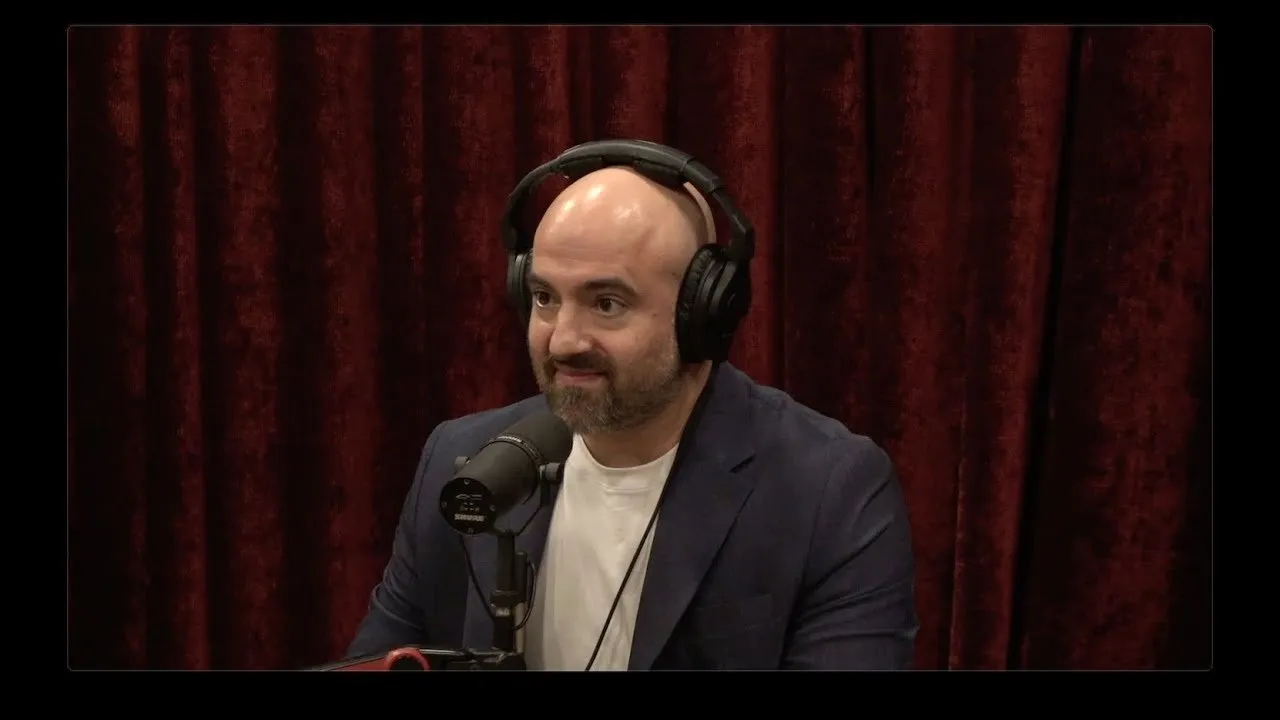
In a landmark episode of the Joe Rogan Experience, Mike Benz, executive director of the Foundation for Freedom Online, dissects the newly released Jeffrey Epstein files with surgical precision. Far from a simple tabloid scandal, Benz frames the Epstein saga as a masterclass in how the "Deep State" operates—specifically the intersection of intelligence agencies, high finance, and organized crime. This conversation moves beyond the salacious details of the island and into the mechanics of American statecraft, revealing a shadow world where "fixers" facilitate off-the-books operations for the government, shielded by a veil of national security.
Key Takeaways
- The "Limited Hangout" of Disclosure: While the recent DOJ file release was a victory for transparency, it notably excludes CIA-originated files, which Benz argues contain the most critical context regarding Epstein’s intelligence connections.
- The "Fixer" Archetype: Epstein is best understood not merely as a sex trafficker, but as a financial and logistical "fixer" similar to historical figures like Bruce Rappaport, who bridge the gap between intelligence agencies and the private sector.
- The Financial Engine of Covert Ops: The episode details how the CIA has historically utilized offshore banking, the narcotics trade, and complex financial structures (like BCCI) to fund operations that Congress refuses to authorize.
- The Function of the "Honey Pot": Benz posits that the procurement of women and girls was less about direct blackmail and more about "juicing deals," creating an exclusive environment that bound powerful figures together and facilitated high-risk transactions.
- The Modern Control Grid: The conversation pivots to modern geopolitical tools, including the weaponization of climate finance to kneecap Russian energy dominance and the use of UK censorship laws to throttle free speech in the US.
The Epstein Files and the Intelligence Gap
The release of the Epstein files represents a significant, albeit incomplete, moment of transparency. Benz emphasizes that while we have access to Justice Department and FBI files, the Central Intelligence Agency remains a black box. The intricate dance between federal investigators and intelligence assets often results in "catch and kill" scenarios where prosecutions are stifled to protect "national security equities."
The Discrepancy in Documentation
- The "One" Dissenter: The bill to release these files passed the House 427 to 1, demonstrating a rare bipartisan consensus. The resistance came from deep within the bureaucracy, where officials feared that releasing raw allegations would compromise victims or lead to public misinterpretation of unverified FBI tips.
- DOJ vs. CIA Files: The current law compelled the disclosure of Justice Department files only. Benz notes that in 2025, Tulsi Gabbard spearheaded a massive release of JFK files, proving that specific legislation is required to force the CIA’s hand.
- Freedom of Information Act (FOIA) Limitations: While citizens can FOIA the CIA, the agency often utilizes a "Glomar response"—refusing to confirm or deny the existence of records—to block inquiries into classified matters.
- Epstein’s Own Inquiries: The files reveal that Epstein himself FOIA’d the CIA twice (in 1999 and 2011). The CIA’s response, a "partial denial" regarding classified matters, strongly implies the existence of a classified file set on Epstein.
- Legislative Precedent: Benz argues that Congress must pass a bill modeled after the 1992 JFK Records Collection Act to force an independent review and declassification of CIA-originated Epstein documents.
- Operational Necessity: Given Epstein's involvement with figures from Saudi Arabia, Israel, and major financial institutions, Benz asserts it would be "physically impossible" for the CIA not to have files on him, as he represented a significant counterintelligence concern.
The CIA would not be doing its job if it didn't have records about Jeffrey Epstein.
The "Fixer" Archetype and the Gray Zone
To understand Epstein, Benz argues one must look at the history of "fixers"—intermediaries who operate in the sticky layer between governments and private enterprise. These individuals are not official employees of the state, which grants the government plausible deniability, but they are essential for executing off-the-books foreign policy.
Historical Parallels and Precedents
- Bruce Rappaport and the Pipeline: Benz details the saga of Bruce Rappaport, a Swiss banker and "fixer" who mediated a pipeline deal between Iraq and Israel during the Iran-Iraq war. Like Epstein, Rappaport faced scrutiny but was protected because his work aligned with National Security Council objectives.
- The Role of Bechtel: Major corporations often rely on intelligence-connected fixers to secure contracts in volatile regions. The CIA facilitates these deals to ensure US strategic interests (like oil pipelines) are maintained without direct military intervention.
- Structure of the "Enterprise": Following the Church Committee hearings in the 1970s, which handcuffed the CIA, intelligence operations were outsourced to a network of private entities and foreign allies. This structure, known during Iran-Contra as "The Enterprise," creates a self-sustaining covert operations capacity.
- Private Sector Cover: Fixers often pose as hedge fund managers, philanthropists, or commodity traders. This cover allows them to move money and people across borders without triggering the diplomatic oversight that official government envoys would face.
- The "Touch" of Intelligence: Benz suggests Epstein’s trajectory—from Bear Stearns to high-level advising—mirrors the career path of intelligence assets who are cultivated to manage "dark money" logistics for state-sponsored operations.
- Protection Mechanisms: Just as the CIA intervened to stop the prosecution of Orlando Bosch (a Cuban exile asset) to prevent "massive damage" to agency operations, Epstein likely benefited from similar institutional shielding for decades.
The Financial Engine: BCCI, Bear Stearns, and Money Laundering
Intelligence operations run on money, and covert operations require covert finance. Benz meticulously traces the history of CIA-sanctioned money laundering, positioning Epstein within a lineage of financial structures designed to move untraceable funds for geopolitical aims.
From the Vatican to Wall Street
- The Vatican Bank Origins: During World War II and the early Cold War, the Vatican Bank served as the primary offshore banking hub for the OSS (precursor to the CIA) and the Italian mob to fund anti-communist activities.
- The Shift to Offshore Empires: As the British Empire dissolved, it transitioned into a financial empire via offshore tax havens (Cayman Islands, British Virgin Islands). These zones became critical for intelligence agencies to move funds outside of congressional oversight.
- BCCI (Bank of Credit and Commerce International): Benz highlights BCCI as the "Bank of Crooks and Criminals International," a financial institution used by the CIA to fund the Mujahideen in Afghanistan.
- The Bear Stearns Connection: Epstein worked at Bear Stearns during the height of its involvement with BCCI. Benz notes that Bear Stearns cleared billions in BCCI transactions, suggesting Epstein cut his teeth in the world of covert finance during this period.
- "Drugs for Cash for Guns": The classic Iran-Contra model involved facilitating narcotics trafficking to generate off-the-books cash, which was then used to purchase weapons for rebel groups (like the Contras or Mujahideen).
- Commodities and Mirrored Trades: Benz explains how "mirrored trades" in commodities are used to launder money. A fixer sets up a losing trade and a winning trade to transfer value between parties while making it look like market activity.
You lose money, you lose everything. You lose your ability to pay your informants.
The Geopolitics of the "Honey Pot"
One of the most controversial aspects of the Benz interview is his analysis of Epstein’s sexual blackmail operation. Benz challenges the conventional wisdom that it was purely a blackmail scheme, proposing instead that the illicit activities were a tool for social cohesion and deal-making within the covert network.
Beyond Simple Blackmail
- Juicing the Deal: Benz argues that in the world of high-stakes international finance and intelligence, access to vices (young women) is a currency used to close deals and bind powerful men to a network.
- The Risk of Direct Blackmail: If Epstein were actively blackmailing his entire rolodex, he would have been ostracized immediately. The "insurance" files were likely defensive, meant to be used only if the government or clients turned on him.
- Historical Context (Dyncorp): Benz cites the Dyncorp scandal in the early 2000s, where a military contractor was implicated in trafficking to satisfy local officials and smooth operations in conflict zones.
- Mutually Assured Destruction: The network functions on shared culpability. Participation in the illicit activity ensures loyalty, as exposure would ruin everyone involved.
- Intelligence Gathering: While not always used for direct extortion, the surveillance of these encounters provides intelligence agencies with profound leverage over foreign officials, scientists, and business leaders.
- The "Cool Kid" Factor: Benz notes that the exclusivity of Epstein’s parties—combining Nobel scientists, billionaires, and attractive women—created a gravitational pull that made him indispensable to the social circuit of the elite.
Modern Geopolitics: Censorship and Climate Finance
Towards the end of the episode, the conversation shifts from historical analysis to current threats. Benz connects the mechanics of the "Deep State" to modern control grids, specifically the censorship industrial complex and the weaponization of climate policy.
The New Mechanisms of Control
- UK-US Censorship Alliance: Benz details how the Biden administration circumvented the First Amendment by outsourcing censorship to British organizations (like the Center for Countering Digital Hate), leveraging stricter UK speech laws to target American dissent.
- Climate Finance as a Weapon: The push for green energy and "Net Zero" is framed not just as environmental policy, but as a geopolitical strategy to destroy Russia’s economy, which is dependent on hydrocarbon exports.
- Smart Cities and Carbon Tracking: Benz discusses the implementation of "15-minute cities" in the UK, where digital surveillance and fines are used to restrict movement, warning that this infrastructure is being prepared for global rollout.
- The Investment Trap: Once trillions of dollars from hedge funds and sovereign wealth funds are committed to green energy, the policy becomes "too big to fail," regardless of scientific outcomes or economic viability.
- The "Uni-Party" Consensus: Benz argues that foreign policy imperatives often override domestic democracy, creating a consensus among the elite that makes voting for change increasingly difficult.
- The Need for Structural Reform: The conversation concludes with a warning: unless the fundamental relationship between intelligence agencies, finance, and foreign policy is exposed and reformed, the "Deep State" architecture will remain intact regardless of who is president.
Conclusion
Mike Benz’s breakdown of the Epstein files offers a chilling glimpse into the machinery of power. By connecting the dots between 1940s war financing, Cold War covert ops, and modern censorship, he reveals that Epstein was not an anomaly, but a feature of a system that relies on extra-legal networks to function.
The path forward, according to Benz, lies in aggressive transparency. The "99% is a bitch, 100% is a breeze" philosophy dictates that we cannot build a true understanding of our history on assumptions. We need the documents. The call to action is clear: apply the same legislative pressure used for the JFK files to the CIA’s Epstein archive. Only then can the public begin to dismantle the shadow structures that govern so much of the world.
99% is a bitch. 100% is a breeze.