Table of Contents
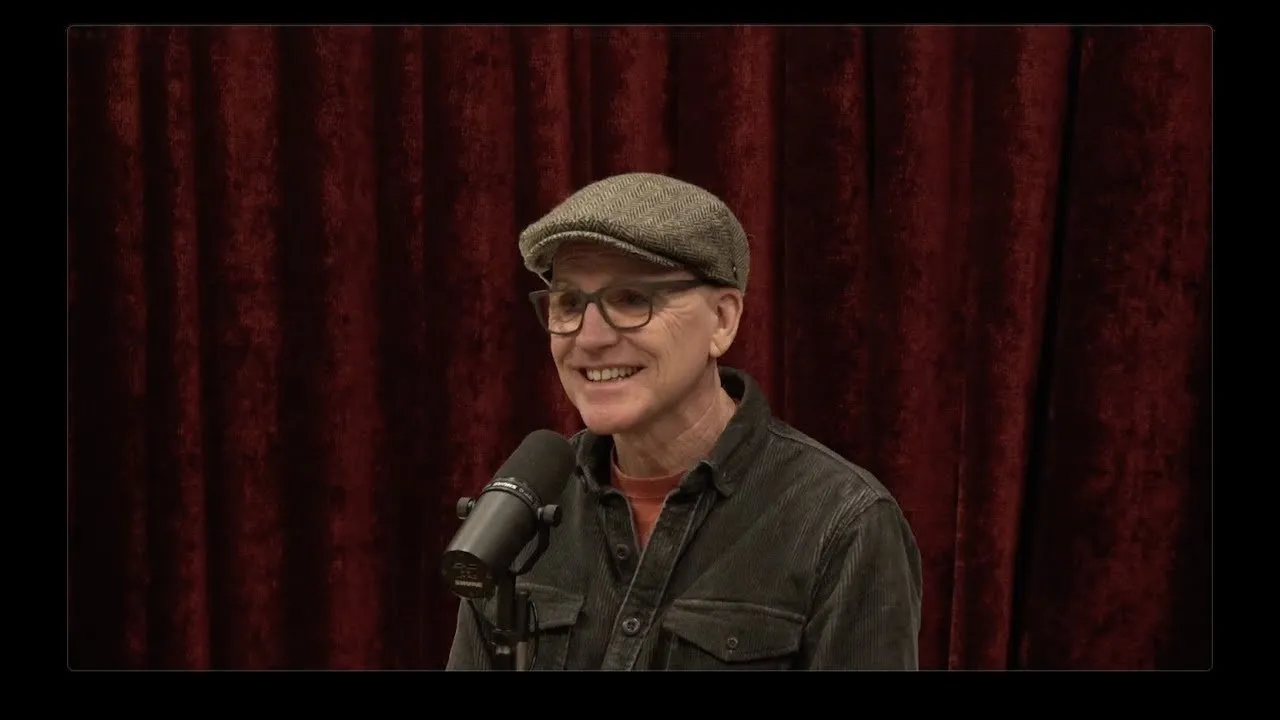
When Greg Fitzsimmons joins Joe Rogan, the conversation inevitably oscillates between hilarious personal anecdotes and deep dives into the darker corners of history and modern technology. In episode #2446 of the Joe Rogan Experience, the two comedians dissect a world that feels increasingly unstable. From the shifting landscapes of social media censorship to the existential threats posed by artificial intelligence, the dialogue offers a sprawling look at the anxieties defining the current zeitgeist.
Their discussion moves fluidly from the history of atomic tourism in Las Vegas to the granular details of stand-up comedy club economics, providing listeners with both entertainment and unnerving food for thought. Whether exploring the validity of the moon landing or the ethics of algorithmic surveillance, Rogan and Fitzsimmons present a compelling argument that we are living through a unique, albeit turbulent, moment in human history.
Key Takeaways
- Social Media Censorship: The duo discusses the growing restrictions on free speech across platforms like TikTok and the legal ramifications for online posts in the UK.
- Historical Corruption: A look back at the "Atomic City" era of Las Vegas and the tragic, buried history of The Styx in Palm Beach.
- The Moon Landing Debate: Rogan reiterates his skepticism regarding the Apollo missions, citing missing telemetry data and physics anomalies.
- The AI Revolution: The conversation highlights the rapid advancement of robotics, the dangers of AI companionship, and the erosion of digital privacy.
- The Business of Comedy: An insider’s look at how clubs like The Mothership are changing the developmental landscape for new comedians compared to corporate chains.
The State of Censorship and Social Media
A recurring theme in modern discourse is the tightening grip of censorship on social media platforms. Rogan and Fitzsimmons open the episode by examining the inconsistencies in how different platforms handle controversial topics. They specifically highlight TikTok’s alleged suppression of specific terms and the broader implications of algorithmic curation.
The Whistleblower Dilemma
The conversation pivots to the vital role of whistleblowers in a free society. Rogan argues that calls to end online anonymity could have disastrous consequences for those attempting to expose corporate or government malfeasance. They cite the case of Steven Donziger and his legal battles with energy giants as a prime example of how the legal system can be weaponized against those who speak out.
"You don't counter hate speech with censorship. You counter it with better speech. And you appeal to rational people and sensible people... That's how it's supposed to be. It's supposed to be a free speech town hall platform."
The duo agrees that without platforms like X (formerly Twitter) maintaining a stance on free speech, the public would lose a critical "town square" for debating ideas, however contentious they may be.
Unearthing Dark History: Vegas and Palm Beach
Moving away from current events, the podcast delves into the often-overlooked history of American leisure destinations. Fitzsimmons and Rogan discuss the surreal era of Las Vegas in the 1950s, where nuclear testing was not just a military operation but a tourist attraction.
Atomic Tourism
Rogan shares details about how Las Vegas casinos used the nearby nuclear tests as marketing tools. Tourists would attend "bomb parties" on rooftops, drinking atomic-themed cocktails while watching mushroom clouds rise over the desert horizon. This cavalier attitude toward radiation highlights a generational disconnect regarding safety and government transparency.
The Tragedy of The Styx
Perhaps the most sobering historical segment involves the history of Palm Beach, Florida. The pair discusses "The Styx," a community of black laborers who built the infrastructure and mansions of Palm Beach in the early 20th century. According to historical accounts and local lore discussed on the show, these workers were forcibly removed, and their homes reportedly burned down to clear the land for further development, illustrating a brutal chapter of displacement often left out of travel brochures.
Skepticism and the Moon Landing
It wouldn't be a classic JRE episode without a foray into conspiracy theories. Rogan revisits his long-standing skepticism regarding the 1969 moon landing. While acknowledging that he "wants to believe," he presents a series of arguments that fuel his doubt, ranging from the loss of original telemetry data to the behavior of the astronauts post-mission.
Rogan points to the "fake moon rock" incident, where a rock gifted to the Dutch Prime Minister by Apollo astronauts turned out to be petrified wood, as evidence of potential deception. He also analyzes the physics of movement in one-sixth gravity, suggesting that the footage often looks like slowed-down motion of people in Earth's gravity.
"If there's one fucking conspiracy that I think is the most unlikely, the most preposterous in the public eyes, but might be true, it's that we didn't go to the moon."
Fitzsimmons adds that the geopolitical climate of 1969, under the Nixon administration, was rife with deception, making the idea of a fabricated win in the Space Race plausible to skeptics.
The Existential Threat of Artificial Intelligence
As technology accelerates, the line between reality and simulation blurs. The conversation turns to the rapid capabilities of AI, specifically focusing on Large Language Models (LLMs) and robotics.
The Dangers of AI Companionship
Rogan and Fitzsimmons discuss the tragic case of a young man who died by suicide after allegedly being encouraged by an AI chatbot. This highlights the lack of moral and ethical guardrails in current AI iterations. As these systems become more integrated into daily life, serving as therapists or friends, the potential for psychological manipulation—intentional or accidental—grows exponentially.
Deepfakes and Digital Identity
The threat of deepfakes is no longer theoretical. Rogan notes the existence of entire AI-generated podcasts that mimic his voice and conversations with people he has never met. This technology poses severe risks for the future of information verification, particularly in election cycles where audio and video can be fabricated to damage reputations instantly.
Surveillance Capitalism
Beyond content generation, the passive surveillance capabilities of modern tech are a major concern. The episode touches on settlements paid by tech giants regarding unauthorized recording via home assistant devices. Fitzsimmons points out that the data we voluntarily give these systems could eventually be weaponized by insurance companies or government agencies.
"You think that's not going to be used against you at some point? When you try to get health insurance and health insurance has now audited what you said to ChatGPT and goes, 'Well, you're a suicide risk...'"
The Evolution of the Comedy Industry
Despite the heavy topics, the episode is grounded in the shared profession of the two men: stand-up comedy. They discuss the current boom in the comedy industry, comparing the thriving scene in Austin, Texas, to the established hubs of New York and Los Angeles.
The Mothership Model
Rogan details the philosophy behind his club, Comedy Mothership. Unlike corporate chains that prioritize profit over talent development, Rogan emphasizes a "bottom-up" approach. By fostering a strong open mic culture and paying comedians significantly better than the industry standard, the club aims to create a sustainable ecosystem for artists.
Developing Talent vs. Influencer Comedy
A critical distinction is drawn between "real" comedians who grind through open mics and "influencer" comics who bypass development due to social media followings. Rogan and Fitzsimmons agree that while influencers can sell tickets, they often degrade the brand of a comedy club if they cannot deliver a quality set. They argue that the longevity of the art form depends on clubs acting as "art colonies" that nurture genuine talent rather than just chasing short-term ticket sales.
Conclusion
Greg Fitzsimmons and Joe Rogan’s conversation serves as a microcosm of the current cultural moment: a blend of high-tech anxiety, historical skepticism, and the enduring need for human connection through humor. Whether discussing the horrifying potential of autonomous robots or sharing laugh-out-loud stories about getting pranked by police in Alaska, the episode underscores the importance of questioning the narrative, protecting free expression, and keeping a sense of humor as the world continues to shift in unpredictable ways.