Table of Contents
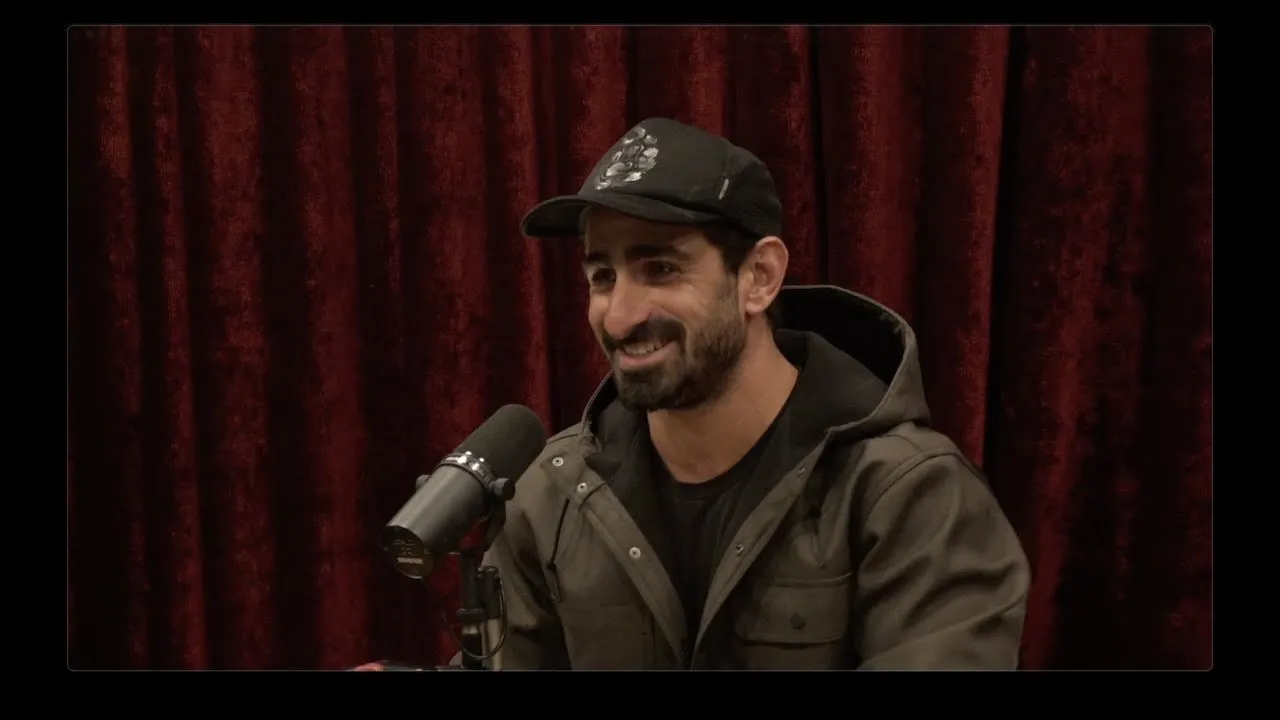
The Amazon Rainforest is often described as the lungs of the Earth, a vast, breathing entity responsible for regulating the planet's moisture and oxygen. Yet, as naturalist and author Paul Rosolie revealed in a gripping discussion on the Joe Rogan Experience, the region is balancing precariously on the edge of ecological collapse. Rosolie, the founder of Jungle Keepers, shared harrowing accounts of his time in the Peruvian Amazon—from first-contact scenarios with indigenous tribes to life-threatening run-ins with narco-traffickers and the visceral reality of jungle survival.
Rosolie’s testimony is not just a collection of adventure stories; it is a frantic alarm bell. Having spent nearly two decades protecting the Madre de Dios region, his insights bridge the gap between romanticized views of nature and the brutal, often violent reality of conservation on the front lines. The conversation traversed the history of the Amazon, the encroaching darkness of organized crime, and the profound, almost spiritual connection required to understand the jungle’s frequency.
Key Takeaways
- Uncontacted tribes are emerging out of desperation: The Mashco-Piro people, previously isolated, are appearing on riverbanks seeking food and weapons, driven by the destruction of their hunting grounds by loggers.
- The Amazon is nearing a tipping point: With 20% of the rainforest already destroyed, scientists warn that losing much more could break the moisture cycle, turning the lush ecosystem into a dry savannah.
- Conservation has become a war zone: The threat has evolved from local poachers to international logging mafias and narco-traffickers, leading to assassination attempts on Rosolie and his rangers.
- The "Man-Made" Amazon theory is often overstated: While ancient civilizations terraformed specific river basins, Rosolie argues that the vast majority of the Amazon remains a wild, evolutionary battlefield untouched by ancient engineering.
- Indigenous medicine offers solutions where Western medicine fails: Rosolie detailed a catastrophic stingray injury that was healed rapidly by local plant knowledge, contrasting with the long-term damage often suffered by those treated in hospitals.
The Desperate Emergence of Uncontacted Tribes
One of the most startling revelations from Rosolie’s recent expeditions involves the Mashco-Piro, a tribe of uncontacted people who have begun appearing on the beaches of the Madre de Dios river. These encounters, captured on video, show men armed with six-foot bows and seven-foot arrows, signaling a profound shift in the jungle's dynamics. Rosolie described the tension of these moments, noting that while the encounters appear peaceful on the surface, they are born of survival instincts.
The Request for "Rope and Bananas"
The tribe members, whom locals now believe call themselves "The Brothers" (Nomoly), appeared with specific demands. They carry ropes wrapped around their waists and requested plantains (bananas), a crop that does not grow wildly in the Amazon but must be planted by humans. This indicates that their traditional food sources are vanishing. The desperation was palpable; Rosolie noted that when plantains were floated across the river in a canoe, the tribe members didn't store them for later—they fought over them immediately, suggesting severe food scarcity.
A Message from the Stone Age
The communication across the river revealed the root cause of this migration. The tribe asked, "Who are the bad ones?" referring to the mechanical noise and destruction upriver. They pleaded for the outsiders to stop cutting down the big trees. This interaction serves as a time-traveling dialogue, where people living with technology effectively from thousands of years ago are confronting the destructive edge of modern industrialization.
We are the generation that's going to decide, do we find a sustainable way to keep the Amazon rainforest functioning or are we going to break that cycle and once we lose it, it's not going to come back.
The Industrial Destruction of the Rainforest
The primary driver of the Amazon's collapse is no longer just subsistence farming; it is industrial-scale extraction. Rosolie detailed the various factions tearing the jungle apart, ranging from cattle ranchers to illegal gold miners. The scale of destruction is difficult to comprehend, with 20% of the Amazon—an area larger than the lower 48 United States—already gone.
The Scourge of Gold Mining
Illegal gold mining has turned vast swathes of lush rainforest into toxic wastelands. Miners cut down the trees, burn the remains, and then suck up the river sediment. To extract gold dust, they use mercury, which binds to the gold. This mercury is then burned off, releasing it into the atmosphere where it returns as "mercury rain," poisoning the water, the fish, and eventually the people. Rosolie described these areas not as ecosystems, but as "Mordor-like" scars visible from space.
The Narco-Trafficking Takeover
Perhaps the most chilling development is the shift from resource extraction to drug manufacturing. As Rosolie’s organization, Jungle Keepers, succeeded in protecting land, they inadvertently squeezed the operations of logging mafias and narco-traffickers. These groups are cutting roads deep into the jungle to grow coca and transport cocaine. The situation has escalated from conservation work to active conflict, with death threats issued against Rosolie and his head ranger, JJ.
- Targeted Assassinations: Rosolie shared a terrifying account of his driver being pulled from a vehicle by masked gunmen looking for him and JJ.
- Bounties: Police intercepted messages placing a bounty on the "gringo who flies the drone," forcing Rosolie to travel with security.
- The Lawless Frontier: These areas are beyond the reach of standard law enforcement, operating as a "Wild West" where indigenous people are displaced, enslaved, or killed.
Debunking the "Man-Made" Amazon Myth
A prevailing modern theory, popularized by recent archaeological findings using LIDAR, suggests that the Amazon is largely a man-made garden, cultivated by massive pre-Columbian civilizations. Rosolie pushed back on this narrative, arguing that it is dangerous clickbait that provides political cover for deforestation.
Riverbanks vs. Deep Jungle
Rosolie clarified that while ancient civilizations certainly existed, they were concentrated along the river basins—the "flood plains" where the soil was enriched (Terra Preta) and agriculture was possible. However, the vast majority of the Amazon is Terra Firma, the deep, inter-fluvial forest between rivers. Scientific sampling in these areas shows no sign of human engineering. The forest has been speciating and evolving on its own for 55 million years.
The danger of the "man-made" narrative is that politicians, particularly in Brazil, use it to justify development. The logic follows that if the forest was managed by humans before, it can be managed (and exploited) by humans now. Rosolie emphasizes that the 95% of the Amazon that remains unsurveyed is likely wild, pristine ecosystem, not an overgrown garden.
Survival, Pain, and Indigenous Medicine
The jungle is not a hospitable place for the unprepared. Rosolie recounted a recent, agonizing injury caused by a stingray. While wading in a stream, he was struck in the arch of his foot. The barb flayed his skin and injected a potent venom, causing "white hot" pain that led to blackouts.
The Failure of Western Approaches
Rosolie contrasted his experience with a friend who had suffered a similar stingray injury and sought treatment at a hospital. That individual endured months of necrosis, infection, and an inability to walk. In the jungle, however, the local indigenous guides knew exactly what to do.
The Power of the Forest Pharmacy
Rosolie's guides sourced bark and fiber from specific trees, heated them into a scalding "plant pus," and applied it directly to the wound. The poultice drew out the venom and denatured blood. Despite the initial agony, Rosolie avoided nerve damage and infection, walking within two days. This incident underscored a broader point: the Amazon is a reservoir of chemical complexity that Western science has barely tapped.
The secrets in this world are hidden for a reason. And even if there is a tribe that knows about the giant ground sloths, they're not going to tell us.
The Web of Life: Wildlife and Ecology
Rosolie’s anecdotes painted a picture of a hyper-connected ecosystem where every organism plays a role in regulation. He explained why diseases like malaria and dengue are rampant in logging camps but rare in the deep jungle. In a healthy ecosystem, the food web controls vectors; frogs and fish eat mosquito larvae, and dragonflies hunt the adults. When humans destroy the forest, they leave behind stagnant puddles in the sun—perfect breeding grounds for disease without the predators to control them.
Close Encounters
- Anacondas: Rosolie described resting his head on a sleeping 20-foot anaconda, dispelling the myth of them as mindless killing machines. He views them as misunderstood apex predators that generally wish to be left alone.
- Jaguars: The tragic reality of deforestation was highlighted by photos of jaguars burned alive in fires set to clear land for cattle. These animals, having nowhere to run, often retreat into dens where they are incinerated.
- Dietary Realities: Survival in the Amazon dictates diet. Rosolie admitted to eating monkey and tortoise when offered by locals, noting that refusing food in a subsistence culture is an insult. He described the taste of piranha and pacu (a fruit-eating fish) as superior to most commercial fish, praising the nutrient density of wild food.
The Philosophy of Conservation
Throughout the conversation, Rosolie returned to the influence of Jane Goodall. He credits her with launching his career by endorsing his first manuscript when he was just an unknown enthusiast. Goodall’s legacy of viewing animals as individuals and the Earth as a connected system permeates Rosolie’s work.
The Disconnect of Modernity
Rosolie argued that modern humans suffer from a sensory atrophy. In the city, we are bombarded by the "news of 8 billion people," causing chronic stress and apathy. In the jungle, the "news" is the chirp of a bird signaling a jaguar or the silence before a storm. This connection to the immediate environment provides a fulfillment that technology cannot replicate. He urged people to "touch grass" not as a meme, but as a prescription for mental health.
A Call to Action
The podcast concluded with a stark reality check: We are the generation that will determine the fate of the Amazon. The destruction is not inevitable. Rosolie cited the recovery of humpback whales and the return of wolves to Yellowstone as proof that nature can bounce back if given space. His organization, Jungle Keepers, is currently racing to buy and protect titles to land, creating a corridor that narcos and loggers cannot legally cross, effectively shielding the uncontacted tribes and the ancient forest behind them.
If you cut the rainforest... the stuff that comes standard with life on Earth is going to be depleted.
Conclusion
Paul Rosolie’s appearance on JRE served as both a travelogue of the world's last great wilderness and a desperate plea for its preservation. The Amazon is not merely a collection of trees and animals; it is a complex, sentient engine that sustains life on Earth. From the uncontacted tribes signaling for help on the riverbanks to the complex chemical warfare of plants and the predatory balance of jaguars and anacondas, the message is clear: the wild is shrinking, and once it is gone, it cannot be rebuilt. Through organizations like Jungle Keepers, there remains a narrow window of hope to secure this ancient legacy for the future.