Table of Contents
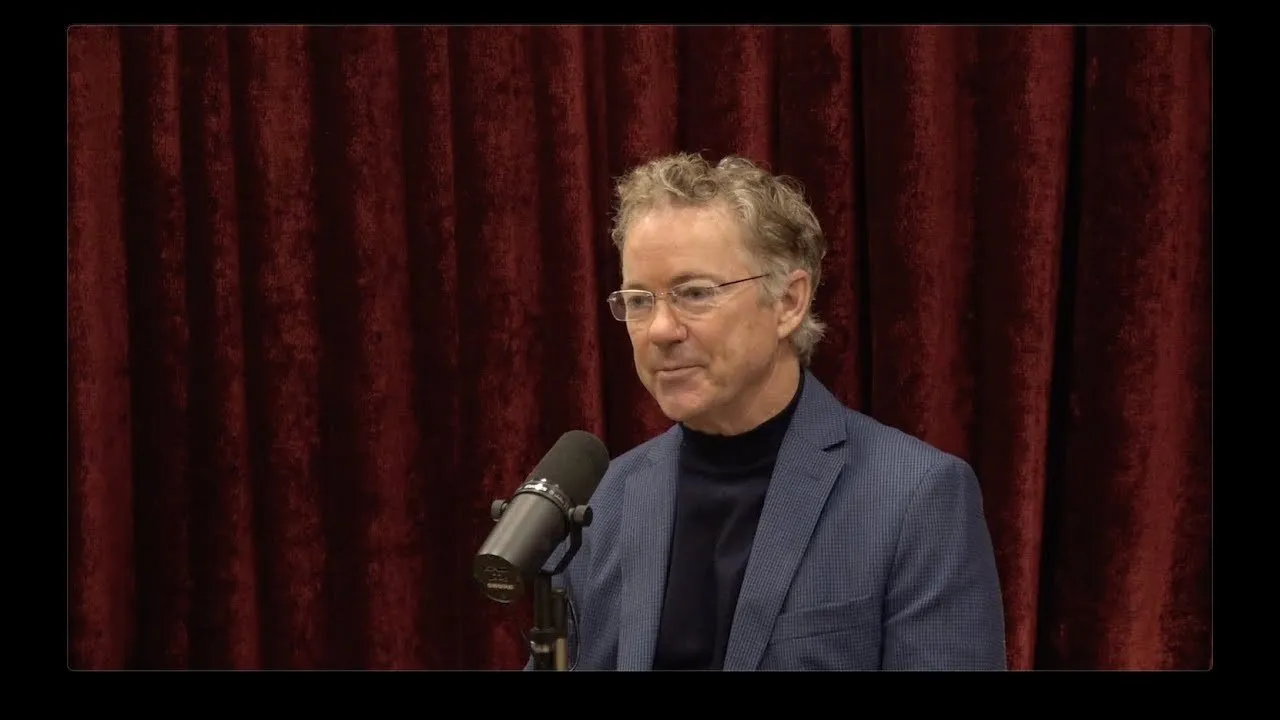
In a sprawling conversation that touches on everything from the intricacies of virology to the philosophy of government spending, Senator Rand Paul joined Joe Rogan to dissect the current state of American politics and public health. Known for his libertarian leanings and his combative history with Dr. Anthony Fauci, Paul offered a deep dive into his investigations regarding the origins of COVID-19, his legislative battles over hemp legalization, and his unconventional proposals for immigration and fiscal reform.
The discussion moves beyond standard partisan talking points, exploring the granular details of government bureaucracy, the unintended consequences of foreign intervention, and the looming questions surrounding artificial intelligence and the workforce. Paul presents a worldview rooted in skepticism of centralized power, advocating for a return to individual liberty and market-based solutions.
Key Takeaways
- The Origins of COVID-19: Paul maintains that evidence strongly points to gain-of-function research and a lab leak, accusing Anthony Fauci of obscuring the truth and destroying federal records to protect his reputation.
- Natural Immunity vs. Mandates: The Senator argues that public health officials ignored centuries of knowledge regarding natural immunity, leading to unnecessary mandates for children and those who had already recovered from the virus.
- The "Penny Plan" for Debt: To combat inflation and the national debt, Paul proposes a "Penny Plan" requiring a 1% spending cut across all government sectors, including the military and entitlement programs.
- Immigration Reform Compromise: Paul suggests a pragmatic approach to the border crisis: creating a robust work visa program that specifically excludes voting rights and citizenship for those who entered illegally, trading legal status for political neutrality.
- The War on Hemp: Paul details his legislative fight against Mitch McConnell's attempts to criminalize hemp products, arguing that the government shouldn't dictate natural sleep aids or pain relief.
- Foreign Policy Restraint: Consistent with his non-interventionist stance, Paul critiques recent US involvement in Venezuela and argues against regime change, citing historical failures in Iraq and Libya.
The COVID-19 Post-Mortem and the Fauci Investigation
A significant portion of the conversation focuses on the retrospective analysis of the COVID-19 pandemic. Paul remains steadfast in his criticism of the public health establishment, particularly Dr. Anthony Fauci, whom he accuses of misleading Congress and the American public regarding the origins of the virus and the efficacy of mitigation measures.
- Gain of Function Denial: Paul asserts that Fauci engaged in semantic gymnastics to deny that the NIH funded gain-of-function research at the Wuhan Institute of Virology, despite internal communications suggesting otherwise.
- Destruction of Records: The Senator claims to have evidence of a "cover-up," citing emails where Fauci allegedly instructed colleagues to "read this and destroy it" regarding communications about the virus's origins.
- Natural Immunity Ignored: Paul highlights the historical understanding of natural immunity dating back to the Athenian plague, arguing that ignoring this factor led to unscientific mandates for people who had already recovered.
- The "Six-Foot" Rule: The discussion touches on the arbitrary nature of social distancing guidelines, with Paul noting that the six-foot rule was not based on rigorous science, as the virus is aerosolized and travels much further.
- Mask Efficacy: Paul references pre-2020 pandemic studies that showed little evidence for public masking, arguing that cloth masks were largely "security theater" that offered false protection to vulnerable populations.
- Vaccines for Children: The Senator questions the risk-benefit analysis of vaccinating healthy children, pointing to low hospitalization rates in that demographic versus the potential risks of myocarditis, particularly with multiple boosters.
- Financial Conflicts: Paul raises concerns about the lack of transparency regarding royalties paid to government scientists by pharmaceutical companies, arguing that anyone voting on vaccine approvals should disclose financial ties to the industry.
We now have evidence that he was telling people like Francis Collins, 'read this and destroy it.' Well, you can't do that. The executive branch when they communicate, they're required to keep their communications.
Public Health, Big Pharma, and Scientific Dogma
Beyond the immediate politics of the pandemic, Paul and Rogan explore the broader relationship between the pharmaceutical industry, government regulators, and public perception. They discuss how "consensus" can stifle scientific inquiry and how financial incentives distort medical advice.
- The "Religious" Nature of Mandates: Rogan and Paul discuss how belief in vaccine mandates became a form of secular religion, where questioning the "science" was treated as heresy rather than legitimate inquiry.
- Liability Shields: They criticize the legal immunity granted to vaccine manufacturers, noting that since the Reagan administration, pharmaceutical companies have had little financial liability for vaccine injuries, removing a key market check on safety.
- The Peanut Allergy Analogy: Paul uses the history of peanut allergy advice—where parents were told to avoid peanuts, leading to more allergies—as an example of how "expert" consensus can be diametrically wrong.
- Marketing Influence: The conversation highlights the United States and New Zealand as the only countries allowing direct-to-consumer pharmaceutical advertising, which they argue buys silence and favorable coverage from major news networks.
- Treatment Suppression: Paul argues that during the early pandemic, cheap, generic therapeutics (like IV steroids) were initially dismissed or ignored in favor of newer, patented, and more profitable drugs like Remdesivir.
- The "Consensus" Trap: Paul warns that when a scientist claims to represent "the science" or demands adherence to a consensus, it stifles the very debate necessary for scientific advancement.
The Battle for Hemp and Personal Liberty
Transitioning to domestic policy, Paul details a current legislative battle regarding hemp. He frames the issue as a matter of personal liberty and government overreach, criticizing attempts by establishment Republicans to recriminalize hemp products that many Americans rely on for sleep and pain management.
- McConnell's Ban: Paul explains that Senator Mitch McConnell is pushing legislation to effectively ban most hemp products by setting impossibly low THC thresholds, overturning the progress made in the 2018 Farm Bill.
- The "Reefer Madness" Legacy: Rogan and Paul discuss the historical origins of cannabis prohibition, tracing it back to William Randolph Hearst's desire to protect his paper interests from hemp competition and the racist propaganda used to sell the ban.
- Inconsistent Standards: Paul points out the hypocrisy of a government that allows the prescription of powerful psychotropic drugs and opioids but attempts to ban a plant-based sleep aid that many veterans and elderly people prefer.
- State vs. Federal Rights: The Senator argues for a federalist approach, suggesting that if states have regulated hemp and cannabis markets, the federal government should not intervene or criminalize products crossing state lines.
- The Safety Profile: Paul argues that products like CBD and low-dose THC gummies have a safety profile vastly superior to alcohol or pharmaceutical sleep aids (like Ambien), making the ban illogical from a public health standpoint.
- Economic Impact: The proposed ban would devastate a budding $2 billion industry of farmers and small business owners who have operated legally under the 2018 guidelines.
Fiscal Sanity and the "Penny Plan"
With the national debt spiraling, Paul outlines his fiscal philosophy. He rejects the idea that inflation is a mystery, attributing it directly to the Federal Reserve's money printing and excessive government spending sanctioned by both parties.
- The "Dirty Deal": Paul describes the mechanism of debt in Washington as a compromise where Republicans get increased military spending and Democrats get increased welfare spending, with the taxpayer footing the bill for both.
- The Penny Plan Proposal: His solution is a "Penny Plan," which proposes spending just one penny less out of every dollar each year. This 1% aggregate cut would balance the budget within five years.
- Mandatory vs. Discretionary Spending: He notes that Congress only votes on one-third of the budget (discretionary), while two-thirds (entitlements like Social Security and Medicare) are on autopilot, driving the debt crisis.
- Interest on Reserves: Paul criticizes the Federal Reserve for paying interest to big banks to keep reserves parked at the Fed, arguing this practice suppresses lending and essentially hands taxpayer money to financial institutions.
- Welfare Reform: He proposes restricting food stamp (SNAP) purchases to exclude sugary drinks and junk food, arguing that taxpayers should not be subsidizing the obesity and diabetes epidemic that Medicaid then has to pay to treat.
- Market Signals: Paul explains that price controls (like caps on credit card interest or rent control) destroy market signals, leading to shortages (in the case of rent control) or risky borrowing behavior (in the case of interest rates).
Immigration, Fraud, and a New Compromise
The conversation turns to the border crisis, with Paul offering a nuanced take that splits the difference between open borders and mass deportation. He focuses heavily on the financial incentives drawing people to the U.S. and the rampant fraud within the refugee system.
- The Work-for-Citizenship Trade-off: Paul proposes a compromise for the millions of undocumented immigrants already in the US: grant them legal work permits but deny them a path to citizenship or voting rights. He believes most immigrants would accept this stability, while Democrats reject it because their goal is acquiring new voters.
- The "Suicidal Empathy": He argues that the refugee system is rife with fraud, citing a specific scandal in Minnesota involving Somali refugees allegedly sending hundreds of millions of dollars in welfare fraud proceeds back to Somalia via suitcases of cash.
- Sanctuary City Hypocrisy: Paul criticizes cities that refuse to cooperate with ICE regarding criminal illegal aliens, arguing that if local police enforced the law against criminals, there would be no need for federal agents to conduct raids in communities.
- Census Distortion: The Senator points out that because the census counts all persons regardless of status, states with high illegal populations gain extra congressional seats and electoral college votes, incentivizing permissive border policies.
- The "Founding Fathers" Argument: Paul argues against bringing pro-Western, English-speaking populations out of destabilized nations (like Afghanistan), suggesting they should remain to rebuild their nations rather than leaving them to extremists.
- Vetting Failures: He contends that mass migration without vetting creates national security risks and strains the social safety net, advocating for a merit-based system that prioritizes individuals who can contribute economically immediately.
Would you accept that you don't get to vote during your lifetime, but your kids will get to vote if they were born here in exchange for not having to worry about being in a car accident or being sent back to Mexico? I'll bet you 80% of the people here illegally would take work without citizenship.
Foreign Policy and the Future of Work
The final segments cover Paul's non-interventionist foreign policy views and a philosophical debate regarding Artificial Intelligence and the necessity of work.
- Venezuela and Regime Change: Paul questions the effectiveness of the U.S. strategy in Venezuela, noting that sanctions often hurt the populace more than the dictators and that regime change efforts (as seen in Iraq and Libya) rarely lead to stability.
- The Drug War Predicate: He argues that the U.S. often uses the "war on drugs" as a flimsy pretext for military operations or geopolitical maneuvering in South America.
- AI and UBI: Paul disagrees with Elon Musk’s prediction that AI will necessitate a Universal Basic Income. He argues that historically, automation (from the loom to electricity) has always created more jobs and wealth, not less.
- The Value of Work: Paul contends that work provides essential meaning and mental health benefits, predicting a dystopian future if humanity is relegated to idleness. He suggests people might even engage in "secret work" just to feel productive in a post-labor society.
- Optimism on Poverty: Citing World Bank statistics, Paul reminds the audience that extreme poverty has dropped from 98% of the global population in 1820 to less than 10% today, attributing this success to technological progress and markets.
- Economic Mobility: He disputes the narrative of a fixed caste system in America, noting the high fluidity between income brackets and arguing that a victimhood mentality harms young people more than systemic barriers.
From a historical perspective, we've never had any kind of invention or automation that ultimately led to less jobs and always led to more and led to more prosperity.
Conclusion
Rand Paul’s appearance on the Joe Rogan Experience serves as a comprehensive articulation of modern libertarian thought. By connecting the dots between the bureaucratic failures of the pandemic, the fiscal irresponsibility of Washington, and the erosion of civil liberties in the drug war, Paul paints a picture of a government that has grown too large and too unaccountable. His solutions—whether investigating Fauci, cutting the budget by a penny on the dollar, or creating a non-voting work status for immigrants—prioritize structure and incentives over ideology. As the U.S. faces mounting debt and social polarization, Paul’s arguments offer a distinct alternative to the standard platforms of both the Democratic and Republican establishments.