Table of Contents
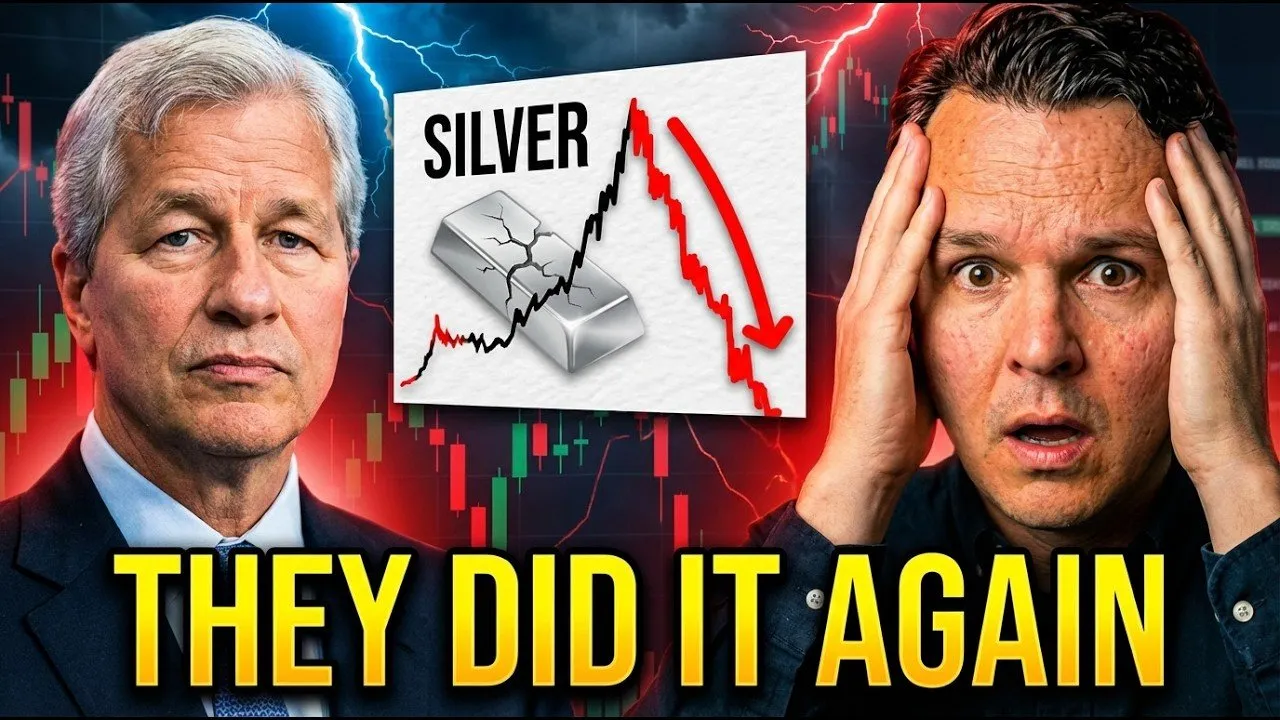
Silver prices have plummeted 40% in just two weeks, halting a historic rally that saw the metal reach $120 per ounce amid allegations of institutional market manipulation. While retail investors grapple with the sudden downturn, market analysts are pointing to a confluence of strategic maneuvers by major banking institutions, specifically JP Morgan, aimed at mitigating billions in potential losses from short positions.
Key Points
- Market Capitulation: Silver has crashed 40% in a two-week period following a 132% rally earlier in 2025.
- Institutional Exposure: Reports suggest JP Morgan faced $5 billion in unrealized losses on short positions before the price correction.
- Operational Irregularities: The sell-off coincided with a system-wide shutdown at HSBC Hong Kong and a pre-market glitch at the London Metal Exchange (LME).
- Arbitrage Profits: Banking institutions reportedly generated over $765 million in arbitrage profits on January 30 alone while retail liquidity was constrained.
The Anatomy of a "Six Sigma" Event
Before the correction, the silver market was experiencing what quantitative analysts describe as a "Six Sigma" event—a statistical anomaly with a probability of occurring roughly twice in one billion instances. Driven by an aggressive narrative surrounding industrial demand for AI data centers, solar panels, and electric vehicles, the metal rallied 132% in 2025.
However, market observers argue that the violence of the rally and the subsequent crash indicates that the market was forced rather than organic. According to reports, the rapid devaluation was not merely a market correction but a defensive strategy by major financial players caught on the wrong side of the trade.
"When you see something that's impossible, it means the market was forced there. This was not a regular rally because everybody woke up one day and decided silver is a great asset... Someone had to kill the rally before it took them down."
JP Morgan and the Short Squeeze
At the center of the controversy is JP Morgan, a dominant player in precious metals derivatives. As silver prices approached $120 per ounce, the bank reportedly faced an emergency regarding a $5 billion short position. If prices had continued to climb toward $150, the unrealized losses would have created a critical instability on the bank's balance sheet.
Analysts allege that to neutralize this threat, institutional players crashed the "paper market"—the market for silver futures and derivatives—rather than the physical metal initially. This strategy mirrors tactics seen between 2009 and 2016, where massive sell orders were placed to induce panic, only to be canceled or bought back at lower prices.
The Timeline of the Crash
The reversal in silver prices appears to have been catalyzed by a specific sequence of geopolitical and operational events:
- January 1: China implemented a silver export ban, removing private sellers from the market and causing liquidity crunches for Hong Kong firms.
- January 29: Reuters reported that the United States was moving away from critical mineral price floors, effectively removing the implied government guarantee for silver prices.
- January 30: HSBC, Hong Kong’s largest bank, suffered a system-wide breakdown affecting 6.2 million customers, preventing them from accessing accounts during the volatility. Simultaneously, the London Metal Exchange (LME) reported a "pre-market glitch."
Arbitrage and Market Impact
While retail traders were locked out due to technical failures, institutional desks allegedly executed a massive arbitrage play. Reports indicate that JP Morgan closed losing short positions at $78 per ounce, then aggressively purchased physical silver ETFs (Exchange Traded Funds) which were trading at a significantly lower valuation due to the panic.
Specifically, the iShares Silver ETF was trading approximately 19% cheaper than the spot price of physical silver. Institutions reportedly bought at the $64 bottom, capitalizing on the spread. On January 30 alone, banks reportedly secured $765 million in arbitrage profits to offset their previous short exposure.
"They close their silver shorts, buy a truck ton of physical silver ETFs... [then] dump the whole bag, crashing the market. The banking cartel pulled off the massive silver heist of 2026."
Implications for Investors
The silver crash has had a contagion effect across broader markets, including cryptocurrencies. As liquidity dried up in the metals market, over-leveraged firms in Hong Kong and elsewhere were forced to liquidate other assets, including Bitcoin and software stocks, to cover margin calls.
This event serves as a stark reminder of the information and execution asymmetry between retail investors and global banking institutions. While the fundamental use cases for silver in green energy and technology remain valid, the market dynamics are heavily influenced by derivatives trading and institutional positioning.
As the market stabilizes, investors are advised to scrutinize the distinction between paper derivatives and physical assets. While a recovery is possible given the "commodity super cycle" narrative, historical patterns suggest that volatility will remain high as institutions consolidate their positions following the correction.