
Table of Contents
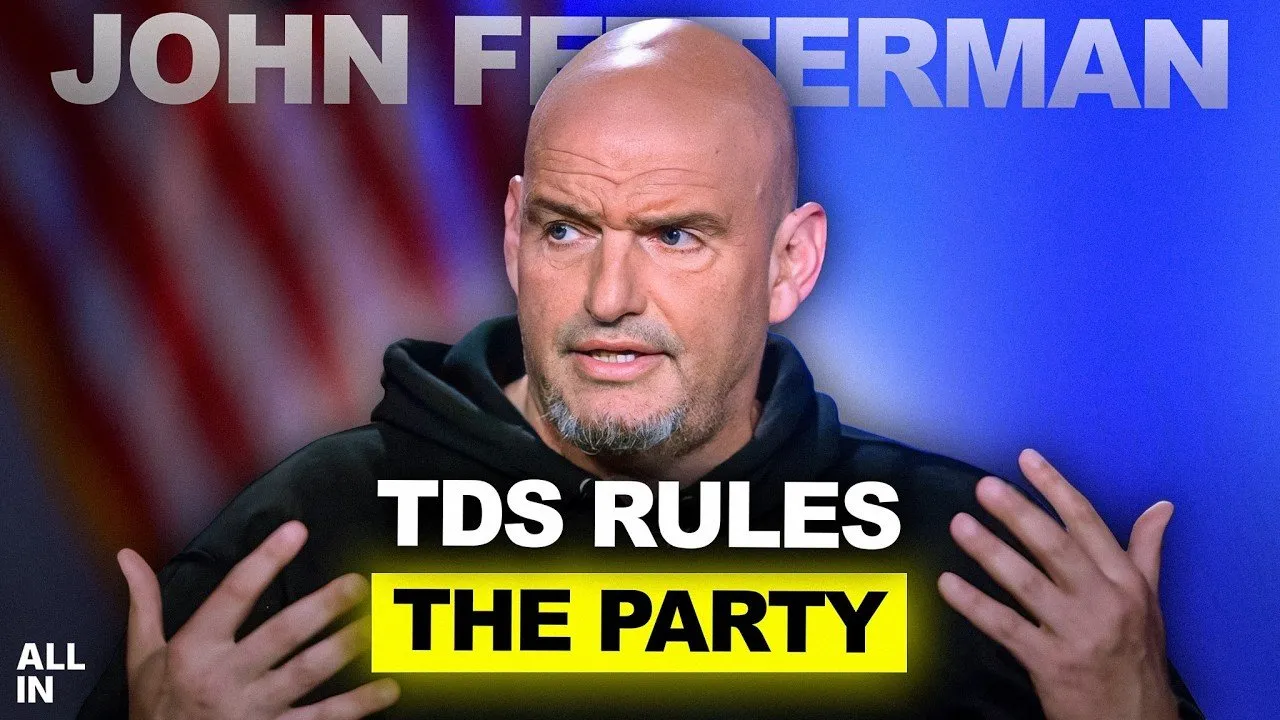
In a political climate defined by intense polarization and rigid ideological litmus tests, Senator John Fetterman stands out as a unique figure within the Democratic Party. Known for his unapologetic stance on key security and foreign policy issues, the Pennsylvania Senator recently joined the All-In podcast to discuss his approach to governance, his evolving party affiliation, and why he consistently prioritizes what he terms "moral clarity" over partisan conformity. From his firm support of Israel to his refusal to shut down the Department of Homeland Security, Fetterman argues that the path forward for the nation lies in pragmatism rather than the pursuit of extreme ideological purity.
Key Takeaways
- Fetterman emphasizes that his core values have remained consistent, even as he has distanced himself from the progressive label to focus on pragmatic, common-sense governance.
- He argues that the current political environment is driven by an obsession with "Trump Derangement Syndrome" (TDS), which he believes prevents Democrats from acknowledging good policies or engaging in bipartisan cooperation.
- Fetterman advocates for border security and robust law enforcement, maintaining that being a Democrat does not necessitate opposing common-sense measures like voter ID requirements or funding critical government departments.
- He rejects the "all-or-nothing" approach to foreign policy, specifically regarding the Iranian regime, arguing that dismantling dangerous, state-sponsored aggression makes the world safer for everyone.
The Shift in Party Identity
During the interview, Fetterman addressed his complex standing within the Democratic Party. While he ran as a progressive in the past, he noted that his evolution away from that label was a reaction to the party's shifting priorities. He describes himself now as simply a Democrat—one who refuses to adhere to the growing hostility toward Israel or the demand for performative opposition to the Republican agenda.
I've just going to follow what I think is the moral clarity. And in my very first race back in 2015 over a decade ago, what used to be a progressive is definitely not what a progressive started to turn into.
Fetterman highlights that this independence has led to a strange phenomenon where he often finds more approval among Pennsylvania Republicans than within the base of his own party. He views this not as a betrayal of his values, but as evidence that the Democratic Party has become increasingly detached from the concerns of the average American.
Foreign Policy and Moral Clarity
One of the most defining aspects of Fetterman's recent tenure is his vocal, unwavering support for Israel and his desire to hold the Iranian regime accountable. He views the dismantling of Iranian proxies and military assets not as a partisan endeavor, but as a necessary step for global security. He expresses frustration that many in his party seem unable to celebrate or support these outcomes simply because they occur during a time of heightened political tension.
The Case for Disarming Rogue Regimes
Fetterman draws a sharp line between nation-building—which he does not support—and the targeted neutralization of regimes committed to terrorism. He argues that by breaking the power of proxies like Hezbollah and Hamas, the U.S. is not only protecting its allies but also safeguarding the global economy, particularly regarding the security of international shipping lanes and oil markets.
Common Sense in Law Enforcement and Voting
Addressing the contentious debate surrounding the Save Act and voter ID, Fetterman distinguishes himself from the mainstream of his party. He points out that the vast majority of Americans—and a significant portion of Democrats—support voter ID, and he refuses to label such efforts as suppressive or nefarious.
Addressing Fraud and Security
Fetterman is equally pragmatic regarding government operations. He remains one of the few Democrats who refuses to support government shutdowns, including the funding of the Department of Homeland Security. He believes that effective government requires the proper functioning of agencies, and he is willing to break with party lines to ensure that institutions like ICE operate securely and lawfully. He maintains that while reforms are always a subject for discussion, the administrative state must not be held hostage to partisan optics.
I refuse to tell 83% of Americans that it's awful and terrible to show ID to vote.
The Fiscal and Economic Future
When discussing the nation's mounting $40 trillion debt, Fetterman acknowledges that this is a critical concern that demands more than just soundbites. He suggests that addressing major entitlement programs like Social Security requires small, actuarial adjustments coupled with political courage—a trait he finds currently lacking in Washington. He laments that the political process has turned into a "Jerry Springer show," where the incentive structure favors conflict over the actual resolution of long-term economic instability.
Conclusion
Senator John Fetterman’s approach offers a glimpse into a potential future for American politics that values individual conscience over the binary constraints of modern partisanship. By focusing on "country over party," he has carved out a position that is often uncomfortable for his peers but reflective of a desire for stability and common-sense governance. Whether or not this approach can unify a fractured political landscape remains to be seen, but his willingness to challenge the status quo continues to make him one of the most unpredictable and influential voices in Congress today.

![Bitcoin: An Unfortunate Pattern [Update]](/content/images/size/w1304/format/webp/2026/03/bitcoin-unfortunate-pattern-update.jpg)
![The Last 4 Times This Happened Markets Crashed [History Repeating?]](/content/images/size/w1304/format/webp/2026/03/strait-of-hormuz-oil-market-crash-risk.jpg)
