Table of Contents
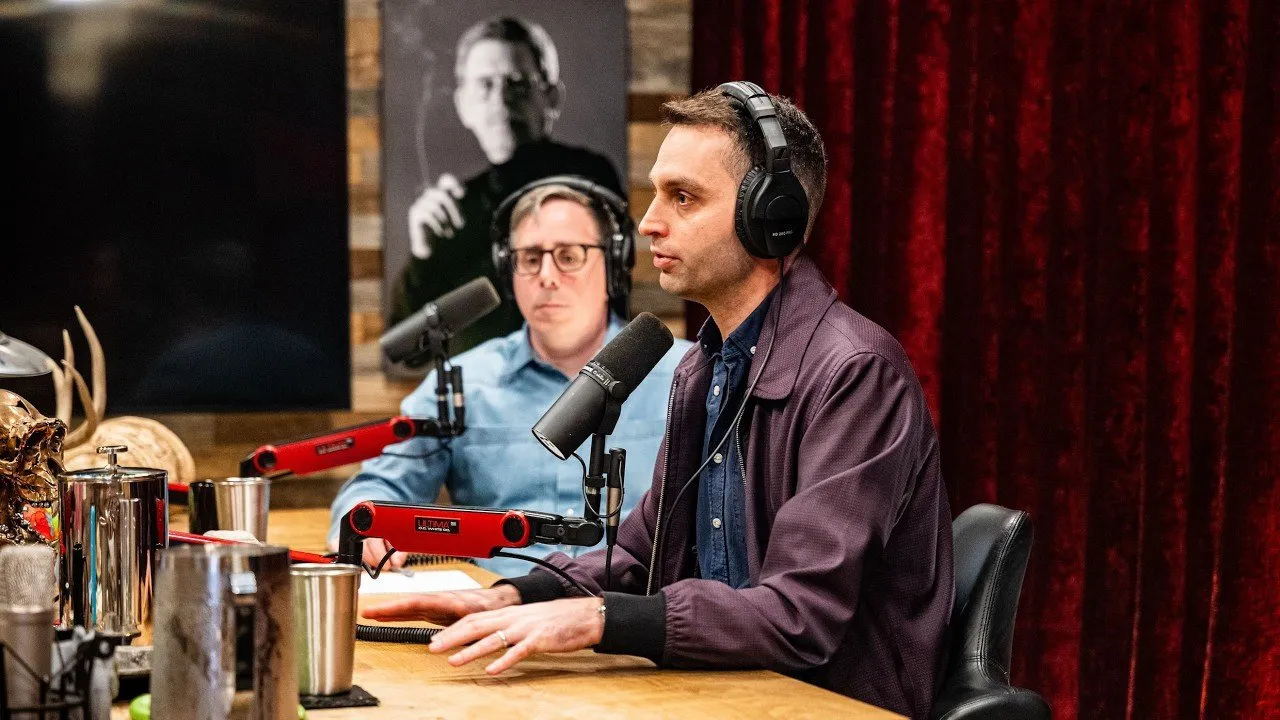
Global instability is no longer a distant concern—it has become the defining backdrop of our current era. From the ongoing conflict in Ukraine to the precarious tensions in the Middle East and the shifting political landscape in the UK and US, the world feels increasingly unpredictable. In a recent episode of The Joe Rogan Experience, Joe Rogan sat down with Francis Foster and Konstantin Kisin to discuss why modern discourse feels so volatile, the dangers of "hot take" culture, and the unsettling rise of information warfare in a digital age.
Key Takeaways
- The Dangers of Information Vacuums: When credible information is scarce, conspiracy theories flourish to fill the void, often exacerbated by a 24/7 social media cycle that prioritizes speed over accuracy.
- The Shift in Global Power: Current foreign policy moves—such as interventions in Venezuela and tensions with Iran—suggest a broader, albeit opaque, strategy to push back against Russian and Chinese influence.
- The Erosion of Truth: Between AI-generated content, state-sponsored bot farms, and the monetization of outrage, distinguishing reality from fabrication has become one of the greatest challenges of our time.
- The Need for Intellectual Honesty: A healthy society requires genuine debate and a willingness to acknowledge blind spots, yet modern political discourse is increasingly captured by tribalism and ad hominem attacks.
The Perils of Hottake Culture
One of the most persistent issues identified by the trio is the modern "hottake" culture. In an environment where social media rewards instantaneous reaction, nuance is frequently sacrificed for engagement. When a global event occurs, the pressure to produce a definitive, expert-level opinion within minutes creates a feedback loop that often lacks a factual foundation.
The Vacuum Effect
Rogan notes that when an event occurs—such as a drone strike or an unexplained explosion—the lack of immediate, reliable information creates a vacuum. This is where conspiracies naturally take root. "The moment you have an absence of information, there's a vacuum and nature hates a vacuum. You need to have that vacuum filled," Rogan observes. This dynamic is compounded by individuals who treat commentary not as a form of communication, but as a business model, where the objective is to trigger an emotional response rather than to inform.
The moment you have an absence of information, there's a vacuum and nature hates a vacuum. You need to have that vacuum filled. So that's where conspiracies naturally flourish.
The Strategy Behind Global Interventions
The conversation pivoted to the rationale behind recent US foreign policy actions, particularly regarding Venezuela and Iran. While critics often dismiss these moves as erratic "mad dog" tactics, Foster and Kisin suggest there may be a more calculated strategy at play: a push to stabilize regions that have been heavily infiltrated by Russian and Chinese interests.
Regime Adjustment vs. Regime Change
The discussion highlighted that regime change is rarely as simple as removing a leader, as seen in the complexities of the Middle East. The panel examined the difference between a total revolution and "regime adjustment," where the underlying power structure remains largely intact but is forced to align with Western interests. However, the panelists remained cautious, noting that even with a strategic plan, the unintended consequences of toppling regimes can often lead to total societal collapse, as seen previously in Iraq and Libya.
Living in the Age of Information Warfare
Perhaps the most concerning topic addressed was the vulnerability of the public to manipulation. As AI technology advances, the ability of foreign actors to sow discord through bot farms and fake imagery is becoming a major threat to democratic stability.
The Crisis of Reality
The panelists pointed to several instances where major news outlets accidentally or deliberately used misleading imagery to frame stories, further eroding public trust. This creates an environment of total paranoia, where individuals struggle to determine if the footage they are watching is a genuine record of events, an AI-generated deepfake, or a legacy image recycled for emotional impact.
We’re already at that point. And when you think of where we were last year, where you could really tell pretty much what was AI and what wasn't, right now we're in the murky waters of is this, isn't it?
The Search for Authenticity in a Polarized World
Kisin and Foster emphasized the importance of maintaining an authentic, honest voice in media. In an era where many creators optimize content for clicks and profit, they argue that the most sustainable path is to prioritize genuine curiosity and human connection.
Rebuilding Discourse
The episode concluded with a reflection on how to navigate these turbulent times. The guests argued that a strong, rational left and a robust, debated right are necessary for a healthy center. Without genuine intellectual exchange—where individuals are willing to have their ideas challenged without resorting to personal attacks—society loses its ability to self-correct. For now, the "coin is in the air" regarding the future, but the panelists agree that maintaining a commitment to the truth, even when it is uncomfortable, remains the only way forward.
Ultimately, the discussion serves as a sobering reminder that we are living through a period of massive transition. As technology, geopolitics, and cultural norms continue to collide, the need for critical thinking, skepticism toward easy narratives, and a return to authentic, human-centered dialogue has never been more urgent.