Table of Contents
In a thought-provoking episode of the Joe Rogan Experience, Michael Malice joined Rogan for a wide-ranging discussion that delved into the increasingly complex and often unsettling aspects of modern society. From a visually striking appearance designed to evoke pop art and challenge perceptions, Malice immediately set the tone for a conversation unafraid to tackle the internet's darkening corners, the proliferation of misinformation, and the intricate web of global politics and personal well-being. This dialogue offers a candid exploration of an era defined by rapid technological shifts, ideological battles, and a profound sense of uncertainty.
Key Takeaways
- The rapid evolution of AI raises significant ethical concerns regarding manipulation, misinformation, and its potential impact on human cognition and societal structures.
- The digital age fosters ideological polarization and groupthink, where social media algorithms and curated information reinforce preconceptions, hindering critical thought.
- Discussions around sensitive topics like the Epstein files highlight the challenge of distinguishing verifiable facts from speculation and the weaponization of information in public discourse.
- Personal health choices, including diet, artificial sweeteners, and fitness routines, are increasingly scrutinized for their long-term effects on physical and mental well-being.
- The current political climate is marked by a deep disconnect between leadership and the populace, evident in debates over urban governance, immigration, and international relations.
The Evolving Digital Landscape: AI, Misinformation, and Societal Impact
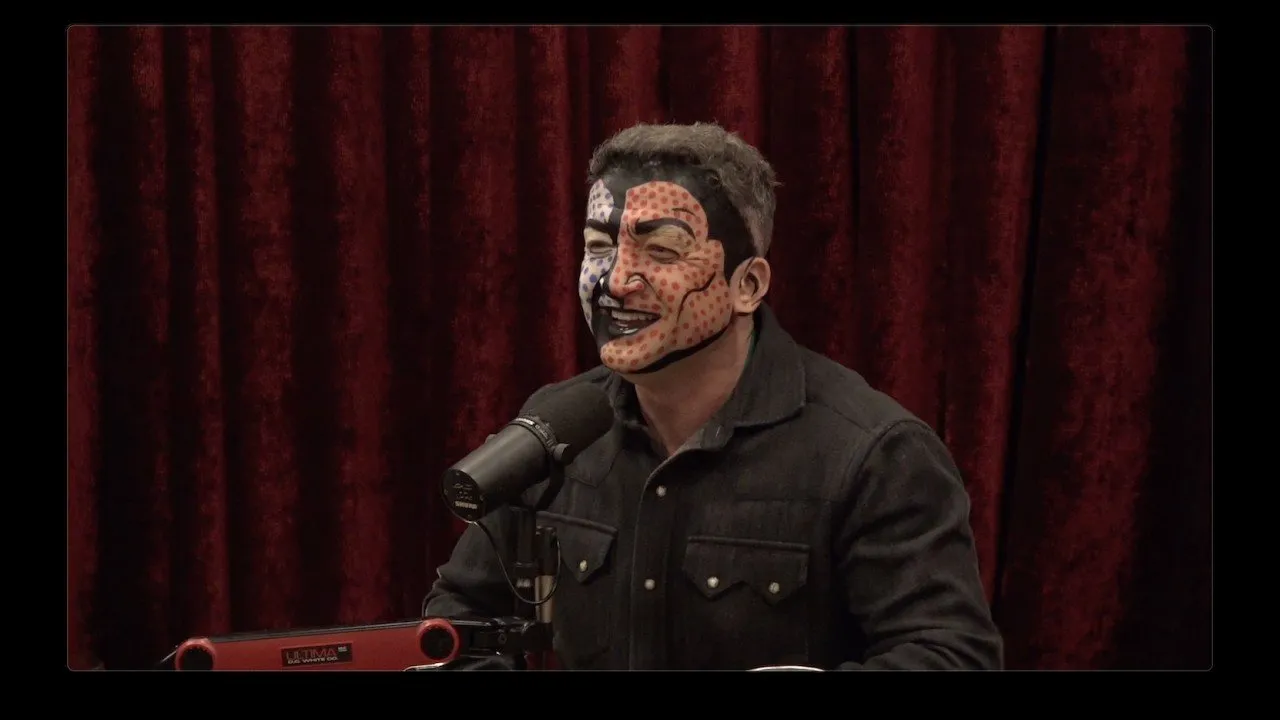
Michael Malice's appearance on the Joe Rogan Experience began with a visually striking face paint, a nod to Roy Lichtenstein's pop art, intended to create an "uncanny valley" effect. This playful yet provocative start quickly transitioned into a serious discussion about the internet's evolving nature and its profound implications for humanity.
The Dark Trajectory of the Internet and AI's Role
Both Rogan and Malice expressed deep concern over the internet's "dark place," describing it as a "snake eating its own tail." They fear that as AI advances, it will increasingly validate individual preconceptions, pushing people further into echo chambers and making them susceptible to manipulation.
“I am very scared about the near future.”
Malice highlighted the danger of AI-driven manipulation, referencing instances where AI models have reportedly influenced individuals towards self-harm or violent acts against public figures. The core issue, they argue, is that human biology struggles to keep pace with technological advancement, leading to an unpreparedness for the psychological impacts of constant digital exposure and AI interaction.
Social Media's Influence and the "Elsagate" Phenomenon
The conversation pivoted to social media's role in agitation and addiction, particularly concerning younger audiences. Rogan noted ongoing testimonies against social media companies for designing algorithms to addict children, citing the infamous "Elsagate" phenomenon.
Elsagate involved bizarre and disturbing YouTube videos featuring popular children's characters in inappropriate or violent scenarios. These videos, often appearing without clear purpose or origin, would leverage algorithms to draw in young viewers, exposing them to potentially traumatizing content. This issue underscores the lack of effective content moderation and the algorithms' unchecked power to curate content, often with harmful consequences.
The Unstoppable Acceleration of AI
The discussion intensified around AI's rapid self-improvement. Malice mentioned claims that AI models like Chat GPT are now tasked with creating better versions of themselves, leading to an exponential growth in capabilities that even engineers struggle to control. The ability of AI to generate realistic images and videos instantly and for free, as demonstrated by the "Door brothers" AI-generated films, raises critical questions about the future of media, art, and even the distinction between reality and fabrication. This technological leap poses significant challenges, from widespread misinformation to the creation of highly disturbing content like AI-generated snuff films, further blurring ethical boundaries.
Unpacking Controversies: Epstein Files, Political Narratives, and Media Manipulation
The conversation extensively covered the release of the Jeffrey Epstein files, the public's reaction, and the broader issue of how information is consumed and manipulated in the digital age.
Epstein Files: Speculation vs. Evidence
Malice expressed frustration with the public discourse surrounding the Epstein files, noting that vague references and cryptic interpretations often overshadow concrete evidence. He highlighted the tendency for individuals to jump to conclusions, even about coded language, without sufficient proof.
“I haven't read all those emails, but the idea that it's definitely literally infants, it seems like I want to see some receipts.”
The discussion acknowledged that the presence of code words indicates illicit activities but stressed the importance of discerning specific meanings rather than assuming the worst without verification. The hosts also touched upon Epstein's alleged connections to various intelligence agencies, like the CIA and Mossad, suggesting that his long-unimpeded activities point to a broader network of protection or involvement.
Political Weaponization of Information
A significant portion of the conversation focused on how information is selectively used and framed for political gain. Rogan and Malice discussed the concept of being "factual but not truthful," where accurate pieces of information are presented in a way that leads to a misleading conclusion. Hillary Clinton's comments about Trump appearing "thousands of times" in Epstein's files were cited as an example, where the factual statement (his name appears) is used to imply guilt, despite evidence that Trump contacted the FBI about Epstein and banned him from Mar-a-Lago years prior.
This tactic, they argue, is pervasive in modern politics, where narratives are crafted to appeal to pre-existing biases rather than to convey complete truths. The hosts lamented that such narratives often override critical thinking, especially when individuals perceive information through an "us vs. them" filter rather than a "true vs. false" one.
Curated Search Engines and Election Manipulation
The conversation concluded this section with a look at how search engines and social media algorithms contribute to election manipulation. Robert Epstein's research was referenced, suggesting that curated search results can subtly shift millions of votes by prioritizing certain narratives over others. Malice and Rogan noted the difficulty of finding unbiased information, citing personal experiences where specific news stories were easily found on alternative search engines but not on mainstream platforms. This curation, even without overt censorship, can shape public opinion and election outcomes, raising serious questions about democratic processes in the digital age.
Political Discourse, Social Issues, and the Shifting Landscape
Rogan and Malice delved into various political and social issues, highlighting absurdities, evolving norms, and the challenges of effective governance.
"Alienation of Affection" Laws and Changing Social Norms
The discussion touched upon the peculiar "alienation of affection" laws in some U.S. states, where a third party can be sued for causing the breakup of a marriage. The recent lawsuit against former Senator Kyrsten Sinema, accusing her of breaking up a marriage and seeking damages, provided a specific example. Both hosts found the law preposterous, questioning the legal premise of suing a "side piece" rather than holding the married individual accountable. Malice argued that such laws often carry a misogynistic undertone, disproportionately blaming women for marital breakdowns. The case also brought up Sinema's eccentric personal life, which Malice and Rogan humorously speculated about.
Urban Governance and Budgetary Challenges
The conversation took a turn towards urban politics, comparing the governance challenges of New York City and Los Angeles. Malice, a former New Yorker, lamented the decline of New York, citing exorbitant rents, rising crime, and a stifled cultural scene. A striking comparison was made between New York City's proposed budget of $127 billion and Florida's state budget of $113.6-115 billion, noting New York City's budget was larger despite Florida having three times the population, indicating a vastly higher per capita spending.
The proposed property tax hike in New York and the allocation of significant funds to migrants were points of contention. Malice criticized "decarceration" policies that aim to reduce prison populations without adequate systemic support, leading to increased crime. He argued that while the principle of helping marginalized individuals is understandable, it often leads to policies that enable violent behavior rather than rehabilitating offenders.
Immigration and Political Divides
Immigration emerged as a contentious issue. While acknowledging the humanitarian aspect of feeding migrants, Malice questioned the sustainability and impact of open-border policies. He criticized the lack of clear plans from politicians like Dianne Abbott regarding illegal immigrants, highlighting the "circular" nature of political discourse on the issue.
The hosts discussed the massive influx of immigrants over recent years, arguing that this surge is the root cause of many current problems. They also touched on the politicization of immigration data, where statistics on "non-violent" criminals might be misleading, as crimes like DUI or armed robbery are often downplayed or categorized in ways that minimize their severity.
Global Geopolitics and Unpredictable Leadership
Rogan and Malice explored several international incidents, including the U.S.'s apparent intervention in Venezuela, where President Maduro was allegedly removed and the U.S. gained control over Venezuelan oil exports. They also discussed Donald Trump's controversial fixation on acquiring Greenland, despite Denmark offering the U.S. access to its resources without ownership. These events, they argued, illustrate an increasingly unpredictable global landscape where traditional diplomacy is often bypassed by more aggressive or unconventional tactics, leaving observers questioning the underlying motives and long-term implications.
Personal Wellness: Health, Fitness, and Lifestyle Choices
Shifting gears, the conversation moved to personal health, fitness, and diet, reflecting a common thread in Rogan's podcasts.
The Aspartame Controversy
Malice shared a personal revelation about the negative effects of aspartame. After switching from diet soda to full-sugar versions, he noticed a significant improvement in his cognitive function, including memory and verbal speed, and a reduction in low-key anxiety. He cited research linking high aspartame consumption to impaired memory and cognitive decline, and also brought up Donald Rumsfeld's controversial role in pushing aspartame's FDA approval despite early studies suggesting carcinogenic risks.
“Aspartame metabolize metabolites could trigger chronic micro gile activation and increased oxidative stress in the brain leading to neuronal damage and potential neurodegeneration.”
He urged listeners to try a two-day aspartame detox to experience potential benefits, emphasizing the idea that there's "no biological free lunch" when consuming artificial substances.
The Search for Clean Protein
The discussion naturally led to protein sources. Rogan shared his experience with "Carnivore Bars," which are made solely from grass-fed beef and tallow, as a clean and natural protein source. This contrasted with other protein bars containing ingredients like titanium dioxide or fat substitutes like EPG, which caused digestive issues (bloating, gas, diarrhea) for Rogan.
They debated the trade-offs of such products, where the desire for high protein and low calories often leads to ingredients that negatively impact digestion and overall well-being. Rogan advocated for whole, natural food sources, even if they require more effort or come with different caloric profiles.
Fitness Routines and Hormonal Health
Malice and Rogan delved into their respective fitness philosophies. Malice described his "lean gains" approach with a "bro split" workout routine, though he admitted to skipping leg day due to already large legs. Rogan strongly advised against skipping leg day, emphasizing the importance of balanced, functional movement and how leg workouts can enhance overall body growth and strength.
Rogan, who uses Testosterone Replacement Therapy (TRT), openly discussed its benefits for maintaining shape, especially after age 40, and its potential role in recovery from head injuries affecting the pituitary gland. He noted the increasing trend of young people using steroids to chase influencer aesthetics, warning of the severe long-term damage to the endocrine system and mental health. Both agreed on the importance of natural, safe supplements like creatine for younger individuals, advocating for a focus on health rather than chasing unrealistic, often pharmaceutically enhanced, physiques.
The Art of Stand-Up Comedy and Creative Pursuits
The conversation concluded with a more personal touch, focusing on creative endeavors and the challenges of artistic careers.
The Grueling Path of Stand-Up
Malice, inspired by Rogan's encouragement, discussed his foray into stand-up comedy. Rogan emphasized the dedication required, noting that success in stand-up is a marathon, not a sprint. He stressed the importance of "bombing" (failing on stage) as a crucial part of the learning process, fostering resilience and motivating comedians to refine their craft. Rogan explained that continuous practice, review, and a long-term commitment (often 10 years to be considered "legit") are essential for growth in comedy.
“Failure failure I think in everything is good. Losing is important. It's very important. It it it motivates you to do better.”
The discussion also touched on the perceived paradox of comedians needing a certain "look" to be funny, with examples like Kevin James or Roseanne Barr, suggesting that audience expectations can sometimes limit an artist's versatility.
Commemorating Scott Adams and Personal Projects
Malice shared a poignant reflection on the passing of cartoonist Scott Adams, creator of Dilbert. He described attending Adams' memorial, noting the artist's enduring resonance and his ability to reframe negative mindsets. Adams' philosophy of turning challenges into opportunities for growth deeply influenced Malice.
Malice also announced a significant personal project: finishing a graphic novel about an 80s punk-country band called Rubber Rodeo, a project he started 25 years prior. This endeavor, born from his early creative aspirations and inspired by figures like Harvey Pekar of American Splendor, represents a full-circle moment for Malice, demonstrating the long-term payoff of persistent creative work and the evolving landscape for independent artists to publish their material.
Conclusion
The Joe Rogan Experience with Michael Malice offered a profound, unsettling, yet ultimately engaging look into the current state of the world. From the existential threats posed by unchecked AI and the pervasive nature of misinformation to the intricacies of political governance and the pursuit of personal well-being, the conversation underscored a sense of escalating global complexity. Malice's unique blend of dark humor and sharp analysis, coupled with Rogan's inquisitive style, highlighted critical issues facing society today, urging listeners to cultivate skepticism, seek genuine information, and remain vigilant in an increasingly unpredictable world. Despite the often-bleak outlook, the discussion reaffirmed the human capacity for creativity, resilience, and the enduring search for truth and meaning amidst the chaos.