Table of Contents
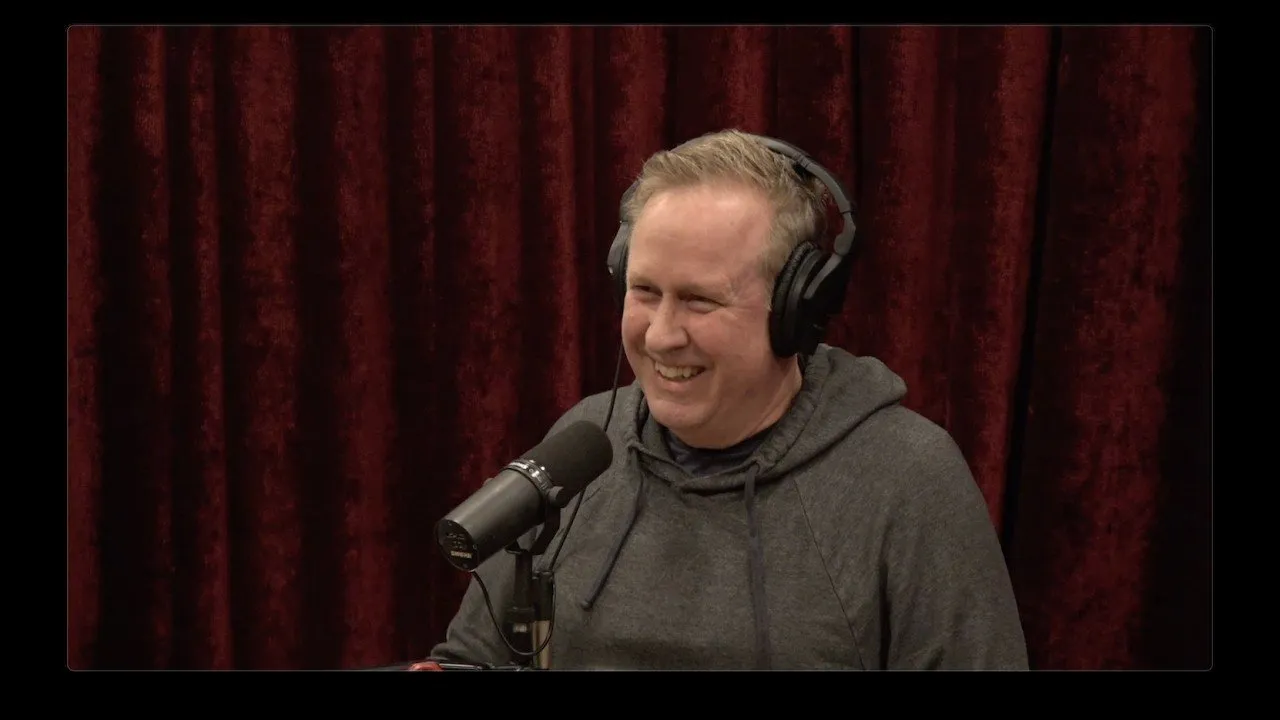
In a sprawling, high-energy conversation spanning over three hours, screenwriter and director Roger Avary joined Joe Rogan to dissect the history of cinema, the sterilization of modern streaming content, and the increasingly blurred lines between reality and conspiracy. Best known for co-writing Pulp Fiction and directing The Rules of Attraction, Avary brought a unique blend of film historian knowledge and provocative skepticism to the table. The dialogue traversed from the technical genius of Orson Welles to the philosophical implications of AI in filmmaking, while taking significant detours into high-strangeness topics like the Epstein files, the "Phantom Time Hypothesis," and the mechanics of 9/11.
Key Takeaways
- The "Netflix-ification" of Cinema: Avary argues that strict corporate mandates and algorithmic requirements are stripping modern filmmaking of its organic "mistakes" and subconscious magic, creating a sterilized product compared to the "oil paint" texture of celluloid film.
- The Unacknowledged Genius of Ridley Scott: While critical of Napoleon, Avary champions Scott’s The Last Duel and the nihilistic The Counselor as misunderstood masterpieces that reveal dark truths about power and Hollywood.
- Conspiracy as a Lens for Reality: The conversation dove deep into "darker hypotheticals," including the specific contents of the Epstein files, the collapse of Building 7, and the idea that history before the 1600s may have been fabricated.
- Experiential Reality vs. Scientific Consensus: Avary played the role of the provocateur, challenging the "consensus reality" of a round Earth based on sensory experience, arguing that blind faith in data we cannot verify is a form of religion.
- AI as the New Independent Cinema: Despite industry pushback, Avary views Artificial Intelligence not as the enemy of art, but as a democratizing tool that allows independent creators to bypass traditional studio gatekeepers.
The Lost Magic of Celluloid and the Rise of "Content"
A significant portion of the discussion was dedicated to the tactile loss cinema has suffered in the transition from physical film to digital sensors. Avary draws a sharp distinction between the two mediums, suggesting that while neither is inherently superior, the industry's attempt to force digital to look like film is a fundamental error.
The "Oil Paint vs. Watercolor" Analogy
Avary posits that the medium dictates the art form. He recounts the technical marvels of Orson Welles' Citizen Kane and Touch of Evil, noting that the physical limitations of massive cameras (like the Mitchell BNCR) and expensive film stock forced a level of discipline and "cooking" of the scene that modern digital workflows lack.
- The cost of the frame: In the film era, every second the camera rolled cost money, creating an intense, focused energy on set described as "lightning in a bottle."
- The digital flatline: Modern sets often leave digital cameras rolling incessantly, which dilutes actor performance and creates a flat, "safety-first" environment.
- Light physics: Avary explains that film captures light passing through layers of emulsion (depth), while digital sensors bounce light off a flat surface, inherently creating a flatter image.
- The "Portrait Mode" fallacy: He critiques the modern trend of using wide-open apertures and digital blurring to replicate the "faults" of old film, comparing it to an iPhone's artificial portrait mode.
- The Netflix White Paper: A major point of contention is the standardization of creativity, where streamers issue technical and narrative "white papers" dictating camera types and story beats (e.g., an inciting incident by minute seven) to retain attention spans damaged by modern technology.
- The communal trance: Avary laments the loss of the movie theater experience—a "waking dream" shared with strangers—which he views as a unifying spiritual congregation that is being systematically dismantled.
"They are both paint, but one is watercolor and one is oil paint... Why would you try to make your watercolor paint look like oil?"
Re-evaluating Cinema: Vampires, Ridley Scott, and "The Counselor"
The conversation moved into a critique of specific films and genres, revealing Avary's deep appreciation for polarizing cinema. He and Rogan bonded over a shared love for vampire lore, specifically the evolution of the Nosferatu story from Murnau to Herzog to Eggers.
- The Haunted Legacy of Nosferatu: Avary described the 2024 Robert Eggers remake as feeling "haunted" by the previous versions, particularly Herzog’s 1979 film, creating a lineage of melancholic horror.
- Ridley Scott’s Inconsistency: Avary offered a mixed review of Ridley Scott’s recent output, dismissing Napoleon and Exodus: Gods and Kings as technically proficient but emotionally hollow failures where dialogue causes the film to "collapse on its own weight."
- The Rehabilitation of "The Last Duel": Contrary to box office results, Avary hailed The Last Duel as one of the best films of the century, praising its Rashomon-style structure and its commentary on Hollywood politicking through the lens of medieval court intrigue.
- "The Counselor" as Documentary: Perhaps the most surprising take was Avary’s defense of The Counselor (2013). He argues the film was hated because it was too accurate regarding how the world actually works—a dark, cartel-run system where power is absolute and inescapable.
- Modern Horror: The duo praised What We Do in the Shadows for reinvigorating the vampire genre with humor, while Avary criticized the "murder porn" aspect of shows like The Walking Dead, which rely on sadism rather than character development.
- Guillermo del Toro: While acknowledging del Toro's artistry and passion, Avary admitted to finding his recent adaptation of Frankenstein and films like The Shape of Water visually stunning but narratively flat compared to his earlier work like Blade II.
High Strangeness: Epstein, Predictive Programming, and Evil
As the conversation drifted away from the screen, it moved into the darker corners of reality. Avary introduced the Latin phrase Mundus vult decipi, ergo decipiatur ("The world wants to be deceived, therefore it is deceived") to explain society's collective refusal to confront uncomfortable truths, particularly regarding the Jeffrey Epstein scandal.
The "Code" of Corruption
Avary and Rogan discussed the leaked emails and logistical anomalies surrounding Epstein, suggesting that the public has only scratched the surface of the operation.
- Sulfuric Acid Orders: They scrutinized a purchase order for vast quantities of sulfuric acid made shortly after Epstein's indictment, debating whether it was for water treatment (the skeptic’s view) or body disposal (the "darker hypothetical").
- Coded Language: Avary insisted that phrases found in the emails—references to "pizza," "walking beef jerky," and "chilled containers"—are transparent codes for trafficking, similar to historical intelligence practices.
- Predictive Programming: The discussion touched on the theory that Hollywood is used to condition the public for traumatic events. Avary cited Fight Club (1999) ending with collapsing financial towers shortly before 9/11, and the producer Arnon Milchan’s admitted ties to Israeli intelligence.
- The Nature of Evil: Avary proposed that demonic influence doesn't necessarily manifest as a monster, but as a "whisper" that provides rationalization for atrocities—whether it's dropping a nuclear bomb or justifying gain-of-function research.
- Stanley Kubrick’s Warning: Avary reiterated his belief that Eyes Wide Shut was an explicit exposure of elite occult rituals, noting that critics often gasp at the interpretation because they prefer the deception over the reality.
- The "Pineal Gland" Theory: A recurring theme was the idea that modern populations have been chemically or technologically lobotomized—via vaccines, phones, or media—rendering them unable to process the "high strangeness" unfolding around them.
"Mundus vult decipi, ergo decipiatur. The world wants to be deceived, therefore it is deceived."
Provocations on Reality: Flat Earth and Phantom Time
In the most contentious segment of the podcast, Avary adopted the role of the ultimate skeptic. While clarifying he isn't a dogmatic "Flat Earther," he argued for the validity of experiential observation over institutional faith. This segment served as a broader critique of how "consensus reality" is formed.
- The Testimony of the Eyes: Avary’s core argument is epistemological: experientially, human beings perceive a flat plane. To believe otherwise requires faith in third-party data (NASA, governments) that have a history of deception.
- 9/11 Building 7: The conversation revisited the collapse of WTC Building 7. Rogan and Avary reviewed footage, agreeing that the symmetrical, free-fall collapse into its own footprint defies conventional physics and resembles a controlled demolition.
- The Phantom Time Hypothesis: Avary introduced the theories of Anatoly Fomenko, a Russian mathematician who argues that roughly 1,000 years of history (the Dark Ages) were fabricated or duplicated to justify land claims and royal lineages, shifting the timeline of Rome’s fall to the late Middle Ages.
- The Simulation Theory Connection: The discussion linked Elon Musk’s comments on the speed of light—suggesting it serves as a "render limit" for a simulation—to the idea that our understanding of the cosmos is fundamentally flawed.
- NASA Feed Anomalies: During the podcast, they attempted to pull up a live NASA feed of Earth, only to find it offline or showing glitches, which Avary used to highlight the fragility of the "space narrative."
- The Purpose of Skepticism: Avary framed these theories not necessarily as absolute facts, but as necessary exercises in breaking the "spell" of authority and questioning narratives provided by entities like the CIA or corporate media.
The Future: Independent Media and AI Filmmaking
Despite the dystopian undertones of the conversation, Avary concluded with an optimistic outlook on the future of independent media. He sees a collapse of the traditional studio monopoly, paved by the incompetence of current executives and the rise of new technology.
Breaking the Studio Stranglehold
Avary highlighted how legacy studios have alienated audiences by prioritizing "corporate propaganda" (DEI mandates, "safe" storytelling) over personal artistic vision. In this vacuum, new successes are emerging.
- "The Chosen" Model: Avary praised the series The Chosen as "punk rock" filmmaking. By using crowdfunding and bypassing traditional distribution for an app-based model, it succeeded where Hollywood failed, creating a massive hit about forgiveness rather than revenge.
- The "Daily Wire" Surprise: He cited the Pendragon Cycle as an example of quality production emerging from unexpected, non-Hollywood sources, proving that audiences are hungry for sincere storytelling regardless of political affiliation.
- AI as a Tool, Not a replacement: While many in Hollywood fear AI, Avary has embraced it. He detailed his new venture, General Cinema Dynamics, which utilizes AI to drastically reduce production costs.
- The "Beowulf" Comparison: He noted that visual effects that once cost a million dollars a minute now cost a fraction of that, allowing independent creators to execute "blockbuster" ideas without studio interference.
- Funding Disparities: Avary revealed the irony of his recent career: he struggled for years to fund a traditional indie movie, but the moment he pitched a company based on AI filmmaking technology, he secured funding immediately and entered production on three feature films.
- The Future is Hybrid: The vision Avary presents is one where "watercolor" (digital/AI) and "oil paint" (traditional film) exist as separate mediums, with AI empowering storytellers to bypass the gatekeepers who have homogenized culture.
Conclusion
The episode served as a fascinating portrait of Roger Avary: a man deeply in love with the history of cinema yet eager to dismantle the industry's current power structures. Whether discussing the optical mechanics of the Mitchell camera or the alleged occult rituals of the elite, Avary’s perspective remains consistent—question the narrative, trust your own eyes, and don't be afraid to use the newest tools to tell the oldest stories. As Hollywood grapples with its identity crisis, Avary suggests the only way forward is to embrace the chaos, ignore the "white papers," and perhaps, entertain the impossible.