Table of Contents
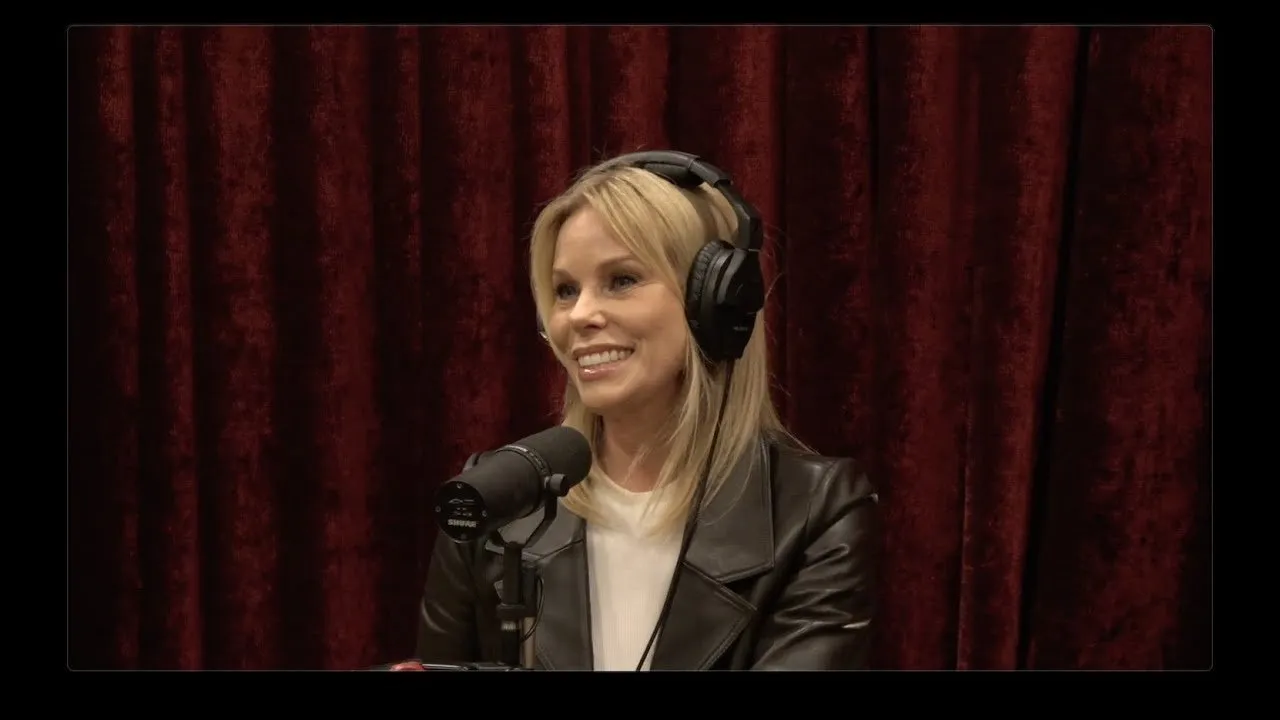
When Cheryl Hines joined Joe Rogan for episode #2451 of the JRE, the conversation quickly moved beyond her iconic role on Curb Your Enthusiasm to the intense, often brutal reality of the American political landscape. As the wife of Robert F. Kennedy Jr., Hines has had a front-row seat to the rigors of a presidential campaign, the shifting dynamics of media narratives, and the personal toll of public scrutiny. The episode serves as a candid exploration of how tribalism shapes modern discourse, the intersection of Hollywood and politics, and the enduring quest for authenticity in an increasingly artificial world.
Key Takeaways
- Political Tribalism as a Cult: Rogan and Hines discuss how fear of social ostracization drives individuals toward "groupthink," turning political affiliation into cult-like behavior where dissent is punished.
- The Reality of Campaigning: Hines shares her personal experience with the RFK Jr. campaign, highlighting the viciousness of media attacks and the denial of Secret Service protection for her husband.
- Regulatory Capture and Health: The conversation delves into the influence of pharmaceutical companies, the opioid crisis, and how "conspiracy theories" often turn out to be proven facts over time.
- Hollywood’s Pressure to Conform: Hines reflects on her transition from comedy clubs to Hollywood, noting the industry's rigid demand for consensus and the difficulty of maintaining authenticity.
- The Threat of Unchecked Power: From the Jeffrey Epstein scandal to Congressional insider trading, the duo explores how systemic corruption goes unchecked by mainstream institutions.
The Cult of Modern Politics and the Loss of Civility
A central theme of the podcast was the deterioration of political discourse in the United States. Rogan and Hines observed that politics has shifted from a debate of ideas to a form of tribal warfare. Rogan argued that the human instinct to avoid rejection by one's "tribe" drives people to agree with increasingly irrational ideas. This fear of being cast out fosters an environment where ideologies mutate into cults, with the most extreme 10% on either side dominating the conversation.
Hines contrasted the current political climate with the 2012 debates between Mitt Romney and Barack Obama. She noted that while they disagreed on policy, the interaction remained civil and focused on governance. Today, however, the dynamic has shifted toward personal destruction and character assassination.
"It is a natural human instinct when you are rejected by your tribe to feel terrified and filled with anxiety. But that's why people do it and that's what encourages group think... because you're terrified and you wind up agreeing to things that are insane."
The Weaponization of Social Norms
The conversation highlighted how social norms are weaponized to silence dissent. Rogan pointed out that questioning narratives—whether about elections, health mandates, or political figures—often results in immediate labeling as a "conspirator" or an outcast. This mechanism ensures that the "groupthink" remains challenged only by those willing to suffer social and professional consequences.
The RFK Jr. Campaign: Media Bias and Resilience
Hines opened up about the emotional and psychological toll of her husband’s presidential run. She described the initial feeling of "doom" when RFK Jr. announced his candidacy, anticipating the onslaught of media attacks. Hines noted that while Hollywood is competitive, the political arena is uniquely vicious, characterized by a willingness to lie and decontextualize statements to destroy an opponent.
One of the most contentious points discussed was the denial of Secret Service protection for RFK Jr. for a significant portion of his campaign, despite his family history and the specific threats leveled against him. Hines described the anxiety of watching her husband navigate crowds, constantly scanning for threats—a skill set she never wanted to acquire.
"Politics... these are not the type of people you ever want in any position of power. People are the least charitable, most vicious people. The moment you are running against them in a political party, they will pull out all the stops."
Rogan credited RFK Jr. with developing "rhino skin" after decades of public scrutiny, particularly regarding his environmental work and his stance on vaccines. They discussed how the media narrative often ignored his legal victories against corporate polluters, focusing instead on painting him as a fringe element.
Hollywood Groupthink vs. Authentic Comedy
Before her life in politics, Hines navigated the world of Hollywood, which Rogan and Hines agreed operates with its own form of intense conformity. Hines recalled her early days moving from the gritty, authentic world of pool halls and comedy clubs to the polished, anxious environment of network television.
She described the "radioactive" feeling of Los Angeles, where desperation to be cast often forces actors to adopt the opinions of producers and casting directors. Rogan and Hines laughed about the absurdity of industry gatherings where everyone pretends to love a mediocre film simply because a major star is in it, reinforcing the idea that honesty is a liability in show business.
The Trap of Artificiality
The discussion veered into the physical manifestations of Hollywood vanity, specifically the use of wigs, lifts, and plastic surgery by public figures. Rogan expressed confusion over men who suddenly appear with full heads of hair or added height, arguing that such obvious artificiality makes it difficult to trust a person's character. For Hines, staying grounded meant acknowledging the absurdity of the industry while trying to maintain her own identity amidst the "classy ladies" who feel the need to announce their class via bumper stickers.
Institutional Corruption: From Pharma to Epstein
A significant portion of the episode was dedicated to what Rogan termed "conspiracy theories that turn out to be true." They examined the revolving door between government regulatory agencies like the FDA and the industries they are supposed to regulate. The opioid crisis, driven by the Sackler family and Purdue Pharma, served as a primary example of how corporate profit is often prioritized over public health, with regulators eventually working for the very companies they once monitored.
The Shadow of Jeffrey Epstein
Rogan and Hines engaged in a deep dive into the Jeffrey Epstein scandal, expressing disbelief at how long his operations continued despite early police reports dating back to 2005. They discussed the disturbing reality that Epstein’s network included prominent scientists, politicians, and academics who continued to associate with him long after his initial conviction.
Rogan highlighted the systemic failure—or perhaps complicity—of intelligence and law enforcement agencies, noting the recent FBI files that seemingly downplayed the extent of the sex trafficking operation. This segment underscored a shared frustration with the lack of accountability for the powerful elite.
"What kind of irresponsible journalism do we have in this country where this has happened and it takes this one guy to publish this book before people start talking about it?"
Congressional Insider Trading
The conversation also touched on the normalization of corruption within Congress, specifically regarding stock trading. Rogan pointed out the statistical improbability of politicians like Nancy Pelosi consistently outperforming the market, suggesting that insider knowledge is the only logical explanation. They agreed that the apathy toward this open corruption is a symptom of a broken system.
Nature, Technology, and the Future
In classic JRE fashion, the conversation oscillated between heavy political topics and the raw brutality of nature. Rogan and Hines marveled at the ruthless efficiency of the natural world, discussing everything from the silence of owls hunting to the terrifying strength of praying mantises. These segments served as a reminder that humans, despite our complex societies, are essentially "soft" creatures shielded from the harsh realities of the food chain.
Finally, they touched on the existential threat of Artificial Intelligence. Rogan expressed concern that AI would disrupt the workforce to such a degree that Universal Basic Income (UBI) would become necessary, leading to a crisis of purpose for humanity. They feared a future where dependence on government stipends would allow the state to exert greater control over individual movement and freedoms, referencing concepts like "15-minute cities" and digital surveillance.
Conclusion
The dialogue between Joe Rogan and Cheryl Hines ultimately circled back to the necessity of resilience and truth. Whether facing a media firestorm, navigating the treacherous waters of Hollywood, or confronting uncomfortable facts about government corruption, they agreed that reality eventually resurfaces. The episode offered a humanizing look at the personal side of political ambition and a sobering critique of the institutions that currently govern American life.