Table of Contents
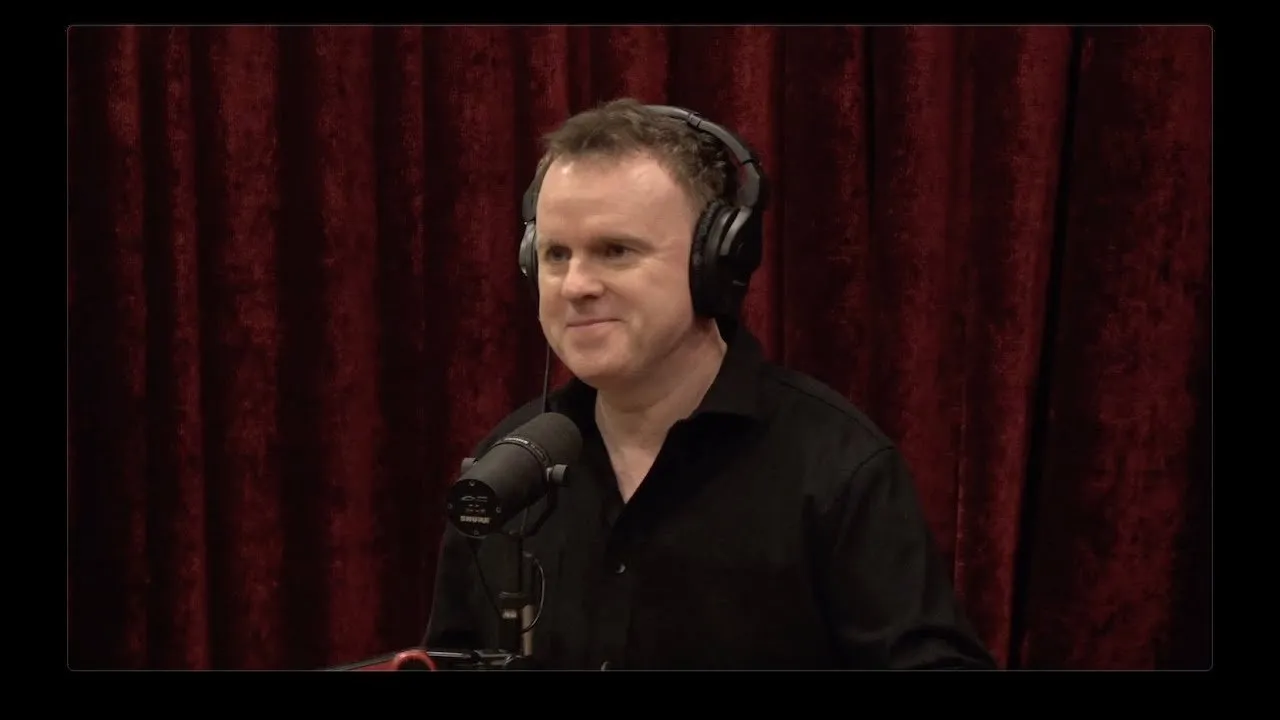
In a revealing return to the Joe Rogan Experience after a six-year hiatus, British author and satirist Andrew Doyle sat down with Rogan to dissect the seismic cultural shifts that have occurred since 2020. The conversation, spanning over two hours, serves as a stark audit of the "woke" phenomenon, the degradation of free speech in the United Kingdom, and the rising tide of authoritarianism masking itself as compassion. Doyle, known for his satirical character Titania McGrath and his book The End of Woke, argues that while the peak of "woke" culture may be passing, the authoritarian impulses it unleashed have permanently altered Western institutions.
The dialogue moves beyond simple political tribalism, exploring the philosophical roots of censorship, the capture of state institutions, and the dangerous divergence between American and British civil liberties. As the West grapples with identity politics, historical revisionism, and the loss of shared reality, Rogan and Doyle provide a roadmap of how we arrived here—and the difficult path toward restoring a culture of free expression.
Key Takeaways
- The Criminalization of Speech: The UK has seen over 12,000 arrests in a single year for social media posts, utilizing laws that punish "grossly offensive" speech, a standard that lacks the protections of the US First Amendment.
- The "Woke" Evolution: Doyle argues that "woke" ideology was never about true equality but was an authoritarian impulse disguised as kindness ("a wolf in a sheep's costume"), leading to social chaos and institutional capture.
- Institutional Trust Collapse: From the BBC editing political speeches to AI censoring historical facts, the conversation highlights a widespread loss of faith in media, medicine, and educational institutions due to ideological bias.
- Gender Ideology vs. Gay Rights: The discussion explores how the push for gender identity politics has arguably undermined traditional gay rights and led to the medicalization of children, citing the closure of the Tavistock clinic.
- The Need for a "Reality Reset": Both Rogan and Doyle suggest that the only cure for the current cultural malaise is the "brick wall of reality"—where the tangible failures of ideology (such as in immigration or energy policies) force a return to pragmatism.
The Erosion of Free Speech in the United Kingdom
One of the most alarming segments of the podcast centers on the disparity between American and British free speech protections. Doyle details a legal landscape in the UK where subjective offense can lead to imprisonment, a concept alien to the American constitutional framework.
- The "Grossly Offensive" Standard: Unlike the US, the UK lacks a codified constitution protecting speech. Laws such as the Communications Act of 2003 criminalize messages deemed "grossly offensive" or those causing "needless anxiety," granting the state broad interpretative power to punish dissent.
- Arrest Statistics: Doyle cites a shocking statistic: roughly 12,000 people are arrested annually in the UK for social media posts. This averages out to approximately 30 arrests per day, targeting citizens for tweets, memes, and comments that would be protected speech in the United States.
- The Banter Ban: The conversation touches on legislative attempts to police private conversations, such as the proposed "banter ban" which would hold employers liable if staff overhear "offensive" jokes between third parties, effectively criminalizing pub talk.
- Selective Enforcement and Two-Tier Policing: Rogan and Doyle discuss "anarcho-tyranny," where the state punishes law-abiding citizens for minor speech infractions while failing to address actual violent crime, creating a sense of injustice and double standards.
- The "Pattern" of Memes: Doyle recounts the case of a man arrested and handcuffed for retweeting a meme rearranging the Progress Pride flag into a swastika—a satirical critique of authoritarianism that the police treated as a hate crime causing "anxiety."
- The Brandenburg Test Deficit: The fundamental difference, Doyle notes, is that the UK lacks the US "Brandenburg test," which protects speech unless it is intended to and likely to incite imminent lawless action. Without this threshold, feelings and offense become the barometer for legality.
It was a costume of being more inclusive, being more open-minded, being a better society, being kinder... It led to chaos. It led to like a lot of really freaky things that you would have never expected.
The Mechanics of Ideological Capture
The conversation delves deeply into how institutions—from the police to the media—have been "captured" by specific ideological frameworks. This phenomenon, often described as the "Long March through the institutions," suggests a systemic subversion of objective truth in favor of narrative control.
- The Yuri Bezmenov Prophecy: Rogan brings up the 1984 warning by KGB defector Yuri Bezmenov regarding "demoralization." They discuss how modern education systems effectively strip students of patriotism and critical thinking, replacing them with Marxist-Leninist frameworks of group identity.
- Media Manipulation: Doyle criticizes the BBC for editing a speech by Donald Trump to make a "tongue-in-cheek" comment appear as an incitement to violence, illustrating how state broadcasters have abandoned neutrality for narrative enforcement.
- AI as the New Censor: Doyle shares a personal anecdote about ChatGPT deleting a factual news story about a court case because it was deemed "politically sensitive," raising concerns about how AI is being programmed to gatekeep reality and history.
- Historical Revisionism: The duo mocks the current trend of identity-based historical revisionism, such as the theory that Shakespeare was a black woman or the casting of historical figures against reality, arguing that this obsession with group identity ultimately tears down cultural icons.
- The "Uni-Party" Problem: In the UK, Doyle argues that the Conservative Party presided over the implementation of "woke" policies for 13 years, proving that ideological capture transcends party lines. He cites former PM Theresa May’s statement, "I’m woke and proud," as evidence of this convergence.
- Policing "Non-Crime Hate Incidents": The UK police record "non-crime hate incidents" on permanent records even when no law is broken. Doyle notes that despite government directives to stop this practice, the "College of Policing" and activist officers continue to enforce it.
The Crisis of Gender Identity and Truth
Doyle and Rogan spend significant time unpacking the rapid rise of gender ideology, viewing it not as a progression of civil rights, but as a regression that undermines biological reality and the rights of other groups, particularly gay people and women.
- Anti-Gay Implications: Doyle argues that modern gender ideology is fundamentally anti-gay. By defining attraction based on "gender identity" rather than biological sex, it erases the very definition of homosexuality (same-sex attraction) and pressures gay youth to transition.
- The Tavistock Scandal: They discuss the closure of the Tavistock gender clinic in London, where data revealed that 80-90% of adolescents referred for gender transition were same-sex attracted, suggesting a form of conversion therapy was taking place under the guise of "affirmation."
- Women's Spaces and "Giggle vs. Tickle": Doyle highlights the absurdity of the "Giggle vs. Tickle" court case in Australia, where a biological male sued a women-only app for discrimination. The court ruling that "sex is changeable" is cited as a dangerous legal precedent.
- The Malleability of Children: Rogan emphasizes that children are naturally malleable and look to adults for guidance. When authorities validate a child's temporary confusion with permanent medicalization (puberty blockers and surgery), they are failing in their duty of care.
- Litigation as a Course Corrector: The conversation offers a glimmer of hope through litigation. Doyle mentions the recent $2 million payout to a detransitioner in the US, suggesting that financial liability for surgeons and therapists may be the only thing that stops the rush to medicalize minors.
- The Erasure of Reality: From politicians claiming 99.9% of women don't have penises (implying some do) to official denials of biological facts, Doyle sees this as a "legitimation crisis" where the public can no longer trust the basic assertions of their leaders.
You’re using language to mean the exact opposite. They say gender affirming care. Do they mean that or do they mean affirming what is effectively a pseudoscientific belief among vulnerable people?
The Psychology of Mass Formation and Group Think
Why do societies succumb to these ideologies? Rogan and Doyle explore the psychological underpinnings of why people, particularly those in creative industries and academia, adopt these views with religious fervor.
- The Authoritarian Impulse: Doyle posits that "woke" is simply the latest manifestation of an innate human desire to impose authority and silence dissent. It thrives on the fear of being ostracized rather than genuine moral conviction.
- Outsourcing Morality: Ideologies allow people to stop thinking. By adopting a pre-packaged set of rules (e.g., "Queers for Palestine"), individuals can feel virtuous without engaging with the complexities or contradictions of their positions.
- The Fear of the "Racist" Label: The discussion highlights how the fear of being branded a racist or transphobe paralyzes rational action. Doyle cites the Manchester Arena bombing inquiry, where security hesitated to stop a suspicious individual for fear of racial profiling.
- Hollywood and Mental Health: Rogan characterizes Los Angeles as a "mentally ill" environment where people desperately shape-shift their opinions to remain employable. This "group think" creates a feedback loop where absurd ideas go unchallenged to avoid social suicide.
- Pattern Recognition and Conspiracies: They discuss how the human brain seeks patterns (like seeing a goat in a portrait of King Charles), noting that while some conspiracies are absurd, the gaslighting from authorities on issues like the lab leak theory drives people toward alternative, sometimes wild, explanations.
- The "Safety Valve" of Comedy: Both agree that comedy and satire are essential for a free society. The crackdown on "offensive" comedy clubs and the inability to mock sacred cows in the UK stifle the cultural ability to self-correct.
The Future: Politics, Technology, and Counter-Revolutions
The podcast concludes by looking forward. While the situation in the UK appears dire to Doyle, he sees potential for change through political disruption and the unignorable consequences of policy failures.
- The Rise of Reform UK: Doyle predicts that the Reform party, led by Nigel Farage, could shatter the two-party system in the UK. The public's exhaustion with the "Uni-party" consensus on immigration and free speech is creating an opening for radical political realignment.
- The "Brick Wall of Reality": Ideology eventually collides with reality. Whether it is the consequences of mass migration in Sweden (rising gun violence) or the medical scandals in gender care, tangible negative outcomes are forcing a public awakening.
- Young Conservatives as Rebels: Rogan notes a shift in the US where young men are increasingly identifying as conservative. In a culture dominated by a stifling left-wing hegemony, conservatism has become the new counter-culture rebellion.
- The Role of the Internet: Despite its flaws, the internet remains the primary tool for bypassing gatekeepers. Rogan and Doyle agree that without independent platforms like X (formerly Twitter) and podcasts, the "official" narratives regarding COVID, gender, and politics would remain unchallenged.
- Technological Integration: A brief detour into AI and robotics suggests a future where humanity may be forced to integrate with technology. Rogan speculates on a future where AI manages humans much like humans manage wildlife—tolerated but controlled.
- The Fragility of Freedom: The overarching theme is that liberty is not the default state of humanity. It requires constant vigilance. As Doyle prepares to return to a UK where he feels less free, the contrast serves as a warning to Americans about what is at stake.
That authoritarianism which we've associated with the left might come up from the right. It could come up from anywhere... So you just have to be kind of vigilant about it.
Conclusion
The conversation between Joe Rogan and Andrew Doyle serves as a grim status report on the health of Western democracy. It highlights a widening gulf between the ruling elite—who seem intent on managing narratives and restricting speech—and the general populace, who are increasingly skeptical of the institutions designed to serve them.
For Doyle, the situation in the UK is a cautionary tale of what happens when a society prioritizes "safety" and "feelings" over the rugged, often uncomfortable necessity of free expression. Yet, the dialogue ends on a note of cautious optimism: reality has a way of asserting itself, and as the contradictions of current ideologies become too obvious to ignore, a counter-revolution of common sense may well be inevitable.