Table of Contents
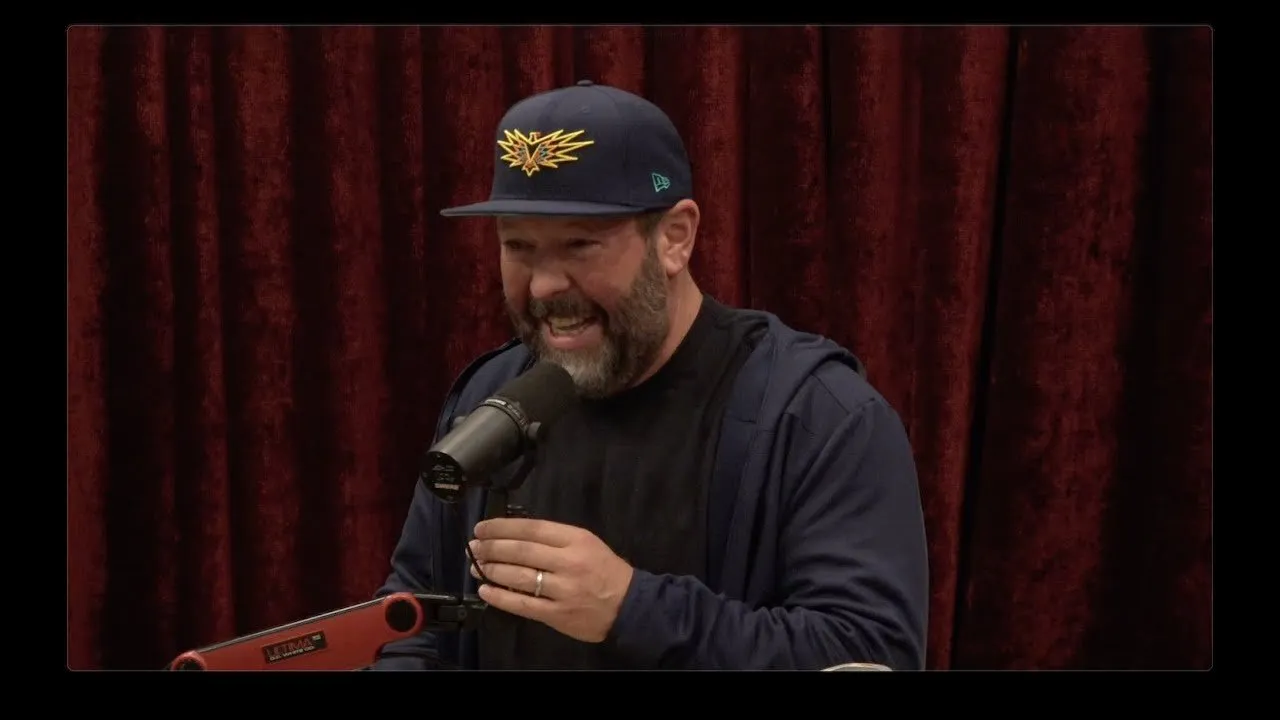
When Bert Kreischer steps into the Joe Rogan Experience studio, listeners can typically expect a chaotic blend of high-level comedy shop talk, intense health interventions, and wild conspiracy theories. Episode #2445 delivers on all fronts. In this sprawling conversation, the two comedians dissect everything from the legitimacy of historical figures to the nuances of modern media consumption, while Kreischer opens up about a recent health scare that fundamentally shifted his perspective on sobriety. Below is a comprehensive breakdown of the episode’s most significant discussions, ranging from biohacking techniques to the philosophy of artistic independence.
Key Takeaways
- Red light therapy impacts vision: Rogan and Kreischer discuss anecdotal evidence suggesting high-powered red light therapy beds significantly improved their eyesight and ability to read small text.
- The "Helen Keller was a fraud" theory: The duo dives into a growing internet conspiracy theory that questions the legitimacy of Helen Keller’s accomplishments and the financial motivations of her handlers.
- Health scares and sobriety: Kreischer reveals a recent battle with blood clots that forced him into a period of sobriety, leading to a realization about how he had been "disrespecting his health."
- Media narratives and Watergate: Rogan details a revisionist history of the Watergate scandal, citing theories that frame Richard Nixon’s removal as a "deep state coup" orchestrated by intelligence agencies.
- Lucid dreaming technology: The conversation highlights a California startup claiming to have achieved two-way communication between humans during sleep, sparking a debate on the nature of consciousness.
Biohacking Vision, Sleep, and Recovery
Rogan and Kreischer spent a significant portion of the episode comparing notes on their latest health optimization protocols. Rogan, a long-time proponent of biohacking, walked Kreischer through several methods to improve sleep quality and physical recovery.
- Red Light Therapy for Eyes: Rogan enthusiastically endorsed high-power red light therapy beds. He shared that after consistent use, his need for reading glasses diminished, allowing him to read shampoo bottles and small print that had previously been blurry. Kreischer corroborated this, noting that Whitney Cummings had experienced similar vision correction using a smaller unit.
- Mouth Taping and Sleep Apnea: The conversation shifted to the mechanics of breathing during sleep. Rogan explained that he uses a mouthpiece combined with "hostage tape" to force nasal breathing. He argued that mouth breathing allows the tongue to obstruct the airway, worsening sleep apnea, whereas nasal breathing filters air and boosts nitric oxide production.
- The Dangers of Sedentary Lifestyles: They criticized the modern tendency to "doom scroll" rather than engage in physical activity. Rogan posited that the human body has built-in reward systems for physical struggle; without meeting those requirements through exercise, the body generates anxiety and mental illness.
- Vitamin D3 and Immune Health: Rogan reiterated his stance on immune system maintenance, emphasizing a "stack" of Vitamin D3, K2, and Magnesium. He expressed frustration that during the pandemic, public health messaging largely ignored the importance of nutrition and vitamin deficiencies in fighting viral infections.
- The "Chevy Chase" CTE Theory: In a crossover between health and comedy history, Rogan proposed a theory that Chevy Chase’s notorious behavioral issues might be the result of CTE (Chronic Traumatic Encephalopathy) caused by years of aggressive, physical pratfalls during his early career on Saturday Night Live.
- Blood Clots and Alcohol: Kreischer opened up about a recent health scare involving blood clots, which forced him to stop drinking for an extended period. He noted that while he always "proved" he could get sober for a month (Sober October), this was the first time he recognized his lifestyle as "disrespectful" to his own longevity.
Navigating Public Scrutiny and Internet Culture
Both comedians have faced their share of online backlash. They discussed the psychology of internet trolls, the futility of reading comments, and how public perception often diverges from reality.
- The "Lost Everything" Rumor: Kreischer recounted a bizarre interaction with Shannon Sharpe, who asked him about "losing everything" and building it back. Kreischer realized Sharpe had likely read an incorrect AI-generated or Reddit-based biography, but rather than correct him, Kreischer awkwardly played along to avoid confrontation.
- The Miss Rachel Controversy: They discussed the recent online attacks on Whitney Cummings regarding her comments on YouTuber Miss Rachel. Rogan argued that "miserable" people on the internet use platforms like Threads to destroy careers because they are dissatisfied with their own lives, noting that Cummings' career remains unaffected despite the noise.
- Ignoring the Negative: Rogan advised against reading any comments—positive or negative. He explained that algorithms prioritize engagement, which often means amplifying hate. He shared a story about his daughter asking why he would let a negative article dictate his memory of a positive event, a moment of clarity that led him to stop Googling himself.
- Shane Gillis and "Cancel Culture": The duo cited Shane Gillis as the prime example of how "cancellation" can be a launchpad for talent. Rogan noted that getting fired from SNL was the best thing for Gillis, as it forced audiences to investigate his work, revealing him to be a top-tier comedian rather than the caricature painted by the media.
- The Fallacy of Awards: When discussing why Rogan didn't submit for the Golden Globes, he dismissed the concept of artistic awards entirely. He argued that once you are successful and have an audience, a trophy from a small group of voters is meaningless.
- Social Media as a Mental Health Hazard: Rogan described the internet's comment section as a gathering place for the mentally ill and "cowards" who would never critique a person to their face. He emphasized that surrounding oneself with digital negativity is as damaging as surrounding oneself with negative people in real life.
Your experience is the one that matters the most... Why would you allow someone to dictate your memory of an event?
Lucid Dreaming and The Mysteries of Consciousness
A recurring theme in the episode was the exploration of the human mind, specifically regarding sleep states and what happens when we dream. This segment moved from scientific news to deeply personal, bizarre experiences.
- Two-Way Dream Communication: Rogan brought up a news story regarding a California startup that allegedly facilitated communication between two lucid dreamers. The experiment involved sending coded words to participants via earbuds, which they incorporated into their dreams and confirmed upon waking.
- Rogan’s "Alien" Dream: Joe shared a disturbing and hyper-realistic dream where he encountered tall, thin, human-like beings in an organic-looking corridor. Unlike typical dreams, he felt a genuine presence and intelligence, leaving him unable to return to sleep. He described the beings as having no genitals and communicating telepathically, leading him to question if it was a dream or a suppressed memory of an encounter.
- Bert’s Lucid Dreaming Habits: Kreischer admitted to being a frequent lucid dreamer, noting that his awareness within dreams usually leads him to pursue hedonistic desires (sex and food) or flying. He mentioned using Alpha Brain supplements to trigger these states.
- Sleep as a Creative Engine: Both comedians discussed how dreams often serve as a source of material or anxiety processing. Kreischer recalled dreaming he was in a KKK outfit on stage, which turned into a tap-dancing routine that won over the audience—a surreal example of "joke dreams."
- The Science of Rasputin: The conversation took a detour into the history of Grigori Rasputin, his influence on the Russian royal family, and his alleged healing abilities with the hemophiliac prince. This transitioned into a discussion about the physical preservation of Rasputin's anatomy in a museum.
- Sleep Apnea Machines vs. Tape: While acknowledging that CPAP machines save lives, Rogan expressed skepticism about the industry behind them, suggesting that lifestyle changes (like weight loss and mouth taping) are often overlooked solutions for snoring and mild apnea.
Historical Revisionism and Media Narratives
Rogan and Kreischer dedicated a substantial portion of the podcast to deconstructing historical narratives, questioning what the public has been told about major figures and events. Rogan emphasized the necessity of seeking out independent media to avoid corporate-sanctioned narratives.
- The Helen Keller Conspiracy: Kreischer introduced the internet theory that Helen Keller may have been a fraud, or at least that her disabilities were exaggerated by her handler, Anne Sullivan, for financial gain. They read sources claiming medical records from 1902–1924 showed she had some vision and hearing, and that her writing style suspiciously matched Sullivan's.
- Stevie Wonder Trutherism: This segued into the long-standing urban legend that Stevie Wonder isn't actually blind. They reviewed clips and anecdotes, including a story from Shaq about Stevie seeing him in an elevator, and footage of Stevie catching a falling microphone stand, fueling the comedic speculation.
- Watergate and the "Deep State": Rogan referenced a theory presented by Tucker Carlson suggesting that the Watergate scandal was a setup by the CIA and FBI to remove Richard Nixon. The theory posits that Bob Woodward was a naval intelligence asset used to leak information to destroy Nixon because the President was investigating the JFK assassination.
- The Role of Independent Media: Rogan argued that mainstream media outlets function as "tools of power" rather than checks on it. He cited the framing of the Nixon scandal and the recent editing of photos to make victims look more or less sympathetic as evidence that corporate media cannot be trusted for objective reality.
- COVID-19 Retrospective: Rogan reflected on the media's handling of his COVID recovery, specifically the "horse dewormer" narrative regarding Ivermectin. He argued that the media purposefully ignored his use of monoclonal antibodies and vitamins to paint a political picture, rather than exploring how a man in his 50s recovered quickly.
- The Importance of Struggle: Citing the documentary Happy People: A Year in the Taiga, Rogan argued that humans are happiest when facing direct, tangible struggles (like trapping food or building shelter) rather than the abstract, manufactured anxieties of modern society.
All of a sudden you're going to have a contest in front of all these people wearing tuxedos and you're going to say, 'Now I'm not number one.' Like, fuck off.
Bert’s Artistic Evolution and "The Machine"
Kreischer discussed his transition from stand-up comedian to media mogul, focusing on his new Netflix series and how his approach to content has matured over the years.
- The "Slow Horses" Pitch: Kreischer revealed that when pitching his new reality/scripted hybrid show to Netflix, he compared it to the spy thriller Slow Horses. His goal was not to make a sitcom, but a serialized story where the ending of one episode compels the viewer to immediately start the next.
- Validation from Peers: Kreischer expressed that receiving a text from country star Luke Combs, who binged the entire series, meant more to him than any industry award. He highlighted that praise from respected peers (like Chris DiStefano and Ron White) is the ultimate metric of success.
- Moving Past Competitive Toxicity: Both comedians reflected on the "crab bucket" mentality of the comedy scene in the 90s and early 2000s. They agreed that the podcast era fostered a collaborative environment where comedians help each other grow, contrasting this with the miserable nature of comics who only focus on competing for limited TV spots.
- The "NewsRadio" Lesson: Rogan recalled his time on the sitcom NewsRadio, noting that the cast was often miserable because they obsessed over ratings. He realized then that chasing the "number one" spot is a trap, and that simply being able to work and have an audience is the true victory.
- Authenticity in Content: Kreischer noted that his audience is willing to "give him an inch" because they know his entire life story. This authenticity allows him to take risks in his new material that newer comics might not get away with.
- The Shift in Ambition: Kreischer admitted he used to be obsessed with fame, but Rogan’s advice to "be less famous" finally clicked. He realized that the goal isn't global ubiquity, but rather having a strong connection with the people who actually understand and enjoy the work.
Conclusion
The episode concludes with a reaffirmation of the bond between the two comedians. Despite their differences in lifestyle—Rogan the disciplined biohacker and Kreischer the party animal turning a new leaf—their friendship is anchored in a shared history of navigating the entertainment industry. Whether debunking Helen Keller’s legacy or analyzing the benefits of mouth taping, the conversation underscores a central theme: the importance of questioning the narrative, whether it comes from the media, the history books, or one's own inner critic.