Table of Contents
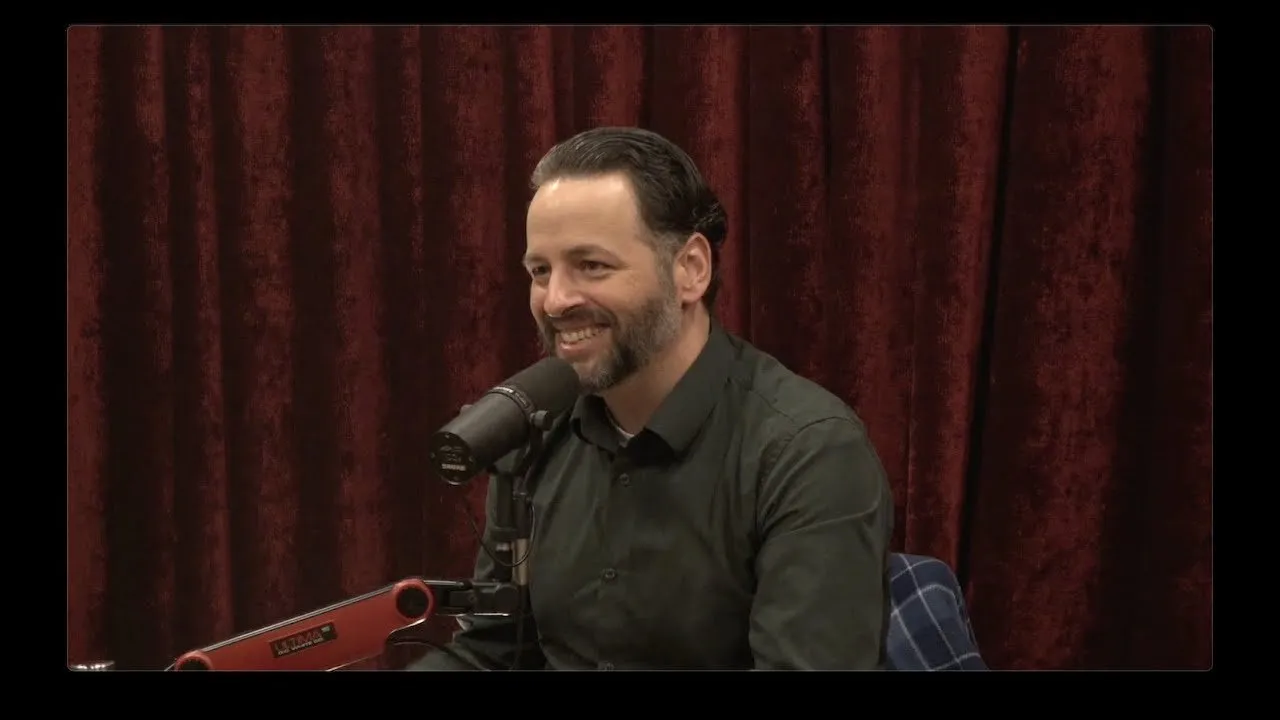
In a sprawling conversation that ranged from the mechanics of industrial robotics to the philosophical underpinnings of Western civilization, Joe Rogan sat down with Andrew Wilson for episode #2444 of the JRE. Wilson, a former robotics mechanic turned formidable online debater and host of The Crucible, brings a distinct blue-collar intellectualism to the table. His journey from the factory floor to the digital colosseum offers a unique lens through which to view the current cultural and political landscape of America.
The episode dissects the anatomy of modern protests, the crisis of meaning in secular society, and the stark differences in mental health across the political spectrum. Wilson and Rogan do not shy away from controversial topics, exploring everything from the efficacy of Christian ethics to the tactical realities of law enforcement encounters. For those looking to understand the friction between traditional values and progressive ideology, this conversation serves as a masterclass in cultural analysis.
Key Takeaways
- The Shift from Industry to Influence: Wilson details how COVID-19 lockdowns transformed him from a robotics mechanic into a leading political commentator.
- The "Color Revolution" Theory: The discussion explores the idea that modern riots are not organic uprisings but coordinated efforts to destabilize specific regions for political gain.
- The Danger of "Suicidal Empathy": Rogan and Wilson analyze how unchecked empathy in immigration and social policy can undermine national stability.
- The Mental Health Divide: Data is presented suggesting a strong correlation between conservative values and better mental health outcomes compared to liberal demographics.
- The Utility of Religious Frameworks: The conversation argues that Christian ethics provide a necessary structure for forgiveness and community that secular materialism lacks.
From Blue Collar to the Digital Frontline
One of the most compelling aspects of Andrew Wilson’s profile is his lack of traditional media pedigree. Before establishing himself as a debate heavyweight, Wilson worked as an industrial mechanic, specializing in food robotics. He describes a world of high-speed packaging machines and automated ovens—a far cry from the ivory towers of academia where many political pundits originate.
The transition occurred during the pandemic. When Michigan's lockdowns shuttered the meat plants where he worked, Wilson found himself with time on his hands and a growing frustration with online discourse. What started as "crashing panels" to argue with liberals on Facebook evolved into a full-time career. This background informs his debate style: grounded, practical, and immune to the credentialism that often plagues political discourse.
"I didn't come from a political background. There's no famous people in my family... I feel like the grounding is always there because even from the family you get the call... 'What are you doing?' Has not changed."
This grounding is evident in his approach. Unlike pundits who operate on theory, Wilson operates on mechanics—whether he is diagnosing a broken robot or a broken argument, he looks for the malfunction in the system.
The Anatomy of Civil Unrest
A significant portion of the podcast is dedicated to dissecting the nature of riots and protests in America, specifically referencing events in Minneapolis. Wilson challenges the narrative that these are purely organic outpourings of grief. Instead, he posits that they often follow the mathematical formula of a "Color Revolution"—a coordinated effort to create chaos and prompt regime change or political shifts.
The Mechanics of Escalation
Wilson breaks down the tactical situation facing federal agents during these unrests. He argues that there is a "mathematical formula" at play: if local police stand down (a phenomenon observed in various cities), federal agents are left to protect federal buildings. The strategy of the agitators, according to Wilson, is attrition. By maintaining a constant presence and high tension, the probability of a violent incident increases statistically over time.
The Sig P320 Controversy
Demonstrating his attention to detail, Wilson dives into the technical specifics of a shooting incident involving a federal task force and a suspect named Winston Smith. While the prevailing narrative screamed "execution," Wilson introduces a crucial mechanical variable: the firearm involved.
He notes that the suspect possessed a Sig P320, a firearm that had a reputation (particularly in pre-2017 models) for accidental discharges when dropped or subjected to inertia, due to the weight of the trigger mechanism. Wilson suggests that in the chaos of a grapple, an accidental discharge could have triggered the lethal response from officers, complicating the simple "victim vs. executioner" narrative often pushed by media outlets.
The Trap of Suicidal Empathy
Rogan and Wilson discuss a concept coined by Gad Saad: "suicidal empathy." This is the idea that a society can be so empathetic toward the "other" that it enacts policies detrimental to its own survival. This theme dominates their discussion on immigration and history.
They critique the "Noble Savage" myth, with Rogan bringing up historical realities of the Comanche and the Aztecs. The conversation highlights the brutality of these civilizations—human sacrifice, torture, and conquest—to counter the modern narrative that indigenous cultures were peaceful utopias destroyed solely by European colonization. Wilson argues that this historical revisionism is a tool to delegitimize modern nation-states.
"The left eats itself more than any group that I've ever encountered over almost nothing. And they love to pile on because they're absolutely terrified that it's going to come for them."
Immigration and Political Power
The duo examines the shifting Overton window regarding border policy. Wilson points out that prominent Democrats, including Barack Obama and Hillary Clinton, once held immigration stances that would be considered "far-right" by today's standards. They play a clip from 2008 where Hillary Clinton adamantly opposes illegal immigration, sounding, as Rogan notes, "more MAGA than Trump."
The conclusion they reach is that the shift isn't moral, but tactical. The argument is made that mass immigration is being utilized to alter the census (which counts residents, not just citizens) to gain congressional seats and fundamentally shift the electorate in swing states.
The Mental Health Crisis and Ideology
In a segment that challenges the "happiness" of the progressive lifestyle, Rogan pulls up data regarding mental health diagnoses. The statistics presented paint a stark picture: young liberal women have significantly higher rates of mental health diagnoses compared to their conservative counterparts. Conversely, conservative men report the highest levels of mental health stability.
Rogan and Wilson theorize on the causes:
- The Victimhood Narrative: A worldview that constantly seeks oppression and offense creates a state of perpetual anxiety.
- The Pharmaceutical Factor: They discuss the prevalence of SSRIs in these communities and the potential side effects, including violent ideation.
- Lack of Purpose: Wilson argues that without the structure of family, faith, and traditional responsibility, people are left in a nihilistic void.
Wilson notes that while critics argue conservatives simply don't report their mental health issues due to stigma, the tangible outcomes—lower suicide rates, higher marriage stability, and stronger community bonds—suggest the difference is real, not just reported.
Christian Ethics vs. Secular Materialism
Perhaps the most philosophical part of the episode centers on the utility of religion. Wilson, an Eastern Orthodox Christian, argues that the "me-centric" worldview of secular materialism inevitably leads to misery. In contrast, religious frameworks force the individual to think of the community and the "other."
The Mechanism of Forgiveness
A profound distinction Wilson draws between the political Left and the Christian Right is the concept of forgiveness. In the current progressive landscape, a single transgression can lead to permanent social exile (cancel culture). There is no clear path to redemption.
Christianity, however, is built on the recognition of human flaw. Wilson shares a story about a monk who drank heavily but reduced his intake slightly before death; the abbot celebrated his progress rather than condemning his vice. This "pathway to forgiveness" creates a more cohesive and less cannibalistic society. Rogan agrees, noting that despite his skepticism in the past, he finds religious communities to be among the kindest and most charitable groups of people.
"If there was a pill that could make you as nice as the people that I go to church with, everybody would be on it."
The Failure of Credentialism in Debate
The episode concludes with an examination of the state of modern debate. Wilson reveals that as he has climbed the ladder to face higher-level opponents—including Ivy League academics—he has found them increasingly easy to defeat.
He attributes this to the bubble of credentialism. Many institutional experts are surrounded by affirmation and operate in theoretical frameworks that detach them from reality. When they encounter a debater like Wilson, who relies on applied logic and refuses to accept appeals to authority, their arguments often crumble.
Rogan parallels this to comedians. He notes that street-smart comics often outperform academics in discussions because they live in the "real world" where feedback is immediate and brutal. The consensus is that the ability to articulate truth is a meritocratic skill, one that cannot be bestowed by a degree but must be forged in the fire of open discourse.
Conclusion
The conversation between Joe Rogan and Andrew Wilson serves as a snapshot of the current American intellectual friction. It highlights a growing skepticism toward institutions, a rejection of sanitized history, and a renewed interest in traditional ethical frameworks. Wilson represents a new archetype of public intellectual: self-made, combat-ready, and unconcerned with the politesse of the establishment. As the cultural divide widens, voices like his—willing to "roll initiative" and engage in the messy reality of debate—are becoming the primary drivers of political thought.