Table of Contents
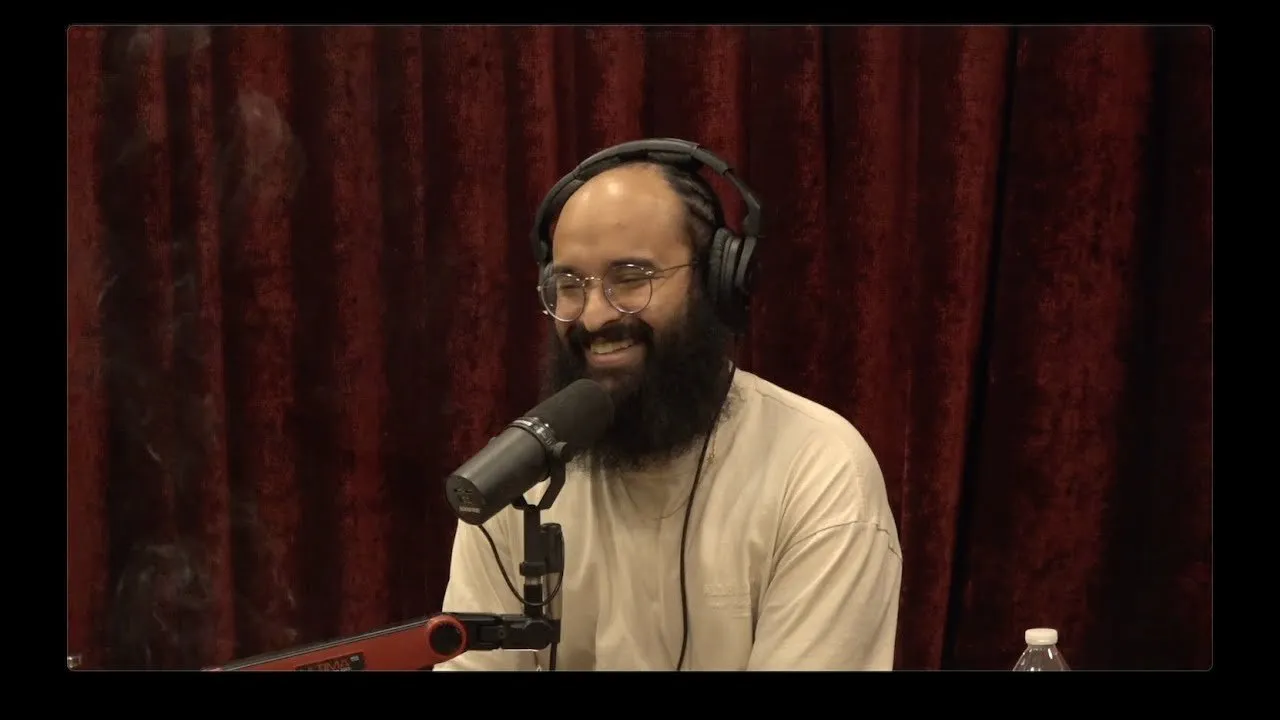
In a sprawling conversation that traverses the vibrant ecosystem of the Austin comedy scene to the depths of ancient history and the complexities of modern geopolitics, Joe Rogan sat down with comedian Ehsan Ahmad for episode #2442 of the JRE. As Ahmad promotes his new special "Too Soon," the dialogue quickly moves beyond self-promotion into a rigorous examination of the cultural shifts defining 2024. The two dissect everything from the collapse of "third spaces" for Gen Z to the biological anomalies that challenge our understanding of extinction, offering a blend of humor and heavy existential inquiry.
Key Takeaways
- The "Walled Garden" of Austin: Rogan and Ahmad defend the Austin comedy scene against coastal critics, describing it as a supportive, collaborative ecosystem that has revived the camaraderie often missing in cutthroat markets like Los Angeles or New York.
- Nuance in Immigration Enforcement: The conversation highlights the statistical ambiguity surrounding ICE detentions, debating the percentage of violent criminals within the system while acknowledging the logistical nightmares of border policy.
- Institutional Distrust: From the sealed Epstein files to Gavin Newsom’s veto of homeless spending audits, the duo explores a growing public cynicism regarding government transparency and accountability.
- The Fragility of History: Through examples like the Coelacanth and the Voynich manuscript, the episode examines how easily languages, species, and civilizations disappear from the record, leaving modern humans with a fragmented view of the past.
- The Crisis of Socialization: Ahmad posits that the decline of "third spaces"—physical locations distinct from home and work—has led to a generation defined by digital loneliness, reduced alcohol consumption, and delayed family formation.
The Renaissance of Austin Comedy and the "Mothership" Effect
The episode opens with a passionate defense of the Austin comedy circuit, which has evolved from a satellite scene into a primary destination for stand-up. Rogan and Ahmad discuss the "Mothership" not just as a venue, but as a cultural anchor that has allowed a middle class of comedians to thrive. They refute the narrative that Austin is a "walled garden" of exclusion, arguing instead that it is a meritocracy where political leanings take a backseat to the quality of the joke.
- Collaborative Environment: Unlike the scarcity mindset often found in LA or NY, Austin comedians like Cam Patterson and Dylan Sullivan are described as helping one another rise, fostering a "rising tide lifts all boats" mentality.
- Abundance of Venues: Ahmad notes that within a short walking distance in downtown Austin, there are roughly 12 dedicated comedy rooms—including The Mothership, Sunset Strip, Vulcan, and Creek and the Cave—allowing comics to perform multiple sets a night.
- The "Ankle Weights" of Hosting: Rogan emphasizes that hosting shows and performing cold opens acts as "training with ankle weights," forcing comedians to win over cold crowds and refine their material in difficult environments.
- Rejecting Political Litmus Tests: Ahmad pushes back against the idea that Austin is a "right-wing" haven, noting that green rooms are predominantly filled with progressive comedians who simply appreciate the freedom to perform without censorship.
- Economic Viability: The move to Austin is framed as a strategic career choice, offering a lower cost of living and higher quality of life, which allows younger comics to focus on writing rather than survival.
- The Impact of Established Names: The migration of heavy hitters like Tom Segura and Rogan provided the necessary "buy-in" to legitimize the scene, creating an infrastructure that now supports hundreds of working comics.
"It’s not based on any reality. It’s not based on people go there and hang out... It's really just a bunch of people just doing jokes."
Immigration, Crime Statistics, and Political Realignment
A significant portion of the dialogue focuses on the polarization of American politics, specifically regarding immigration enforcement and the shifting allegiances of minority voters. Rogan and Ahmad utilize real-time fact-checking to parse through the emotional rhetoric surrounding ICE (Immigration and Customs Enforcement), attempting to determine the actual scope of violent criminality among undocumented immigrants.
- The 8% Statistic: They analyze data suggesting that while a small minority (approximately 8%) of those in ICE detention have violent convictions, in raw numbers, this still represents a significant population of potentially dangerous individuals.
- The Reality of Law Enforcement: Rogan argues that public perception is skewed by viral videos of aggressive arrests, ignoring millions of routine, peaceful interactions between law enforcement and civilians.
- Minority Voting Shifts: Ahmad observes that minority groups are increasingly shifting right, attributing this to a rejection of "victimhood mentality" and a dislike of being treated as a "hostage vote" by the Democratic party.
- The Human Cost of Policy: The conversation acknowledges the tragedy on both sides—immigrants lured by the promise of open borders only to face deportation, and agents tasked with an impossible enforcement mandate.
- Census and Representation: Rogan highlights the political incentives behind the border crisis, specifically how counting undocumented immigrants in the census impacts congressional seat allocation, potentially skewing political power.
- The "Walled Garden" of Ideology: The duo discusses how algorithmic echo chambers prevent people from seeing the full picture of issues like immigration, trapping citizens in feedback loops that reinforce their prior biases.
Government Accountability and the California Exodus
The discussion transitions into a critique of California's governance, specifically focusing on Governor Gavin Newsom. Rogan and Ahmad express frustration over the lack of transparency regarding taxpayer money, particularly in the context of the homelessness crisis. This segment paints a picture of a political class that is increasingly insulated from the consequences of their policy decisions.
- The $24 Billion Black Hole: They discuss the specific instance of Governor Newsom vetoing a bipartisan bill that would have required an audit of $24 billion spent on homelessness, raising questions about where the money actually went.
- Incentivized Failure: A theory is proposed that the "homeless industrial complex" is incentivized to maintain the problem rather than solve it, as solving it would cut off the flow of government funding to executives and non-profits.
- The "Gameplay" of Politics: Ahmad cynically notes that Newsom’s veto was "good gameplay" for a politician looking to run for President, as it effectively killed an investigation that could have damaged his reputation.
- The Epstein Files: The conversation touches on the enduring mystery of the Jeffrey Epstein client list, with Rogan expressing disbelief that a sex trafficking conviction could occur without naming those who were trafficked to.
- The "Black Highlighter": They mock the government's tendency to release "redacted" files that offer no new information, comparing it to the CIA using a black highlighter to obscure the truth while claiming transparency.
- Regulatory Strangulation: The exodus from California is attributed not just to taxes, but to an over-regulated environment that makes building or rebuilding—whether it’s housing or a business—nearly impossible.
"You want to tell me there's some sort of a compromised trial? How do you not have a lawyer that goes, 'Who did she sex traffic to?'"
Biological Anomalies and the Fragility of History
Moving away from politics, the podcast takes a deep dive into the mysteries of the natural world and human history. Rogan’s fascination with "living fossils" and Ahmad’s interest in lost civilizations converge to highlight how much of the human and biological story remains unknown or misunderstood.
- The Coelacanth Paradox: Rogan details the discovery of the Coelacanth, a fish thought to be extinct for 66 million years, which was found alive in 1938. This serves as a metaphor for the limits of scientific consensus.
- Lost Languages of the Americas: The pair discusses the cultural devastation caused by the Conquistadors, noting that over 100 distinct languages and histories in the region of Mexico were likely wiped out, leaving permanent gaps in our knowledge.
- The Voynich Manuscript: Ahmad brings up this indecipherable medieval codex, using it to illustrate the existence of knowledge systems that are completely alien to modern understanding.
- Primary Sources as Propaganda: Ahmad explains how our understanding of the Persian Empire relies heavily on the Behistun Inscription, which was essentially propaganda carved into rock by Darius the Great, reminding listeners that history is written by the victors.
- Indigenous Oral Histories: They explore the tragedy of Aboriginal Australian history, where "mobs" with distinct languages were wiped out, taking tens of thousands of years of oral history and knowledge with them.
- Dragons and Dinosaurs: Rogan speculates on the universality of dragon myths and the "flying serpent" archetype, questioning if these cultural memories stem from interactions with surviving megafauna or dinosaur-like creatures in antiquity.
The Disappearance of "Third Spaces" and Gen Z Isolation
Ahmad offers a sociological critique of the modern digital age, focusing on the changing behaviors of Generation Z. He argues that the physical infrastructure of community—the "third place" that is neither work nor home—has eroded, leading to profound changes in dating, mental health, and social cohesion.
- The Death of the Mall and Bowling Alley: Ahmad notes that places where young people used to congregate casually are either closing or becoming prohibitively expensive, forcing socialization onto digital platforms.
- The Rise of Digital Virginity: The conversation touches on the trend of influencers monetizing their virginity or celibacy, a concept that Ahmad links to a broader retreat from physical intimacy among young people.
- Algorithm Cleanses: Rogan suggests that people need to perform "algorithm cleanses" similar to dietary juice cleanses to break free from the doom-scrolling loops that dictate their emotional states.
- Economic Barriers to Family: Ahmad points out that the traditional American dream of a house and kids is mathematically impossible for many in his generation, which naturally leads to delayed adulthood and declining birth rates.
- The "Freshman 15" of Austin: On a lighter note, they discuss the culinary culture of Austin, specifically the "meat sweats" induced by the city's BBQ scene, which serves as one of the few remaining communal bonding experiences.
- Deepfakes and Reality: The two express concern over AI-generated content, noting that we are approaching a point where video evidence will be inadmissible in court and people will retreat further into confirmed biases because "seeing is no longer believing."
The Threat of Deepfakes
The discussion on AI video generation was particularly stark. Rogan observed that while early deepfakes had "tells" like malformed fingers or unnatural blinking, the technology has advanced to a point where distinguishing reality from fiction requires forensic analysis. This technological leap threatens to dissolve the shared reality that news and media are supposed to provide, further fragmenting society into tribes that only trust their own fabricated evidence.
The Mechanics of Stand-Up and Mental Health
The episode concludes with a return to the craft of comedy. Rogan and Ahmad geek out over the specific mechanics that make a comedian great, from the ability to handle a heckler to the mental fortitude required to bomb late at night. They pay tribute to late legends and discuss the therapeutic necessity of the art form.
- Running with Ankle Weights: Rogan uses the analogy of ankle weights to describe the process of doing "cold opens" or hosting shows. By performing without a warm-up act, comedians build a unique type of resilience and crowd-control ability.
- The Tragedy of Brody Stevens: They reminisce about the late Brody Stevens, using his story to illustrate the thin line between brilliance and mental health struggles in comedy, and the importance of community support when a comic goes "off the rails."
- The Q&A Format: Rogan recalls seeing Jerry Seinfeld do a Q&A session after a set in Boston, noting how this format allows comedians to riff and generate organic material that isn't possible through standard joke-writing.
- Bottom of the Barrel: Ahmad discusses his podcast "Bottom of the Barrel" as a premise factory, a place to test out "wild" ideas that aren't yet ready for the stage, highlighting the importance of having a low-stakes creative outlet.
- Physical Discipline: Rogan advises that for comedians—who live in a chaotic, nocturnal world—physical exercise is non-negotiable for maintaining mental sanity and preventing the "spiral" often seen in the industry.
- Legacy of the Comedy Store: They trade stories about the legendary Comedy Store in LA, emphasizing that while venues change, the "ghosts" of past legends like Kinison and Hicks create an energy that pushes new comics to be better.
"It's the ones that suck that make you better. It's definitely... you realize like where the sloppy parts of your bits are."
Conclusion
Joe Rogan and Ehsan Ahmad’s conversation serves as a microcosm of the current cultural moment: a blend of optimism about localized creative communities (like Austin) and deep skepticism about the broader machinery of society (politics, media, and history). Whether dissecting the intricacies of a brisket sandwich or the geopolitical implications of a rigged election in Venezuela, the underlying theme is a desire to find truth—or at least a good laugh—in an increasingly synthetic world.