Table of Contents
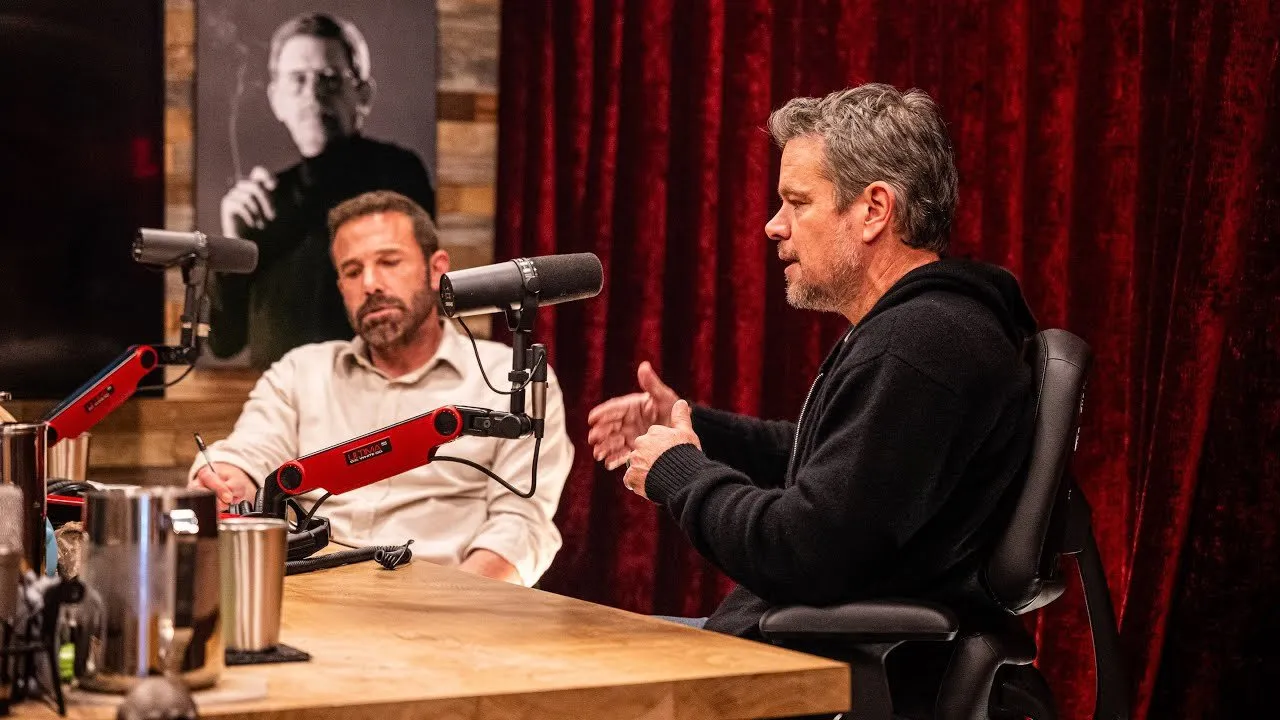
When Matt Damon and Ben Affleck sit down together, the chemistry is palpable—a byproduct of decades of friendship and collaboration that began long before they were household names. In their recent appearance on the Joe Rogan Experience, the duo dove deep into the mechanics of their new film RIP, but the conversation quickly expanded beyond mere promotion. They explored the seismic shifts in the movie industry, the philosophical implications of artificial intelligence in art, and the often-devastating cost of elite performance.
This wasn't just a discussion about Hollywood; it was a candid look at business ethics, the psychology of obsession, and why human connection remains the only currency that truly matters in storytelling.
Key Takeaways
- The Streaming Paradigm Shift: How consumer habits have fundamentally altered the pacing and structure of modern filmmaking.
- A New Economic Model: Damon and Affleck’s production company, Artists Equity, is revolutionizing crew compensation by sharing backend profits with the people below the line.
- The Limitations of AI: Why artificial intelligence acts as a "regression to the mean" and cannot replicate the trauma-informed nuance of human performance.
- The Cost of Greatness: An analysis of the obsessive nature required to be elite athletes or artists, and the toll it takes on personal lives.
- The Necessity of Grace: A philosophical discussion on cancel culture, the danger of binary thinking, and the importance of redemption.
The Streaming Revolution and the "10-Minute" Hook
The film industry is currently navigating a transition as significant as the introduction of television. Affleck notes that while the theatrical experience offers a unique, church-like communal focus, the reality of supply and demand has shifted toward streaming. This shift isn't just changing where we watch movies; it is changing how they are made.
In the age of Netflix and TikTok, audience attention spans are shorter. Filmmakers are now pressured to front-load action sequences into the first five minutes to prevent viewers from clicking away—a stark contrast to the slow-burn cinema of the 1970s, like The Deer Hunter or Taxi Driver, which allowed stories to "air out."
The bar for walking out of a movie theater is a lot higher than from just changing the channel.
Affleck argues that while technology changes distribution, it shouldn't dictate the soul of the art. He cites Baby Reindeer and Succession as proof that audiences still crave complex, challenging narratives without needing explosions every few minutes to keep them engaged.
Reimagining Hollywood Economics: The Artists Equity Model
Perhaps the most actionable insight from the episode is the business philosophy behind Damon and Affleck’s company, Artists Equity. Traditionally in Hollywood, "above the line" talent (directors, stars) receive backend profit participation, while the "below the line" crew (grips, electricians, costumers) work for hourly wages regardless of the film's success.
Damon and Affleck have disrupted this model. For their film RIP, they structured the deal so that if the movie performs well, the crew receives bonuses. This isn't just altruism; it’s a pragmatic strategy to improve the final product.
The "Trickle-Down" Effect of Investment
Affleck explains that when a crew knows they have a stake in the outcome, the level of care and collaboration skyrockets. It eliminates the transactional nature of the job. When the camera operator or the prop master feels true ownership, they contribute creative solutions that can elevate a good movie to a great one.
This approach also requires transparency. In negotiations with streaming giants like Netflix, Artists Equity created a tiered bonus structure based on viewership metrics—ranging from a "single" to a "grand slam"—ensuring that success is shared democratically across the production.
Why AI Cannot Replicate Human Trauma
With the looming threat of AI in creative industries, Affleck offers a nuanced, skeptical perspective. He compares generative AI to a tool that inherently "regresses to the mean." Because AI builds upon existing data, it produces averages. It can mimic competence, but it struggles with the erratic, painful brilliance of human experience.
Damon illustrates this with a powerful anecdote about Dwayne "The Rock" Johnson. In a scene for the film The Smashing Machine, Johnson portrays a moment of vulnerability that was informed by two distinct, traumatic memories from his real life: his father’s deflection regarding addiction and his mother’s reaction to a cancer diagnosis.
That is a piece of art that comes out of a lived human experience. There's no AI that can do that.
An AI can generate a photorealistic image of a face crying, but it cannot synthesize complex, unrelated emotional memories to create a performance that resonates on a subconscious human level. The consensus is that while AI may handle technical drudgery, the "ghost in the machine"—the spark of true art—remains safe.
The Dark Side of Greatness
The conversation took a philosophical turn toward the nature of elite performance, drawing parallels between acting, directing, and combat sports. Rogan, Damon, and Affleck discussed figures like Michael Jordan, Tom Brady, and Jon Jones, dissecting the often-destructive obsession required to reach the pinnacle of any field.
True greatness often demands a single-minded focus that requires abandoning balance. This results in a paradox where the public admires the output (the championship, the masterpiece), but the individual suffers a massive cost in their personal relationships and internal peace.
The Relief of Defeat
Rogan shared a revealing story about UFC legend Matt Hughes, who admitted that losing his title was a "relief" because the burden of being the hunted was finally lifted. This sentiment resonates with creatives as well; the pressure to maintain a standard of perfection can be paralyzing. The trio agreed that the most compelling figures are often those who are deeply flawed yet undeniably brilliant, proving that human capability is rarely a clean, linear path.
Grace, Redemption, and Cancel Culture
Moving beyond industry talk, the group tackled the current cultural climate regarding judgment and forgiveness. Affleck reflected on the tendency to define people by their absolute worst moments, a habit exacerbated by social media and "cancel culture."
He referenced the complexity of characters like Tony Soprano—a murderer whom audiences loved—to highlight that humans are capable of simultaneously being deeply flawed and possessing redeeming qualities. The modern urge to "zero out" a person’s humanity based on a mistake ignores the essential human need for redemption.
The consensus was that a society without forgiveness is unsustainable. As Affleck noted, if you think you have "nailed being human" to the point where you can judge others without mercy, you have fundamentally failed the test of humanity yourself.
Conclusion
While the podcast served as a launchpad for their gritty new crime thriller RIP, the dialogue between Rogan, Damon, and Affleck offered much more. It provided a blueprint for a fairer Hollywood, a defense of human-centric art in the face of automation, and a sobering look at what it truly costs to be great. Whether discussing the intricacies of editing for TikTok or the emotional weight of Saving Private Ryan, the underlying theme remained clear: in an increasingly digital and polarized world, authenticity and shared human experience are the only things worth preserving.