Table of Contents
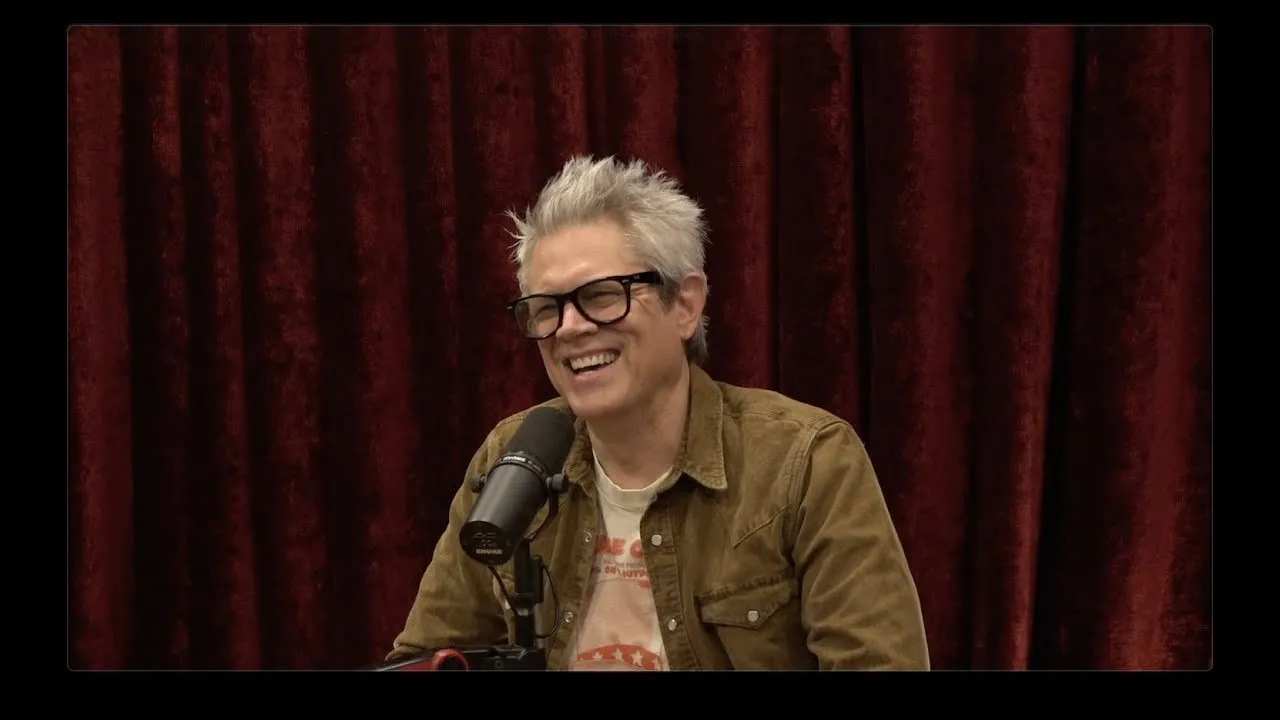
When Johnny Knoxville sits down with Joe Rogan, the conversation inevitably veers into the territory of extreme physical endurance, the psychology of risk, and the blurred lines between comedy and catastrophe. In episode #2439 of the Joe Rogan Experience, the Jackass creator and star opens up about the physical toll of his career, the desperate origins of his rise to fame, and the specific stunt that finally forced him to retire from high-impact performance. From his short-lived run hosting Fear Factor to his deep appreciation for MMA legends, Knoxville provides a candid look at a life lived on the edge of disaster.
Key Takeaways
- The origin of Jackass was born of desperation: Knoxville filmed himself testing self-defense equipment (including a cheap bulletproof vest) simply because he had a daughter on the way and needed money fast.
- One stunt ended his career in the ring: A magic trick involving a bull resulted in a brain hemorrhage, broken ribs, and a concussion that left Knoxville with vertigo and severe depression, effectively ending his ability to take further head trauma.
- "Donkey Juice" killed Fear Factor: Knoxville confirmed that his revival of Fear Factor was cancelled specifically because of a stunt involving twins consuming donkey bodily fluids, which sparked outrage before it even aired.
- Rehabilitation is a constant battle: Knoxville details his use of the "Intracept" procedure to burn nerves in his lower back and his reliance on Transcranial Magnetic Stimulation (TMS) to treat the mental health fallout from his brain injuries.
- The lineage of pranking: Knoxville attributes his chaotic sense of humor to his father, a tire company owner who would stage fake gunfights and send prank letters about venereal diseases to employees.
The Desperate Origins of Jackass and Stunt Culture
While Johnny Knoxville is now a household name synonymous with pain and pranks, he revealed to Rogan that the entire franchise began as a frantic attempt to support his family. Living next door to director Antoine Fuqua and writing articles for skateboarding magazines, Knoxville’s decision to test self-defense weapons on himself wasn't an artistic choice—it was a financial necessity.
- The Bulletproof Vest: Knoxville bought the cheapest vest available with Christmas money from his mother. He noted that the lack of pre-production meant he simply drove to a fire road, handed a revolver to a reluctant friend, and was interrupted by "tweakers" asking for directions before getting shot.
- Inspiration from Gene LeBell: The conversation opened with stories of "Judo" Gene LeBell, the legendary stuntman known for choking people out on film sets. Knoxville recalled LeBell’s terrifying grip and his willingness to drop stuntmen who disrespected him, setting the tone for the "old school" toughness Knoxville admires.
- The snowball effect: What started as a written article for Big Brother magazine turned into a video feature at the suggestion of Jeff Tremaine. This transition from print to video sparked the visual format that would become Jackass.
It was either no stun gun or taser gun... Jeff says, 'Hey, why don't you film that article that you're writing?' And it kind of snowballed from there.
The Physical Price: Concussions, Bulls, and Brain Hemorrhages
The most sobering part of the interview focused on the cumulative damage Knoxville has sustained. While he laughs off broken limbs, the repeated head trauma has forced a hard stop on his career. He detailed the specific incident in Jackass Forever that changed his life.
- The "Magic Trick": Knoxville attempted to perform a magic trick for a bull. He mistimed his jump, resulting in a rotational flip where he landed directly on his head.
- The Aftermath: The injury caused a brain hemorrhage, a broken wrist, and broken ribs. More alarmingly, it triggered six to eight weeks of vertigo and a months-long slide into a deep depression characterized by catastrophic thinking.
- The "Buster Keaton" Close Call: Knoxville recounted a stunt from Jackass Number Two where a 20-foot steel wall was dropped on him. He moved slightly off his mark, and the window cutout barely cleared his head. Had he been inches off, the wall would have crushed him instantly.
- Mental Health Recovery: To recover from the bull injury's psychological effects, Knoxville underwent Transcranial Magnetic Stimulation (TMS) and utilized medication to stabilize his mood, eventually regaining his "color" and mental clarity.
I got a concussion with the brain hemorrhage, a broken rib and a broken wrist out of the deal... that was it.
Hosting Fear Factor and the Stunt That Got It Cancelled
Knoxville shared behind-the-scenes details of his time hosting the reboot of Fear Factor. Unlike his Jackass persona, he approached the hosting gig as a supportive coach, often consuming the disgusting items himself off-camera to prove to contestants it was possible.
- The "Donkey Juice" Incident: Knoxville confirmed the rumors regarding the show's cancellation. In an episode featuring twins, contestants were challenged to drink donkey semen and urine. While the network initially approved it, images leaked online before the airing, causing a media firestorm that led to the show's immediate cancellation.
- Coaching the contestants: Knoxville admitted to taking edibles before filming to make the long shoots more interesting. He described using his martial arts coaching background to help terrified contestants overcome primal fears, particularly regarding snakes and drowning simulations.
- Production warnings: Knoxville explicitly warned producers about two stunts: a bull riding segment involving untrained contestants and the donkey fluid stunt. In both cases, he felt the production was too close to the project to see the looming disaster.
The Psychology of Danger and "Survivor’s Euphoria"
Rogan and Knoxville dug deep into the "why" behind the stunts. Knoxville rejected the idea that he is an adrenaline junkie in the traditional sense, instead citing a mix of "survivor’s euphoria" and a dissociation that allows him to perform.
- Colonel John Paul Stapp: Knoxville referenced the famous biophysicist who subjected himself to 49 Gs of deceleration. Stapp coined the term "survivor’s euphoria" to describe the rush of endorphins after surviving a lethal situation—a feeling Knoxville knows intimately.
- compartmentalization: Knoxville revealed that while he sees a therapist, he refuses to discuss the part of his brain that compels him to do stunts, fearing that "unwinding" that thread might ruin his career.
- Father’s Influence: Knoxville paints a picture of his father as the original prankster—a man who staged fake gunfights at company Christmas parties and sent fake IRS audit letters to neighbors. This chaotic upbringing normalized the high-stakes pranks Knoxville would later monetize.
- Risk Assessment: Surprisingly, Knoxville claims to have zero fear of orthopedic injuries (broken arms, legs). His only current hard boundary is anything that risks a concussion, as his brain can no longer absorb the impact.
MMA, Combat Sports, and Fighter Health
Both Rogan and Knoxville share a profound respect for combat sports. The conversation shifted from stunts to the professional violence of the UFC and Pride FC, highlighting the parallels between stuntmen and fighters.
- Fedor Emelianenko: Rogan and Knoxville bonded over their admiration for Fedor, particularly his stoicism. They analyzed the famous "Randleman Suplex," marveling at how Fedor survived being dropped on his head to win the fight moments later.
- The brutality of leg breaks: They reviewed footage of Anderson Silva and Chris Weidman suffering compound leg fractures. Knoxville admitted that while he can handle gore, seeing limbs bend unnaturally—especially on female fighters—viscerally disturbs him.
- Gable Stevenson: Rogan highlighted Stevenson as a terrifying prospect for the UFC, noting his freakish speed for a heavyweight. They discussed the difficulty of matching him up because experienced fighters know the risk-to-reward ratio is skewed against them.
- CTE and Retirement: The conversation circled back to brain health. Rogan expressed concern for fighters who continue past their prime, slurring their words but still competing. This mirrored Knoxville’s own realization that he had to stop taking hits to the head to preserve his cognitive function.
Documentaries and Obscure Americana
Beyond stunts, Knoxville has a passion for documenting the fringes of American culture. He and Rogan discussed the cult classic documentary The Wild and Wonderful Whites of West Virginia, which Knoxville produced.
- Tragedy and Charisma: Knoxville acknowledged the conflict in filming the White family—they were undeniably charismatic outlaws, but their lives were ravaged by the coal industry, poverty, and the opioid crisis. He noted the difficulty of finding a "happy ending" in a region systematically destroyed by corporate neglect.
- David Allan Coe: Knoxville is currently trying to produce a documentary on the outlaw country singer. He shared bizarre anecdotes about Coe, including his time in a motorcycle gang, living in a cave, and a brief 1980s phase where he tried to become a ventriloquist/magician.
- Otto and George: Rogan contributed to the ventriloquist discussion by recalling the comedian Otto, who treated his dummy, George, as a living entity—even checking on him in the trunk of the car.
There’s forgotten sections of our country when it comes to just extreme despair and poverty... seeing how the coal companies jacked their town... and the town’s just left massacred.
Conclusion
Johnny Knoxville appears to be a man who has successfully navigated a minefield. He has transitioned from a desperate young writer shooting himself with a .38 revolver to a Hollywood fixture who knows exactly when to walk away. While the physical scars are evident—herniated discs, broken bones, and a history of concussions—his spirit remains surprisingly intact. As he moves away from performing stunts and toward producing and acting, Knoxville carries the wisdom of a man who has looked death in the face repeatedly and, mostly through "dumb luck," lived to tell the tale.