Table of Contents
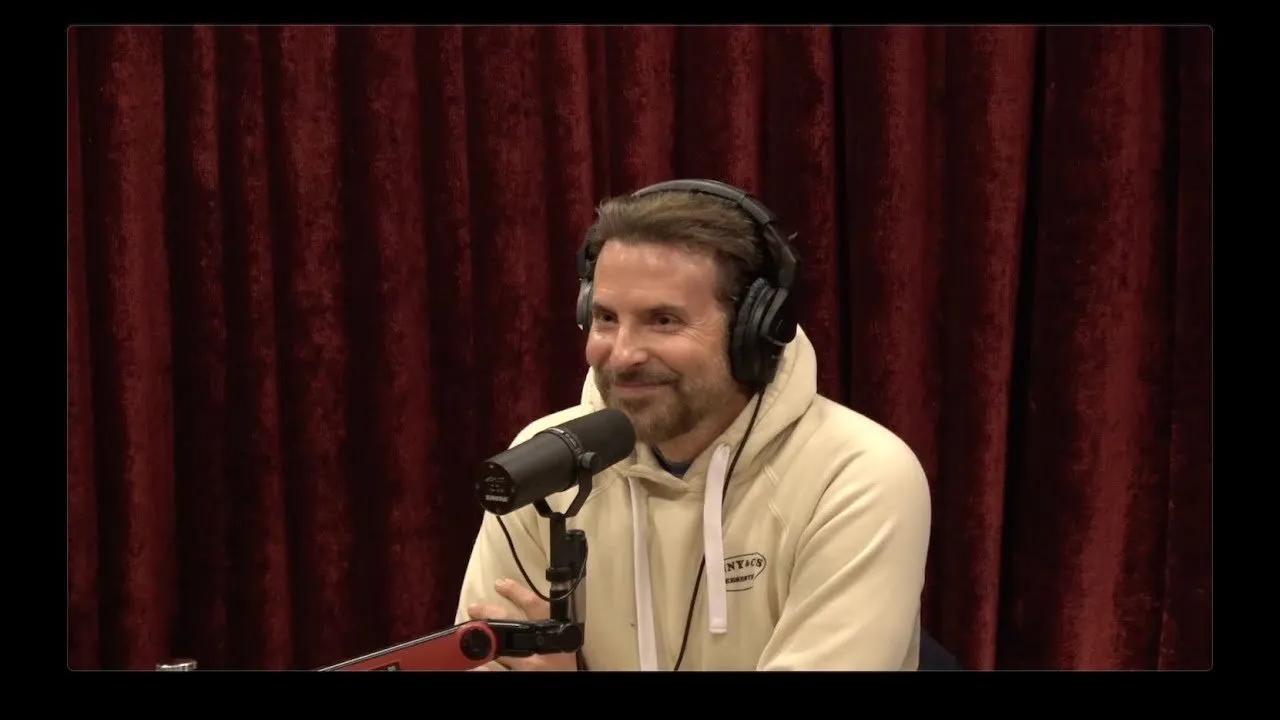
In a media landscape dominated by dopamine-inducing shorts and rapid-fire edits, the enduring popularity of long-form conversation stands as a testament to the human need for genuine connection. When Bradley Cooper sat down for the Joe Rogan Experience, the dialogue quickly moved past standard promotional talk into a deep exploration of the human condition. The three-hour exchange traversed the rigorous demands of method acting, the shifting culture of stand-up comedy, the profound psychological shifts of fatherhood, and the looming existential questions posed by artificial intelligence.
Cooper, a filmmaker and actor known for his immersive preparation, offered a rare glimpse into the obsessive nature required to portray real-life figures like Leonard Bernstein and Chris Kyle. Simultaneously, the conversation revealed a philosophical side to Rogan and Cooper, dissecting how technology is rewiring our collective memory and why the "struggle" of artistic pursuit remains essential for a meaningful life.
Key Takeaways
- The evolution of comedy: The cutthroat, sitcom-hungry atmosphere of 1990s stand-up has largely been replaced by a supportive, internet-driven collaborative culture.
- Immersion requires obsession: Cooper details the grueling physical and mental transformation required for American Sniper, including a 6,000-calorie daily diet and learning to think in the subject's voice.
- Fatherhood reshapes empathy: Raising a child fundamentally alters how one views other adults, shifting perspective from judgment to understanding everyone as a "former baby."
- The dopamine trap: Short-form content and social media are rewiring memory and attention spans, creating a "low-level anxiety" that contrasts with the deep flow state of long-form engagement.
- The AI horizon: The rapid advancement of artificial intelligence poses existential questions about human purpose, intimacy, and the future of storytelling.
The Psychology of Attention and the Dopamine Trap
The conversation opens with a meta-analysis of the podcast medium itself, exploring why unedited, long-form discussions resonate in an era defined by shrinking attention spans. Rogan and Cooper dissect the modern addiction to digital stimuli and its physiological effects on the brain.
- The "Twilight Zone" effect: Cooper describes the surreal experience of stepping inside the "television set" of the JRE studio, noting how the long-form format creates a sense of intimacy that disarms both the guest and the audience.
- Addiction to the scroll: Rogan compares social media consumption to a drug addiction, describing the "low-level anxiety" that accompanies the endless chase for a dopamine fix that never truly satisfies the user.
- Short-term vs. Long-term rewards: They argue that while short clips hijack the brain's reward system, humans possess a deeper, unfulfilled craving for substantial engagement—evidenced by the success of three-hour films like Oppenheimer and long podcasts.
- Dunbar’s Number and memory limits: Rogan theorizes that modern humans are hitting a "hard drive" limit on memory, struggling to retain names and faces because we are exposed to far more than the 150 intimate connections (Dunbar's Number) our brains evolved to manage.
- The alteration of reality: Heavy consumption of algorithm-driven content, particularly "police footage" or negativity, reprograms the brain to perceive the world as more hostile and chaotic than it actually is.
- Hypnosis through engagement: Both agree that great content—whether a podcast, a film, or a stand-up set—acts as a form of "artistic hypnosis," where the audience surrenders control to the storyteller, a state impossible to achieve with rapid-fire editing.
Reshaping the Landscape of Stand-Up Comedy
Discussion shifts to Cooper's new film project, Is This Thing On?, which centers on the world of stand-up comedy. This segment provides a historical analysis of how the comedy industry has transformed from a competitive zero-sum game into a collaborative digital ecosystem.
- The realism of the "hang": Cooper emphasizes that his goal was to capture the authentic, non-performative interactions of comedians off-stage, filming on location at the Comedy Cellar with actual staff to ground the film in reality.
- The "sitcom gold rush" of the 90s: Cooper and Rogan reflect on the toxic atmosphere of 1990s comedy, where comedians viewed peers as obstacles to the ultimate goal: a network development deal or a spot on The Tonight Show.
- The internet as a stabilizer: The democratization of media turned competitors into assets; appearing on a peer's podcast now helps both parties, fostering a culture of mutual support rather than backstabbing.
- Will Arnett’s vulnerability: To prepare for the role, actor Will Arnett performed open mics as a character named "Alex Novak," facing the genuine terror of bombing in front of real audiences to understand the visceral "pain" of the craft.
- The "Ari Shaffir Effect": Rogan credits comedian Ari Shaffir with helping import the supportive, "hang-out" culture of Los Angeles comedy scenes to New York, shifting the dynamic from solitary ambition to communal growth.
- The necessity of "eating it": Both agree that no amount of acting talent can simulate the experience of a joke falling flat; one must experience the silence and the "echo" of a bomb to truly portray a comedian.
The Immersive Craft of Method Acting and Directing
Cooper offers a masterclass in the dedication required for high-level performance. He details the extreme lengths taken to embody characters in American Sniper and Maestro, moving beyond simple acting into a state of psychological and physical transformation.
- The responsibility of biography: Cooper describes the immense pressure of playing real figures like Chris Kyle, noting that the presence of surviving family members provides "four extra vats of firepower" to work harder than ever before.
- Physical transformation for American Sniper: To become Chris Kyle, Cooper consumed 6,000 calories a day and deadlifted heavily to gain 53 pounds of muscle naturally, refusing performance-enhancing drugs due to a family history of cancer.
- The "Fake Baby" controversy: Cooper addresses the infamous scene in American Sniper involving a plastic doll, revealing he improvised moving the doll's hand with his thumb to save the production $35,000 in CGI costs, ultimately embracing the moment as a testament to the audience's suspension of disbelief.
- Voice as the gateway: For Cooper, capturing the specific sonic rhythm and dialect of a character (like Leonard Bernstein or Chris Kyle) is the primary key to unlocking the performance; once the voice is secured, the "acting" disappears.
- Christian Bale’s influence: Cooper cites observing Christian Bale on the set of American Hustle as a turning point, where he realized that staying in character between takes wasn't pretentious but a practical way to conserve energy and maintain belief.
- Directing from the inside: As a director, Cooper often operates the camera or acts alongside his cast to create an "immersive ecosystem," minimizing the technical barrier between the performance and the capture medium.
"If I believe I'm Chris, then I have a shot at everybody else potentially going along with this illusion. I just have to be absolutely fearless when I walk on set."
Fatherhood and the Expansion of Empathy
In perhaps the most poignant segment of the podcast, the two discuss how raising children fundamentally rewires the male brain, altering their capacity for love, patience, and understanding of the human condition.
- The "Free Jolts" of joy: Cooper describes parenting as a source of unexpected dopamine hits—moments of pure connection, like sharing a meal or walking up stairs, that provide a profound sense of purpose absent in professional achievements.
- Expanding the capacity for love: Citing Dave Chappelle, Rogan notes that children don't just increase the amount of love one feels, but expand the literal capacity of the heart to experience emotion and empathy.
- Seeing adults as "former babies": Fatherhood shifted Rogan’s perspective on difficult people; he now views adults not as static entities but as the result of a developmental trajectory, leading to greater charity and forgiveness.
- The difficulty of being human: They discuss the realization that "being a person is hard," acknowledging that everyone is struggling to manage emotions, trauma, and societal pressure, which makes judgment less useful than compassion.
- Learning through observation: Cooper shares the joy of watching his daughter navigate frustration and learning curves (like drawing or doing a cartwheel), seeing his own struggles reflected in her and learning patience through the process.
- Legacy and memory: The conversation touches on the transience of life, with Cooper noting that investing in family and genuine connection is the only antidote to the terrifying reality that "we don't know anything and it's not going to last."
"Not only has children changed the amount of love I have... it's changed my capacity for love."
Navigating the Future: AI, Technology, and Purpose
The dialogue takes a futuristic turn as Rogan introduces the rapid advancements in Artificial Intelligence. They debate the ethical, social, and artistic implications of a world where machines can replicate human intimacy and creativity.
- The threat of AI intimacy: Rogan highlights the development of AI "sex robots" and companions, fearing a future where humans retreat into compliant, artificial relationships that atrophy their ability to handle the friction of real human connection.
- The "God Mode" problem: Cooper argues that an AI relationship is akin to playing a video game in "God Mode"—without the risk of rejection or the need for compromise, the interaction becomes hollow and ultimately lonely.
- The democratization of creativity vs. theft: They discuss the SAG strikes and the battle over digital likeness, acknowledging that while AI offers incredible tools for storytelling, it creates a "Wild West" regarding ownership and compensation.
- Post-labor purpose: A major concern raised is the potential loss of purpose for millions if jobs become irrelevant; Rogan questions whether labor should define human worth, suggesting a potential pivot toward a renaissance of human-centric art.
- Telepathy and the end of language: Rogan mentions conversations with Elon Musk regarding neural interfaces leading to non-verbal communication, prompting a debate on whether privacy of thought is a burden or a sanctuary.
- Cooper’s digital abstinence: In a revealing admission, Cooper notes he is not on social media at all, preserving his mental bandwidth and avoiding the "dopamine drip" to stay present in his real life and craft.
The Philosophy of Passion and Mastery
Throughout the episode, a recurring theme is the necessity of obsession. Whether it is furniture making, conducting an orchestra, or playing the flute, both men marvel at the human capacity to find meaning through the mastery of difficult skills.
- The Andre 3000 example: They discuss the rapper’s pivot to playing the flute, using it as an example of pure artistic pursuit—doing something simply for the love of the act rather than for commercial viability or fame.
- The necessity of loving the "suck": Cooper argues that to be truly great, one must embrace the initial phase of being terrible at something; the willingness to fail publicly is the gateway to eventual mastery.
- Hypnosis through observation: Rogan describes his fascination with watching craftsmen (like woodworkers) on YouTube, noting that witnessing someone else’s obsession and competence is a vicarious thrill that connects us to human potential.
- Relaxation in action: Cooper contrasts the "lazy" default setting of humans with the "active relaxation" found in flow states—hunting, conducting, or acting—where the mind quiets down precisely because the task demands total focus.
- Art as the antidote to loneliness: Ultimately, Cooper concludes that the drive to create art, whether a film or a podcast, stems from a primal need to say "I am here" and to ensure that others do not feel alone in their experience.
- The illusion of control: Both agree that the best moments in art and life occur when one relinquishes control and becomes a "passenger" to the moment, a state that AI or curated social media feeds can never truly replicate.
"The true high is when you're doing these things where it first started out and you were horrible at it... and then all of a sudden you're going out on a hunt or whatever and you're like, I'm relaxed."
Conclusion
The meeting of minds between Joe Rogan and Bradley Cooper transcends the typical celebrity interview. It serves as a cultural artifact documenting a pivotal moment in history—where the analog grit of method acting and 90s comedy clashes with a digital future of AI and algorithmic curation. Cooper’s refusal to engage with social media, paired with his intense dedication to the "human" aspects of his craft, offers a blueprint for maintaining authenticity in an increasingly synthetic world. As technology races toward a horizon of telepathy and artificial intimacy, the conversation suggests that the things which make us struggle—failure, parenting, and the pursuit of mastery—are exactly what make us real.