Table of Contents
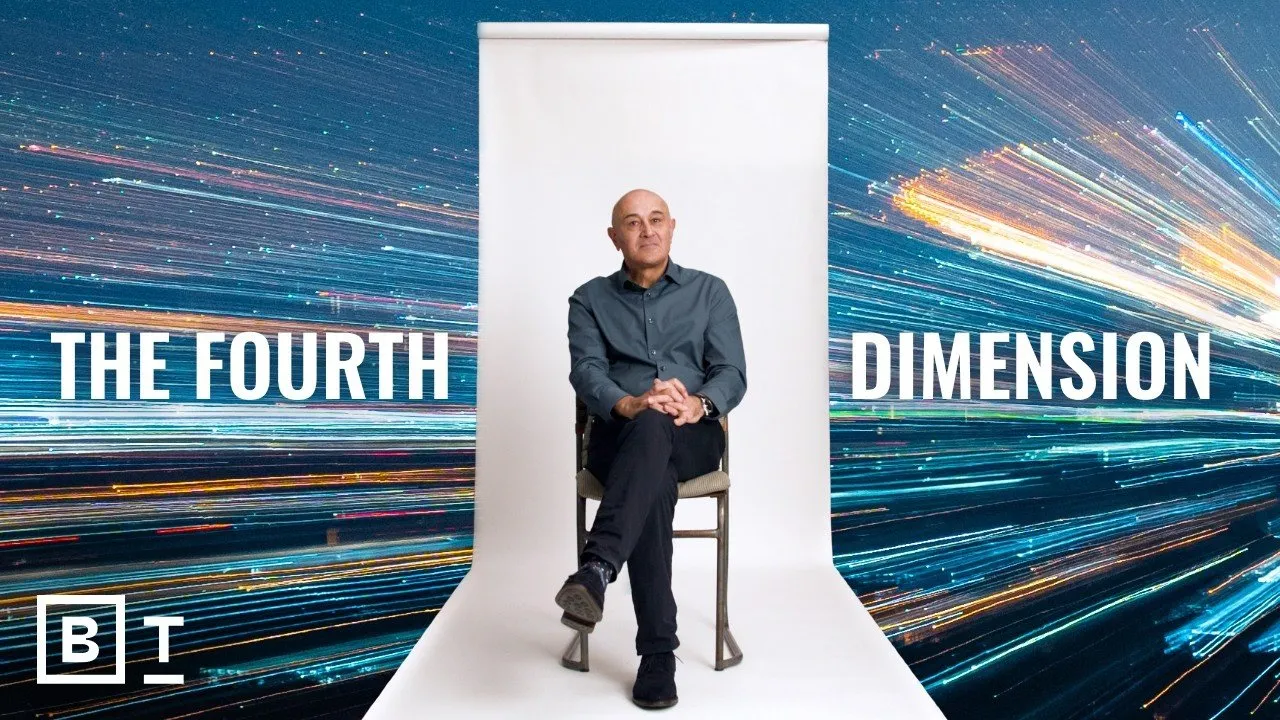
Time is the most familiar aspect of our daily lives, yet it remains one of the greatest enigmas in modern science. As we navigate our existence, we perceive time as a river that flows relentlessly from the past into the future. However, when physicists attempt to peer behind the curtain of reality, they encounter a series of paradoxes that challenge our very understanding of the universe. Jim Al-Khalili, Emeritus Professor of Physics, suggests that the "problem of time" is not a single issue, but a complex intersection of physics, philosophy, and human perception.
Key Takeaways
- The Nature of Manifest Time: There is a critical distinction between the physical time described by mathematical equations and the manifest time we experience subjectively.
- Relativity vs. Intuition: Einstein’s theories dismantled the Newtonian idea of absolute time, replacing it with a relative, four-dimensional structure where time can dilate based on gravity and velocity.
- The Arrow of Time: While fundamental physical equations are time-symmetric, the universe exhibits clear irreversibility, driven by entropy and quantum decoherence.
- The Eternalist View: Most modern physicists lean toward eternalism, the idea that past, present, and future coexist in a "block universe," suggesting the flow of time may be an emergent illusion.
The Conflict Between Physics and Perception
In our everyday lives, we possess a strong intuition that time flows. We feel the present as a unique, fleeting moment—a sharp edge between what has happened and what is yet to be. Yet, when we examine the laws of physics, this "flow" is conspicuously absent. In most equations, time appears merely as a humble coordinate, a variable denoted by the letter t that allows us to map a system's state.
The Newtonian Legacy vs. Einsteinian Reality
Isaac Newton viewed time as an absolute, external "cosmic clock" ticking at a constant rate regardless of the observer. Albert Einstein famously overturned this. His theories of relativity demonstrated that time is not absolute; it is a dimension that can stretch and compress. Through time dilation, Einstein showed that time runs slower for those moving at high velocities or situated in stronger gravitational fields. This is not merely a theoretical exercise; it is a practical necessity for modern technology. Without accounting for gravitational time dilation, our GPS satellite networks would fail to pinpoint locations accurately.
The Block Universe and the Illusion of Flow
If we accept Einstein’s view, we must grapple with the concept of the block universe. By treating time as the fourth dimension, space-time becomes a frozen, four-dimensional landscape. In this model, every moment—from the birth of the universe to its eventual heat death—is equally "real."
"Time is the fourth dimension, part of space-time, but gravity curves space-time. Gravity changes the shape of space-time." — Jim Al-Khalili
This eternalist perspective creates a philosophical tension regarding free will. If the future already exists as a coordinate in the block universe, are our choices truly free? Many physicists adopt compatibilism, arguing that while the future may be predetermined in the mathematical structure of the universe, our inability to predict it—combined with our immersion within the system—makes our experience of agency both authentic and sufficient.
Where Does the Arrow of Time Come From?
If the fundamental laws of physics are time-symmetric—meaning they work just as well in reverse—why do we observe time moving in only one direction? Why do glasses shatter, but never spontaneously reassemble? This is the domain of thermodynamics and the concept of entropy.
Entropy and Quantum Decoherence
Entropy measures the progression from order to disorder. In an isolated system, entropy must increase, providing a statistical arrow of time. However, Al-Khalili argues that the most fundamental source of this directionality may be quantum decoherence. As quantum systems interact with their surroundings, they become entangled. This process is effectively irreversible. Since no part of the universe is truly isolated, this entanglement ensures that the "arrow" is baked into the very fabric of reality.
"Decoherence is regarded as the one truly irreversible process in nature." — Jim Al-Khalili
The Beginning and End of Time
Cosmologists generally point to the Big Bang as the origin of time itself. To ask what happened "before" the Big Bang, according to current models, is akin to asking what lies north of the North Pole. However, speculative theories suggest alternatives, such as a cyclic universe or the existence of a multiverse where our Big Bang was merely a single event in an eternal inflationary process.
The Fate of the Universe
Regarding the end of time, observations since 1998 suggest that the universe’s expansion is accelerating. This implies a future defined by heat death, where matter becomes increasingly sparse and cold. Yet, even in a universe where nothing "happens" in terms of biological or mechanical activity, time—as a dimension of expansion—would likely continue indefinitely.
Can We Travel Through Time?
Time travel into the future is a scientifically proven phenomenon, albeit one limited by current technology. By moving at relativistic speeds or enduring extreme gravity, one can arrive in the future "ahead" of those who stayed behind. Travel into the past, however, remains deeply problematic.
"If time travel into the past is possible, where are all the time travelers from the future?" — Stephen Hawking (as referenced by Jim Al-Khalili)
While general relativity allows for "closed time-like curves," these paths lead to logical paradoxes like the Grandfather Paradox. Some suggest the "Many Worlds" interpretation of quantum mechanics could resolve these issues by branching reality, while others, like the Novikov self-consistency principle, suggest that the past cannot be altered. For now, the mystery remains, reminding us that even with our modern understanding of the cosmos, we are still scratching the surface of nature's greatest puzzle.
The problem of time forces us to confront the limitations of our human perspective. Whether time is a fundamental feature of the universe or an emergent illusion, our search for the answer drives the progress of science. By continuing to probe the boundaries of quantum gravity and space-time, we move closer to understanding the mechanism that makes the universe tick.


![Bitcoin Is on Sale [How to Buy It in 2026]](/content/images/size/w1304/format/webp/2026/03/how-to-buy-bitcoin-2026.jpg)