Table of Contents
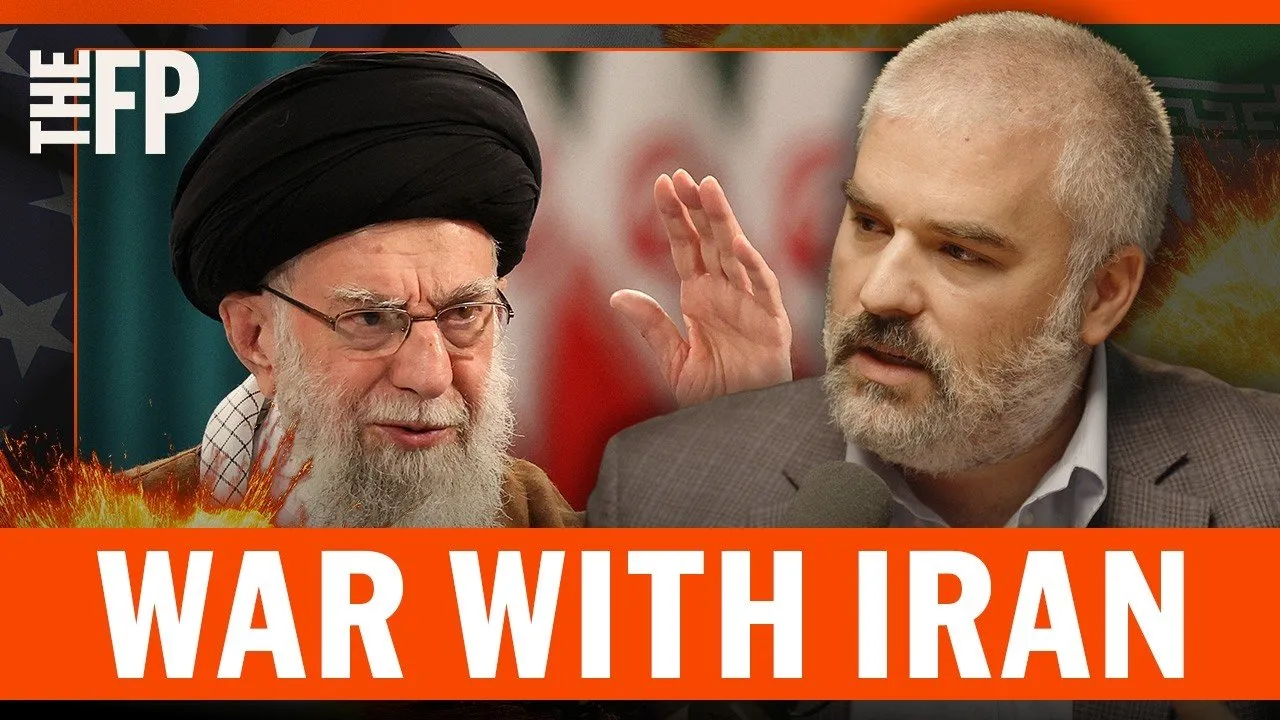
The sounds of air raid sirens have become a rhythmic, if harrowing, part of daily life in Jerusalem. As Israeli journalist Haviv Rettig Gur and former Ambassador Michael Oren report live, the atmosphere is one of grim determination rather than panic. This is not merely another skirmish in a decades-long shadow war; it is an escalation into direct confrontation that many in the region believe was inevitable. While the world watches the skies for intercepted missiles, the real battle is being fought within the command structures of the Iranian regime and the strategic rooms of the Western alliance.
Key Takeaways
- Unprecedented Intelligence Penetration: Recent daytime strikes on high-level Iranian meetings suggest that Israeli and U.S. intelligence have infiltrated the topmost tiers of the Iranian regime or that internal dissent has reached the rank of the IRGC.
- The Strategic vs. Existential Threat: While nuclear proliferation remains a long-term concern, the immediate danger to Israel lies in Iran's arsenal of 3,000+ ballistic missiles, which can reach major cities in minutes.
- Ideological Foundation: The Iranian regime defines itself through a "world revolution" against Western values, meaning its hostility toward the U.S. and Israel is foundational to its existence, not merely a policy choice.
- The Resilience of the Israeli Public: Despite the constant threat of massive ballistic strikes, Israeli society remains unified in the belief that the current Iranian leadership represents an intolerable threat that must be addressed.
The Intelligence Coup: Breaking the Regime's Cohesion
The recent wave of precision strikes in Tehran marks a departure from traditional nocturnal operations. By striking during daylight hours—when high-level leadership meetings are in session—the Israeli Air Force demonstrated a level of real-time intelligence that has shaken the Iranian leadership to its core. This suggests a total breakdown in Iranian counter-intelligence.
A Potential Infiltrator in the High Command
Analysts speculate whether this intelligence is the result of advanced technical surveillance or a modern-day "Ellie Cohen" situation—a high-level spy operating within the Iranian Revolutionary Guard Corps (IRGC). Haviv Rettig Gur notes that the ability to know the exact time and location of secretive meetings involving the Supreme Leader's inner circle signals to the regime that "somebody is not rowing in the same direction." This psychological impact is as damaging as the physical decapitation of the leadership.
Internal Dissension and the IRGC
The more likely scenario for such precise targeting is internal betrayal. Many high-ranking Iranian generals and officials are increasingly disillusioned with a regime that has traded the country’s wealth for proxy wars. The disconnect between the "holy warrior" rhetoric of the leadership and the billionaire lifestyles of their children in the West has created a volatile internal environment ripe for revolt.
"The psychological impact of this kind of a successful start can't be overstated. It tells the Iranian regime they are not working together."
Living Under the Shadow of Ballistic Missiles
For civilians in Jerusalem and Tel Aviv, the threat has evolved from the crude rockets of Hamas and Hezbollah to advanced Iranian ballistic missiles. These weapons are significantly larger, faster, and more destructive, capable of leveling entire neighborhoods rather than just single apartments. The warning time is minimal—often less than ten minutes from launch to impact.
The Limits of the "Safe Room"
Michael Oren highlights a sobering reality for Israeli families: the standard safe rooms built to withstand secondary shrapnel or smaller rockets may not offer protection against a direct hit from a heavy ballistic missile. This has shifted the mood on the ground toward a "war of no choice." There is a widespread understanding that as long as Iran maintains a massive arsenal as a shield for its nuclear program, Israel remains under an existential cloud.
Resilience as a Strategic Asset
Despite hearing sirens dozens of times in a single day, the Israeli public continues to exhibit a unique form of fortitude. "This is a nation on the verge of war, yet people were dancing in the streets for the holiday," Oren observed. This resilience allows the government the political maneuverability to conduct extended operations without the domestic collapse that enemies might anticipate.
The Ideological War: Why This Conflict Is Foundational
Critics of the current escalation often argue that the West is being "dragged" into a war of choice. However, evidence suggests that the Iranian regime’s hostility toward the United States is not a reaction to specific policies, but a core tenet of its revolutionary ideology. The regime defines the West as "arrogant" because of its focus on science, material progress, and secular governance.
Anti-Westernism as a State Principle
The regime's survival is predicated on its status as a vanguard against Western influence. From funding bot armies to destabilize European politics to targeting American service members with IEDs in Iraq, Iran’s activities are consistently aimed at the dismantlement of the U.S.-led world order. If Israel were removed from the equation today, analysts argue the regime's fundamental hatred of the West would remain unchanged.
"This is a regime that is fundamentally foundationally anti-American, and every time you loosen up on it, it would be more anti-American."
Addressing the Critique of "Regime Change"
The specter of Iraq and Afghanistan looms large over any discussion of regime change in the Middle East. Skeptics argue that removing the clerical elite in Tehran will lead to a power vacuum and regional instability. However, supporters of the current operation point to historical successes like post-WWII Germany and Japan as evidence that regime change can work when the underlying population is ready for a different future.
Iran's Two Armies
Iran possesses a unique military structure: the National Army and the IRGC. While the IRGC exists solely to protect the revolution and export terror, the National Army is a more traditional force. A strategic goal of the current campaign is to create enough internal pressure that the National Army or other moderate factions within the state turn against the IRGC to prevent the total destruction of the Iranian nation.
The Role of Information Warfare
To succeed, military strikes must be accompanied by an aggressive information campaign. By highlighting the hypocrisy of the ruling elite—who live in luxury while the Iranian people face economic ruin—the West can undermine the "moral immunity" that the regime relies on to keep its base loyal. The goal is not American "boots on the ground," but rather empowering the Iranian people to reclaim their future.
Global Implications and the Future of the Alliance
The current conflict has forged unprecedented regional partnerships. The fact that American F-22s are operating from Israeli soil, potentially with the tacit support of Arab nations like Saudi Arabia and Qatar, marks a historic shift in Middle Eastern geopolitics. These nations recognize that an unconstrained Iran is a threat to the stability of the entire global energy market and regional peace.
The Necessity of Resolve
Iran’s strategy has long relied on the belief that Western democracies lack the "resolve" for a prolonged conflict. They bank on international public opinion and domestic political cycles to force a ceasefire before their capabilities are truly neutralized. Ambassador Oren warns that this is a "first-day" excitement, and the true test will be maintaining the pressure as the war enters more difficult phases.
"Everyone knows how war starts. No one knows how they end."
Conclusion
The current operations against the Iranian regime represent a pivotal moment in 21st-century history. For Israel, it is an existential necessity to dismantle a "ring of fire" that has been 47 years in the making. For the United States and its allies, it is an opportunity to neutralize a regime that has consistently acted as the primary engine of global instability. While the risks of escalation are real, the consensus among those on the ground in Jerusalem is that the risk of inaction—allowing a revolutionary, anti-Western regime to acquire a nuclear shield for its ballistic arsenal—is far greater. The coming days will determine if this resolve can be sustained long enough to see a fundamental change in the region's trajectory.