
Table of Contents
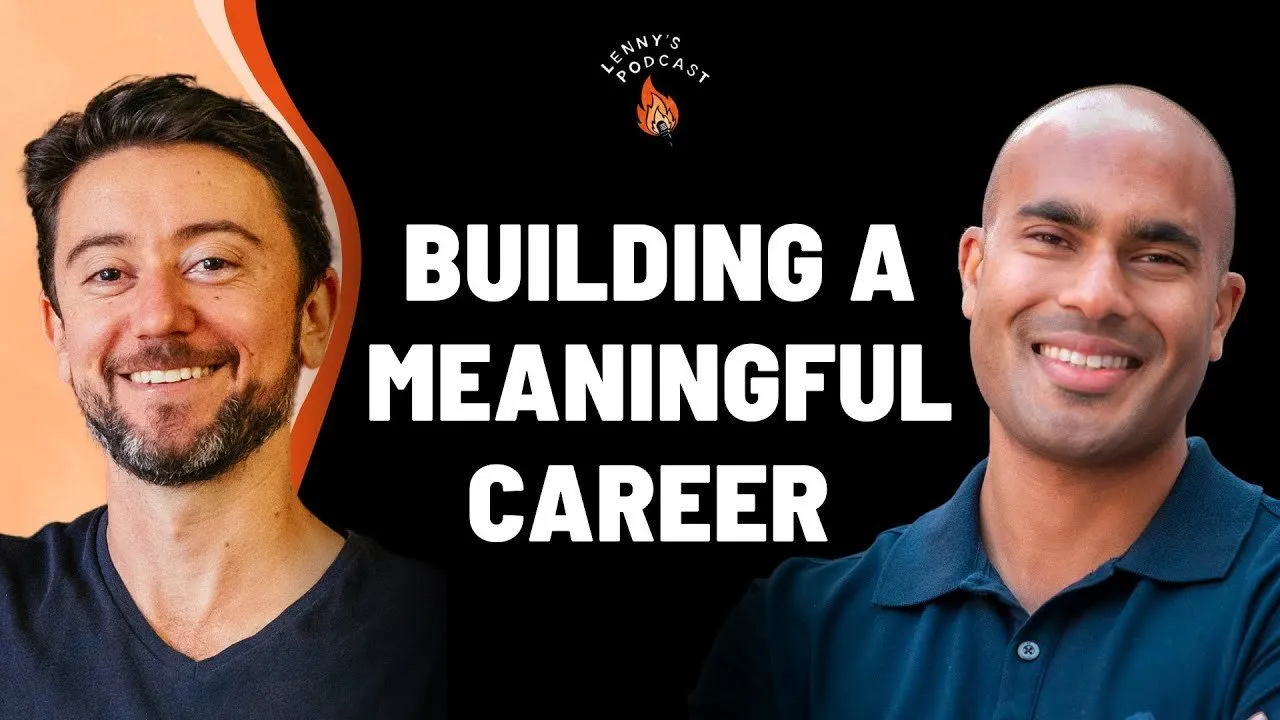
From early-stage startups to tech giants like Amazon, Microsoft, and Airbnb, Jason Shah has navigated the full spectrum of the product management landscape. Currently leading product at Alchemy, Shah offers a unique perspective on how the discipline changes depending on the maturity of the company and the technology itself. His journey highlights that successful product leadership isn't just about managing roadmaps; it requires a mastery of communication, a willingness to dive into the details, and the courage to treat a career as an exploration rather than a linear ascent.
In this deep dive, we explore Shah’s insights on the evolving role of PMs in Web3, the specific mechanisms that make Amazon’s product culture unique, and the soft skills required to influence founders and align teams on what truly matters.
Key Takeaways
- The "Ladder vs. Map" Mindset: Career growth isn't always linear. Treating your career like a map allows for exploration and high-learning risks that a traditional corporate ladder often discourages.
- Working Backwards is a Rigorous Process: Amazon’s PR/FAQ method isn't just a document; it is a tool to force clarity, remove fluff, and validate customer obsession before a line of code is written.
- Reframing "Pushback" as Alignment: Disagreeing with leadership shouldn't be a battle of wills. Effective pushback involves reframing the conversation around shared goals and winning strategies.
- The Evolution of Web3 Product Management: While early crypto projects often lacked formal PMs, the maturing landscape now demands product leaders who can manage complexity and drive user adoption.
- Great Leaders are in the Details: The most effective executives combine humility—believing no task is beneath them—with an obsessive attention to craft and detail.
The Maturation of Product Management in Web3
The cryptocurrency and Web3 landscape is often characterized by extreme volatility, yet the underlying need for structured product thinking is becoming increasingly apparent. Shah notes that while the industry faces cyclical "winters," the builder energy remains at an all-time high. The role of the Product Manager (PM) in this space is undergoing a significant transformation.
From Community Managers to Product Leaders
In the early phases of Web3, projects were often driven by engineering teams and community managers, with little need for traditional product management. However, as the ecosystem matures, companies like Uniswap, OpenSea, and Gemini are actively recruiting experienced product talent from Web2 giants.
As user bases grow and technical complexity increases, the "product playbook"—strategy, prioritization, and execution—becomes a competitive advantage. Projects that previously relied solely on tokenomics or hype are now finding that sustainable growth requires the discipline that professional PMs provide.
maintaining Morale Through Progress
Leading a team during a market downturn requires a shift in focus. Shah argues that extrinsic motivators, such as financial incentives, fail to sustain morale when the market drops. Instead, leaders must focus on progress.
Whether it is shipping a new integration, launching support for a new blockchain, or seeing an uptick in developer activity, tangible momentum is the only antidote to uncertainty. When teams see that their daily work results in real product advancements, they remain engaged regardless of external market conditions.
Leadership Lessons from Amazon and Airbnb
Having worked across varied cultures—from the data-driven rigors of Amazon to the design-led ethos of Airbnb—Shah identifies specific traits that separate good leaders from the truly exceptional.
The Three Pillars of Elite Leadership
Observing leaders like Jeff Bezos, Brian Chesky, and David Sacks reveals a common pattern in how they operate:
- Nothing is Above Them: Great leaders possess humility. They do not view themselves as too senior to review a spec, answer a customer support ticket, or fix a minor detail.
- They Are in the Details: This is not about micromanagement, but about craft. Leaders like Chesky are known for reviewing every screen of a product launch. This attention to detail signals to the organization that quality is non-negotiable.
- Adaptability: Rigid playbooks fail when contexts change. The best leaders adapt their style and strategy based on new information, whether navigating a global pandemic or shifting business models during a crypto winter.
Mastering Amazon’s "Working Backwards" Process
Amazon’s culture is famous for prohibiting PowerPoint presentations in favor of six-page memos. The core of their product development process is the PR/FAQ (Press Release and Frequently Asked Questions). This mechanism forces a team to clarify the end state before development begins.
A standard PR/FAQ follows a strict structure:
- Introduction: A concise announcement of the product.
- Problem: A clear definition of the customer pain point.
- Solution: A description of the product and how it solves the problem.
- Customer Quote: A fictional but realistic quote describing the user’s experience.
- Leadership Quote: A quote explaining the strategic value of the launch.
- Call to Action: Specific instructions on how and where to access the product.
Crucially, this process enforces intellectual honesty and concision. Fluff words like "great" or "easy" are discouraged in favor of specific metrics (e.g., "saves customers 20 minutes per day"). Writing the customer quote forces the PM to step out of their own shoes and genuinely empathize with the user’s perspective.
The Art of Influence and Reframing Pushback
One of the most difficult skills for a Product Manager to master is disagreeing with a founder or CEO. Shah suggests that the concept of "pushback" itself is flawed because it implies an adversarial stance. Instead, successful influence is about alignment.
Pushback is a word that makes you feel like you're sort of physically going against what somebody else wants... alternatively, it could be about how do I shift the direction on something or how do I help the business actually succeed.
Aligning on the Goal, Not the Features
Shah shares an example from his time at Airbnb involving the integration of an acquisition, Luxury Retreats. The initial roadmap called for a complex set of concierge features that the team felt were scoped too broadly and destined to fail. Rather than saying "no" to the features, the team reframed the goal.
By shifting the conversation to the shared desire for a "magical customer experience," they proposed a new concept: "Trip Designers." This reframing allowed them to simplify the product into an elegant chat interface. The leadership got the premium experience they wanted, and the product team got a manageable scope they could execute well. The lesson is clear: don't fight the feature; align on the outcome and propose a superior path to achieve it.
Career Philosophy: The Ladder vs. The Map
Many professionals view their careers as a ladder—a linear progression of titles, salary bumps, and increasing authority. Shah advocates for a different visualization: The Map.
The "Map" mindset treats a career like travel. Just as a traveler might choose a difficult destination for the sake of the experience and the story, a professional might choose a role that offers chaos, learning, and novelty over stability.
Avoiding False Precision
Planning a career 10 years in advance often relies on false precision. Companies change, industries dissolve, and new roles emerge. By focusing on the "ladder," professionals may miss side-steps that look risky on paper but offer exponential learning opportunities.
Whether it is moving to San Francisco without a job to build apps, or leaving a stable role to join a volatile Web3 startup, the "Map" approach prioritizes interesting problems over safe titles. Ultimately, the metric for a successful career isn't the final title held, but the breadth of problems solved and the impact of the products built.
Conclusion
Building a meaningful career in product management requires a balance of hard skills and philosophical flexibility. It demands the rigor to write an Amazon-style press release that kills bad ideas early, the emotional intelligence to reframe pushback as strategic alignment, and the courage to step off the corporate ladder to explore the map. As the industry evolves—particularly in emerging fields like Web3—the PMs who thrive will be those who remain obsessed with the details, adaptable to change, and relentlessly focused on solving the right problems.




)