Table of Contents
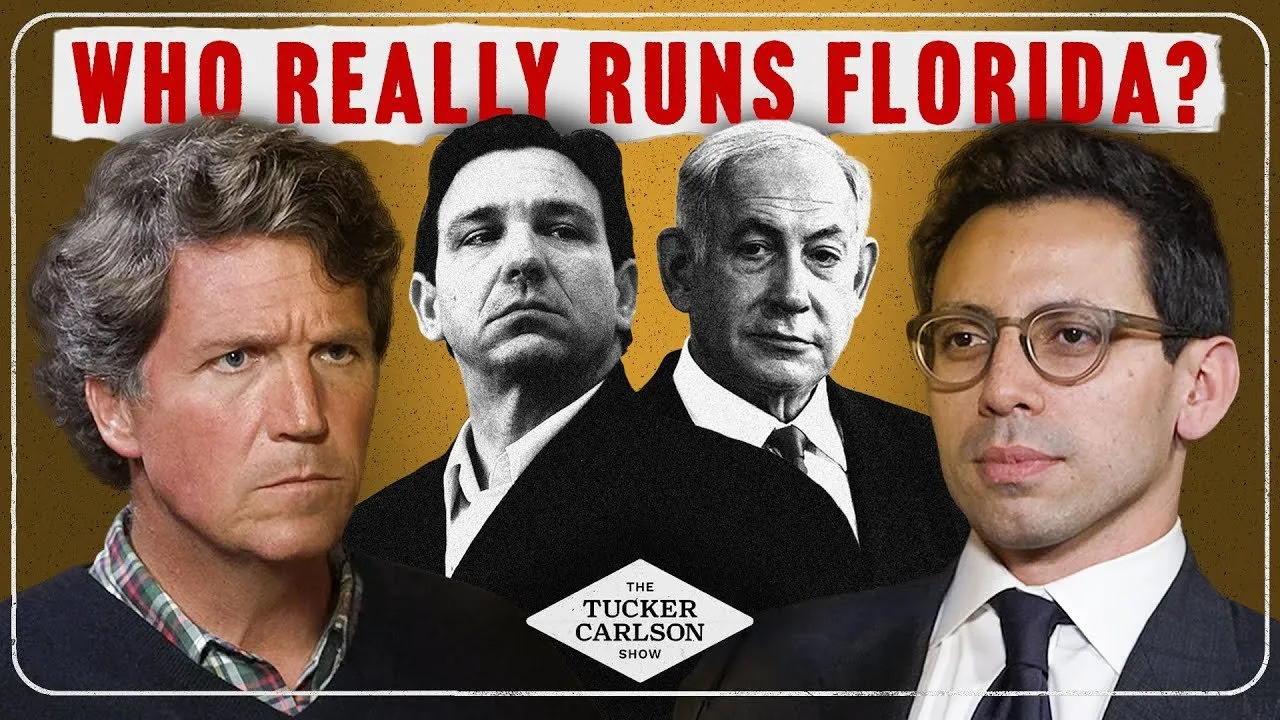
In a recent and provocative discussion regarding the future of Florida politics, gubernatorial candidate James Fishback outlined a platform that challenges the established norms of both the Republican party and the state’s current administration. Speaking on the feeling of displacement many locals experience, Fishback argued that the "America First" movement has lost its way, becoming too entangled with corporate interests and foreign entanglements at the expense of heritage Floridians. His campaign is built on the premise that it has become difficult for citizens to survive in their own communities due to economic policies that favor foreign students, temporary workers, and global investment firms over local taxpayers.
Fishback’s vision for Florida represents a sharp pivot from traditional conservatism toward a more nationalist, protectionist approach. From proposing astronomical tuition hikes for foreign students to banning private equity firms from buying single-family homes, his platform prioritizes the preservation of Florida’s cultural and economic sovereignty. The following analysis breaks down the core components of his controversial yet populist agenda.
Key Takeaways
- Education Reform: Fishback proposes raising tuition for foreign students to $1 million annually to prioritize spots for Florida residents at public universities.
- Housing Sovereignty: The candidate plans to ban private equity firms like Blackstone and foreign nationals from purchasing single-family homes in Florida.
- Fiscal Reprioritization: Fishback intends to divest $385 million in state-held Israeli bonds and redirect those funds into a down payment assistance program for young Floridian families.
- Industry Revival: To save the decimated citrus industry, he proposes a $1 billion cash prize for any scientist who develops a greening-resistant citrus strain.
- Immigration and Schools: The platform includes an executive order to remove illegal immigrant children from public schools, challenging the Supreme Court’s Plyler v. Doe decision.
Prioritizing Floridians in Higher Education
One of the central pillars of Fishback’s campaign is the reclamation of Florida’s public universities for the children of taxpaying residents. He argues that current bilateral frameworks and trade deals often prioritize foreign enrollment to the detriment of local students. Specifically, he criticized the potential influx of foreign students—notably from China—who occupy seats at top-tier institutions like the University of Florida and Florida State University.
Fishback views this not merely as an educational issue, but as a breach of the social contract between the state and its citizens. His proposed solution is drastic and designed to be exclusionary by financial design.
"On day one, my first executive order as governor next January is to raise tuition on all foreign students to $1 million a year. So, when they can't pay, they're out and our kids are back in their destinies, their lives restored at our great colleges."
The logic behind this proposal is rooted in the belief that public universities are funded by the cumulative taxes of Floridian families over generations. Fishback contends that giving preference—or even equal footing—to international students undermines the investment local families have made in their state’s infrastructure.
The Housing Crisis and Corporate Bans
Perhaps the most economically populist aspect of Fishback’s platform is his stance on the housing market. He identifies the inability of young families to purchase homes as a civilization-level threat. If young people cannot afford homes, they delay marriage and children, which Fishback argues leads to the collapse of local communities.
Banning Corporate Speculation
Fishback takes aim at private equity giants and foreign investors, accusing them of artificially inflating real estate prices. He specifically targets firms like Blackstone, arguing that their bulk purchasing of single-family homes converts a generation of potential owners into permanent renters. His proposed Executive Order Number Three would unequivocally ban private equity firms, Airbnb speculators, and foreign nationals from purchasing single-family homes in Florida.
He rejects the free-market counter-argument that these companies provide liquidity or stability. Instead, he frames it as a moral issue where corporate profits are prioritized over family formation.
Divestment for Down Payments
To further support homeownership, Fishback proposes a controversial reallocation of state funds. Currently, Florida holds approximately $385 million in Israeli sovereign bonds. Fishback argues that this investment is fiscally irresponsible given the geopolitical risks and subpar returns compared to U.S. Treasuries.
His plan involves fully divesting from these foreign bonds and repurposing the capital into a statewide down payment assistance program. The goal is to provide immediate liquidity to young, married couples in Florida, allowing them to compete in a difficult housing market.
Reviving the Citrus Industry
Fishback paints a bleak picture of Florida’s interior, describing towns that were once teeming with life now hollowed out due to the collapse of the citrus industry. He attributes this decline to "greening" (a disease affecting citrus trees), unfavorable trade deals, and government apathy.
Critiquing the lack of "concrete falsifiable solutions" from current leadership, Fishback proposes a market-driven incentive to solve the agricultural crisis:
"Any scientist in the world who wants to develop a strand of citrus that is impervious to greening, we're going to pay you $1 billion cash."
He views this potential expenditure not as a cost, but as an investment in restoring Florida’s heritage and economic backbone. By incentivizing a scientific breakthrough, he hopes to bring back the jobs and community structures that relied on the citrus trade for over a century.
Free Speech and Foreign Policy
A significant portion of Fishback’s critique is directed at the current Republican establishment’s approach to free speech and foreign policy. He argues that "hate speech" laws, specifically those recently enacted in Florida regarding antisemitism, are unconstitutional and un-American. He suggests that such laws create a two-tiered justice system where political speech is criminalized to appease donor classes.
Fishback recounted incidences where he felt threatened by political operatives, including an early morning call from State Representative Randy Fine, whom Fishback characterizes as a "slave to his donors." He argues that the political establishment is more focused on foreign conflicts than domestic issues, citing the massive financial support for Israel as a point of contention.
He further defended his position against accusations of antisemitism, stating that prioritizing American citizens and debating the fiscal prudence of buying foreign debt is a matter of national interest, not prejudice.
"Don't sit here and call American citizens anti-Semitic for opposing a third of a billion dollars being shipped overseas to fund some stupid war."
Labor Markets and Immigration
Fishback’s platform takes a hardline stance on labor and immigration, focusing on the displacement of American workers by H-1B visa holders and illegal immigrants.
Challenging Corporate Hiring Practices
He argues that major tech companies and corporations abuse the H-1B visa program to hire cheaper foreign labor, effectively creating "ethnic cartels" within companies and shutting American graduates out of high-paying jobs. Fishback asserts that the "free market" defense of these practices is flawed because the market is rigged against domestic workers.
Public Schools and Illegal Immigration
Regarding illegal immigration, Fishback proposes an executive order to remove illegal immigrant children from Florida public schools. He acknowledges this challenges the 1982 Supreme Court ruling Plyler v. Doe, but expresses a willingness to take the legal fight to the current Supreme Court.
He argues that the presence of non-English speaking students dilutes the quality of education for American citizens and places an undue burden on teachers. In his view, the state’s primary obligation is to its citizens, and resources should not be diverted to support those in the country illegally.
Conclusion
James Fishback’s campaign frames the 2026 gubernatorial race as a choice between "Old Florida"—characterized by agriculture, affordability, and local sovereignty—and "New Florida"—defined by overdevelopment, globalist economics, and foreign labor. By rejecting the traditional GOP reliance on corporate donors and focusing on aggressive, protectionist executive actions, Fishback is attempting to redefine what it means to be a conservative in the Sunshine State.
His proposals, from the $1 billion citrus prize to the ban on corporate home ownership, suggest a governance style that places the social and economic well-being of heritage Floridians above global market efficiencies. As the primary approaches, Fishback’s ability to mobilize voters against the well-funded establishment will be a litmus test for the enduring power of populist politics in Florida.