
Table of Contents
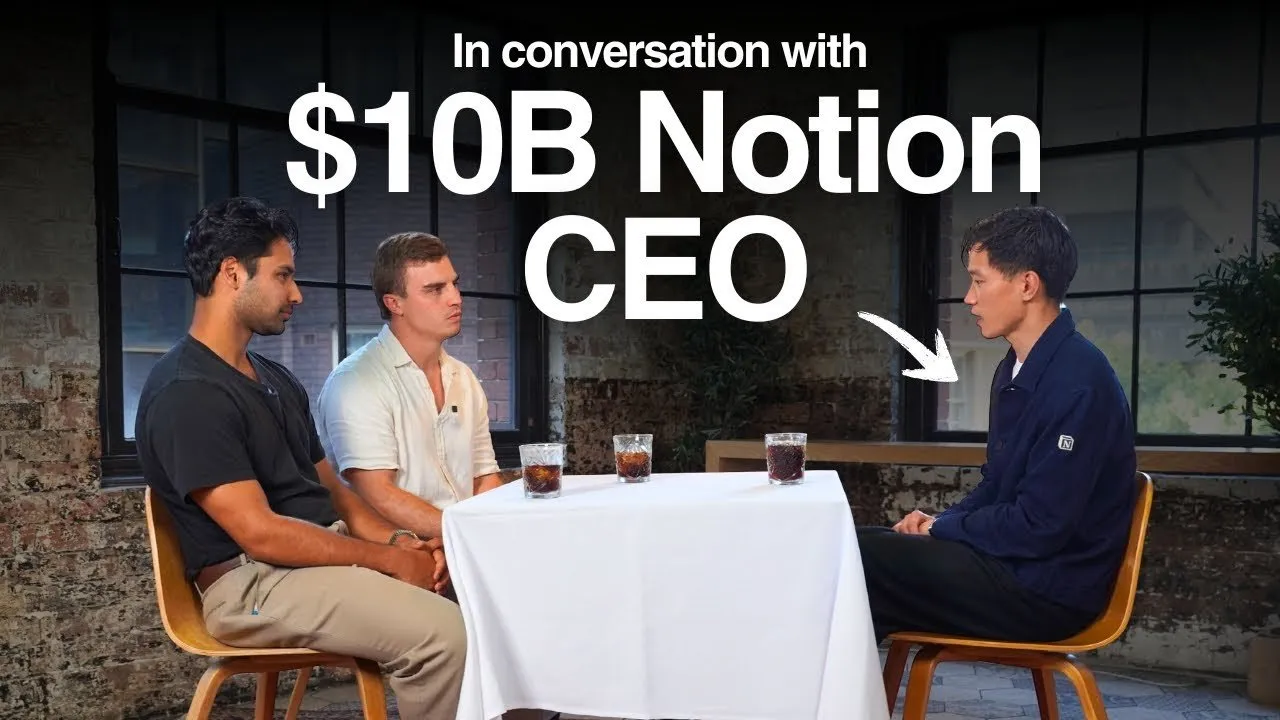
Ivan Zhao, CEO and co-founder of Notion, represents a rare breed in Silicon Valley—a tech entrepreneur whose artistic sensibilities shape every aspect of his $10 billion company. From his early dreams of becoming a photographer to building one of the most influential productivity platforms in the world, Zhao's journey illuminates how aesthetic philosophy can drive technological innovation.
Key Takeaways
- Notion's modular "Lego" architecture, built years before the AI boom, positioned the company perfectly for developing effective AI agents
- Balancing artistic vision with business pragmatism requires constant recalibration—too much art yields no product-market fit, while excessive business focus creates commoditized products
- Future knowledge work will shift from capability-driven to taste-driven, where workers supervise AI agents rather than execute tasks directly
- Consolidating context in one platform gives Notion a significant advantage in building AI teammates that actually understand and execute complex workflows
- Authentic leadership stems from treating company building as a craft and journey rather than chasing destinations or mimicking Silicon Valley trends
The Artist-Entrepreneur Paradox
Zhao's path diverged from traditional Silicon Valley narratives early. As a college student, he exhibited photography at the New York Photo Festival and seriously considered pursuing art full-time. However, he discovered that success in the art world depended heavily on social networking and party attendance rather than pure meritocracy.
I realized so much of doing art is like going to parties and there's too much people social aspect of it versus meritocracy of doing science or building products.
This realization led him toward technology, but his artistic sensibilities never disappeared. Instead, they became the foundation for how he approaches product development at Notion.
Beauty as a Business Strategy
While most tech founders focus on growth metrics and competitive advantages, Zhao centers his philosophy around a Bell Labs principle: creating something both beautiful and useful. This dual focus serves as his primary energy source and differentiates Notion in an increasingly commoditized software landscape.
The challenge lies in maintaining equilibrium. Early Notion struggled for three to five years without product-market fit because it leaned too heavily toward artistic vision. Conversely, when the team attempted to build more rigid, point-solution features to compete directly with established players, they experienced what Zhao describes as "organ rejection"—customers, community, codebase, and team all resisted the departure from Notion's modular philosophy.
The Accidental AI Advantage
Notion's success in AI agents stems from architectural decisions made years before large language models dominated the tech landscape. The company's "Lego" approach to software—where users combine modular components to build custom workflows—created the perfect foundation for AI integration.
Context Consolidation as Competitive Moat
The key insight driving Notion's AI strategy centers on context. While buzzwords like "context engineering" have emerged recently, Notion spent over five years consolidating user data, documents, and workflows into a single platform. This comprehensive context gives AI agents the information they need to perform meaningful work.
We have all the context in one place. Now you give this to language models, just let it cook, and it turns out it works quite well.
Unlike specialized agents that excel in narrow domains like customer support or coding, Notion's agents operate across general knowledge work requiring team collaboration. This broader scope presents greater complexity but also larger potential impact.
Teaching AI to Use Digital Legos
Notion's evaluation strategy for AI agents focuses on tool utilization rather than abstract performance metrics. The company teaches language models to use Notion's various components—text editing, database management, view creation—then evaluates how effectively the AI employs these tools. Since Notion's modular system can encompass most knowledge workflows, an agent proficient in using these components can theoretically handle most knowledge work.
The Future of Knowledge Work
Zhao envisions a fundamental shift in how knowledge workers operate. Instead of executing tasks directly, workers will supervise teams of AI agents, focusing more on judgment and direction than production.
From Capability to Taste
This transition will democratize certain capabilities while elevating others. Workers won't need exceptional writing skills to produce strategic memos, but they'll need refined taste to evaluate AI-generated content. Three dimensions will determine success in this new paradigm:
- Capability requirements will decrease as AI handles execution
- Taste requirements will intensify as judgment becomes the primary human contribution
- Agency becomes crucial—the drive to experiment and iterate will distinguish high performers
Zhao suggests that creative individuals who traditionally struggled with detail-oriented execution might thrive in this environment. The archetype of someone who's "creative and kind of lazy" could become highly valuable if they can effectively direct AI agents.
The Vision: Two-Person Companies with Twenty-Person Capabilities
In Notion's idealized future, users can design and deploy AI teammates as easily as writing documents or managing project trackers. Two founders could theoretically operate with the capabilities of a twenty-person team, fundamentally reshaping startup dynamics and organizational structures.
Authentic Leadership in Silicon Valley
Despite leading a company worth over $10 billion, Zhao maintains a remarkably grounded perspective on success and leadership. He actively works to demystify his role and avoid the pedestal effect common in tech media coverage.
The Journey-Focused Mindset
Zhao's durability as a founder stems from treating company building as a craft rather than pursuing specific destinations. This journey-focused approach provides sustainable energy through the inevitable ups and downs of a decade-long entrepreneurial journey.
The journey is the reward. It's a good feeling when you actually treat it that way.
His advice philosophy reflects this individualistic approach. Rather than following Silicon Valley groupthink or applying generic frameworks, he emphasizes thinking independently and considering the context behind any advice before implementation.
Drawing Inspiration Beyond Tech
While many founders immerse themselves in Silicon Valley echo chambers, Zhao draws inspiration from diverse sources spanning centuries and disciplines. He cites computing pioneer Alan Kay's observation that tech operates more like pop culture—people learn from immediate peers rather than studying history or distant disciplines.
Zhao's intellectual curiosity extends to figures like Mozart and Darwin rather than contemporary tech personalities. This broader perspective informs Notion's unique position in the productivity software landscape and resistance to following conventional Silicon Valley patterns.
Building in the Age of AI Flux
With new AI models releasing weekly and competitive landscapes shifting rapidly, maintaining strategic focus becomes increasingly challenging. Zhao's approach emphasizes building enduring foundations rather than chasing the latest developments.
Platform Strategy in Uncertain Times
Notion is transitioning from a design-driven to a more developer-friendly culture, embracing initiatives like MCP (Model Context Protocol) to open their platform. This represents a strategic bet that creating more value for customers through ecosystem expansion will generate sustainable competitive advantages.
The philosophy reflects confidence in Notion's core value proposition: when competitors create fear and uncertainty, opening up and focusing on customer value often proves more effective than defensive positioning.
Maintaining Identity Through Change
Despite pressure to move faster or adopt more conventional approaches, Zhao remains committed to Notion's fundamental character. The failed experiment with rigid, point-solution features reinforced the importance of staying true to the company's modular DNA, even when market pressures suggest alternative approaches.
This commitment to authentic identity—rather than mimicking successful competitors—positions Notion uniquely as the productivity software market evolves toward AI-native experiences.
Conclusion
Ivan Zhao's story demonstrates how seemingly contradictory elements—artistic sensibility and business acumen, individual craft and team building, patient development and rapid innovation—can synthesize into extraordinary outcomes. His approach to building Notion reveals that the most sustainable competitive advantages often emerge from authentic expression rather than strategic imitation.
As AI reshapes the knowledge work landscape, companies like Notion that spent years building comprehensive, flexible foundations may find themselves best positioned to deliver on the ambitious promises of AI agents. The future belongs not to those who chase every trend, but to those who build lasting value while staying true to their core vision.
For aspiring entrepreneurs, Zhao's journey offers a compelling alternative to Silicon Valley's typical playbook: focus on craft over hype, journey over destination, and beauty alongside utility. In a world of increasing automation, these distinctly human qualities may prove to be the most durable competitive advantages of all.



)